Polyfoam Concrete Lifting · Johnson & Miami Counties
Concrete Leveling in Spring Hill, KS
Spring Hill straddles the Johnson and Miami County line along US-169, and new subdivisions keep spreading out from its small-town center. Metro Wide lifts settled driveways, patios, sidewalks and garage floors with polyurethane foam on both sides of the county line.
Spring Hill started as a small farm town and has grown into one of the faster-growing communities on the south edge of the metro. Its older core has traditional homes on small blocks near downtown, while most newer housing sits in subdivisions built since the early 2000s, many with three-car garages, wide driveways and large back patios. US-169 runs through town, making for an easy drive north to Olathe and the rest of Johnson County.
That growth explains most of the concrete calls we get from Spring Hill. Newer driveways, walks and patios often sit on fill that hasn't finished settling, and the first panel at the garage or the walk along the front of the house tends to drop first. In the older part of town, settling is slower but has had more time to add up, so stoops and front walks are the usual problems.
Foam leveling raises slabs through small ports and doesn't require tearing out a driveway or waiting on new concrete to cure. It is also a sensible option when only one or two panels have dropped and the rest of the slab is fine.
Spring Hill at a glance
Location: Spring Hill, KS, Johnson & Miami Counties
Distance: about 28 miles southwest of downtown Kansas City
Method: polyurethane foam lifting through small ports
Estimates: free, often by text from your photos
Warranty: 2 years on residential lifting
Properties: residential and commercial
Spring Hill sits roughly 28 miles southwest of downtown Kansas City, well inside Metro Wide’s 75-mile coverage radius. Scheduling depends on the address and the size of the project, and a remote quote from your photos lets us plan the trip before we arrive.
Local Conditions
Why concrete settles in Spring Hill.
Spring Hill sits on rolling prairie ground with clay-rich soils that swell and shrink as moisture changes. Open, newly developed areas get full sun and wind, and the ground can dry out deeply in a hot summer, then soak up water quickly during spring storms. That swing is hard on slabs, especially at the edges where water reaches the soil first.
In new subdivisions, grading plays the biggest role. Lots are built up and leveled with fill, and soil is pushed back against foundations after basements are poured. That loose soil keeps compressing for years under the weight of concrete and the water that runs off roofs and driveways. The low side of a driveway on a graded lot, or a patio on the backfill behind a walk-out, is especially prone to settling.
Utility installation adds its own pattern. Water, sewer and other lines run under or alongside many driveways and sidewalks in newer neighborhoods, and trench backfill that wasn't fully compacted settles in a line. Freeze-thaw cycles and gutters that empty next to slabs speed up all of it, and we will point out water sources we notice when we review your project.
Signs your slab has lost support
A lip or step-up at a driveway, sidewalk, or garage joint
A patio or walk that tips toward the house
Gaps opening between steps, stoops, and the foundation
Water pooling on a slab or flowing toward the home
Hollow sounds or visible washout along a slab edge
Common Spring Hill Projects
The concrete we lift most often in Spring Hill.
Every slab is different, so we start with what is happening at your property. These are the repairs Spring Hill property owners ask us about most.
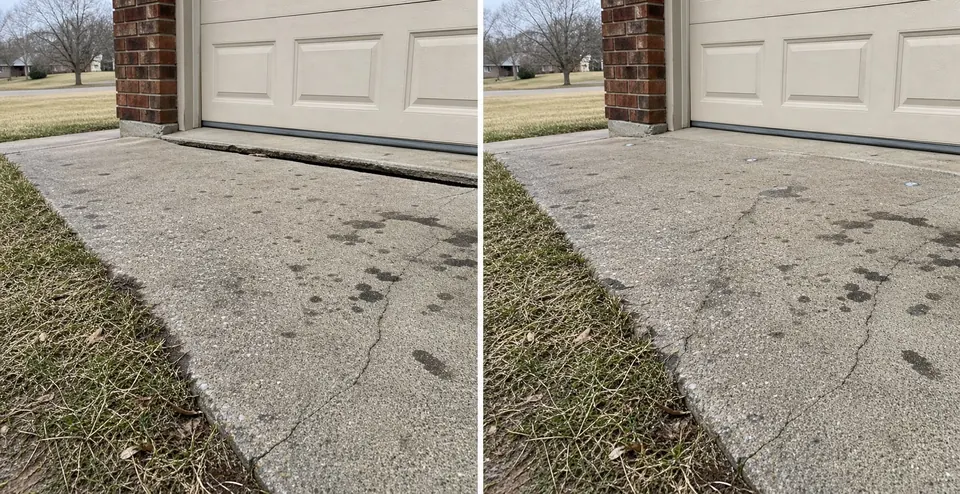
Wide driveways at three-car garages
Wide driveways have more joints and more edge exposed to runoff. When the panels at the garage or along the side of the drive drop, lifting them back into line removes the lip, reduces scraping and restores drainage toward the street.
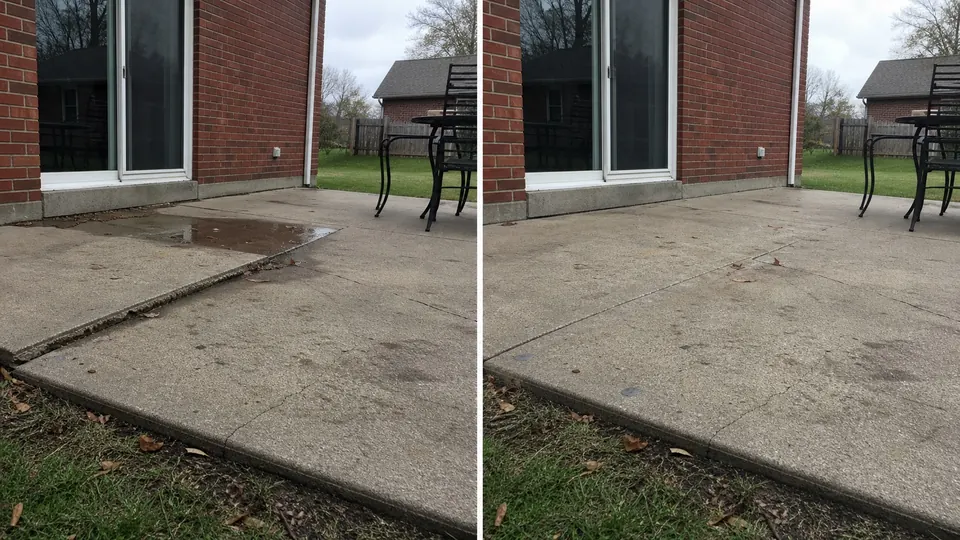
Patios beside the back door
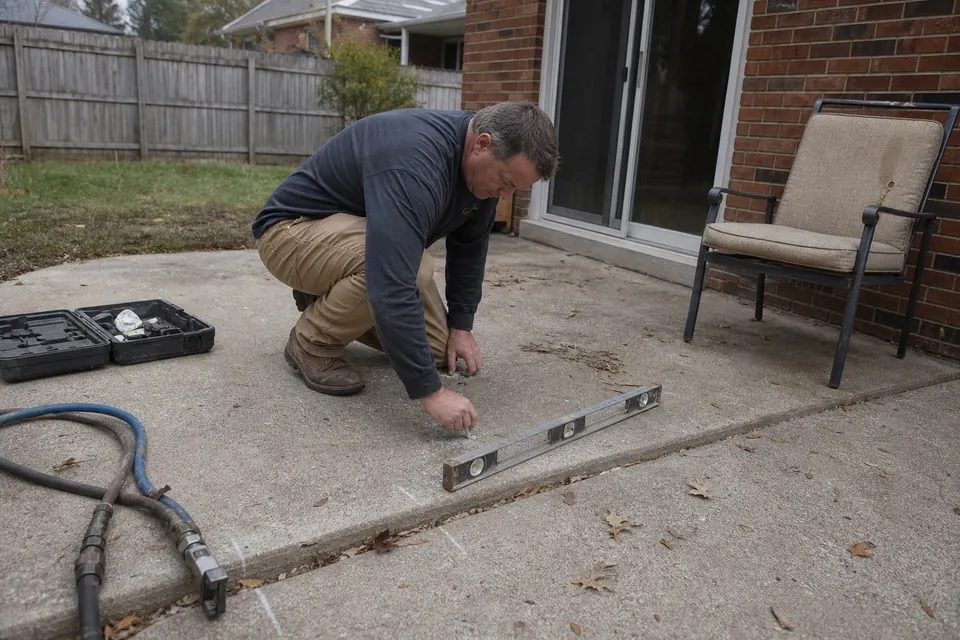
Back patios that sit against the foundation of a newer home often sink along that edge and collect water at the door. Lifting the low side restores slope toward the yard where the slab, threshold and surrounding grades allow.
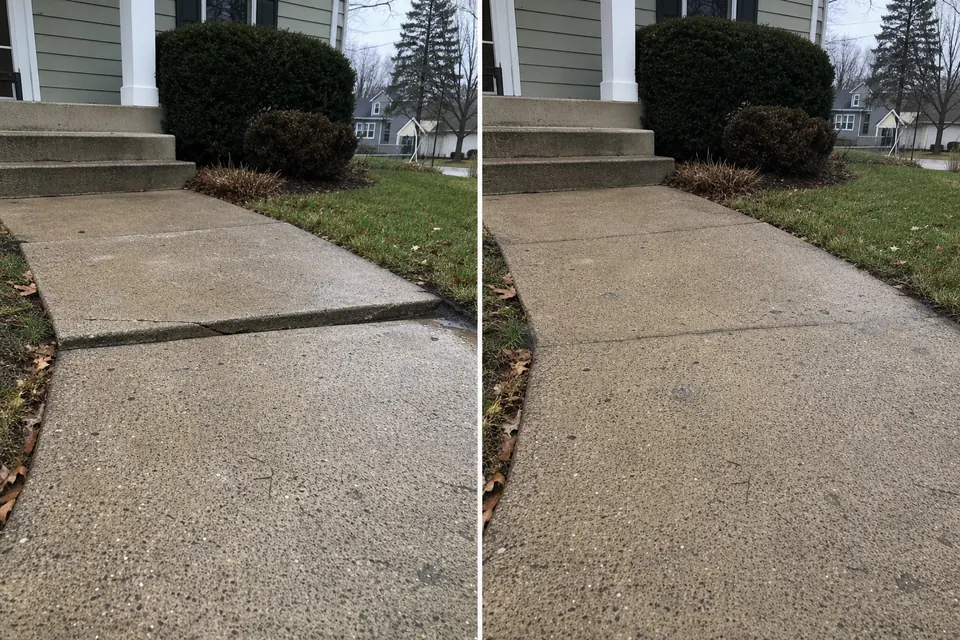
Sidewalks over utility trenches
Public-side walks in newer subdivisions can settle at driveway crossings and over utility trenches, leaving a row of uneven squares. Lifting the low squares removes trip edges for neighbors walking by and kids riding bikes.
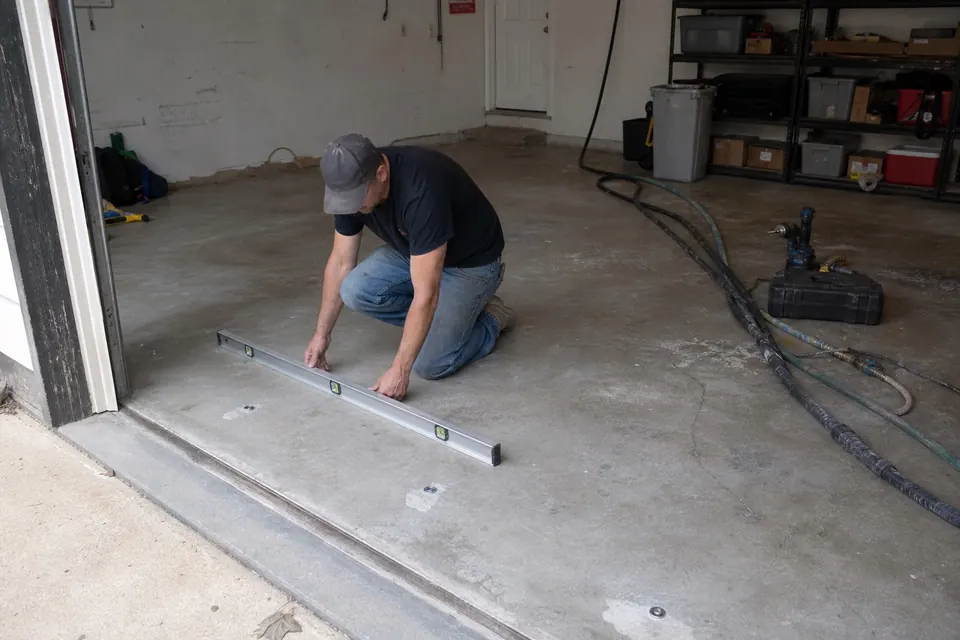
Garage floors in older homes
In Spring Hill's older blocks, single-stall and detached garages sometimes have floors that have sunk at one end or along the door. Where the slab is intact, foam can raise it and fill the voids beneath.
Our Spring Hill Leveling Process
A controlled lift with a small footprint.
01
Send photos
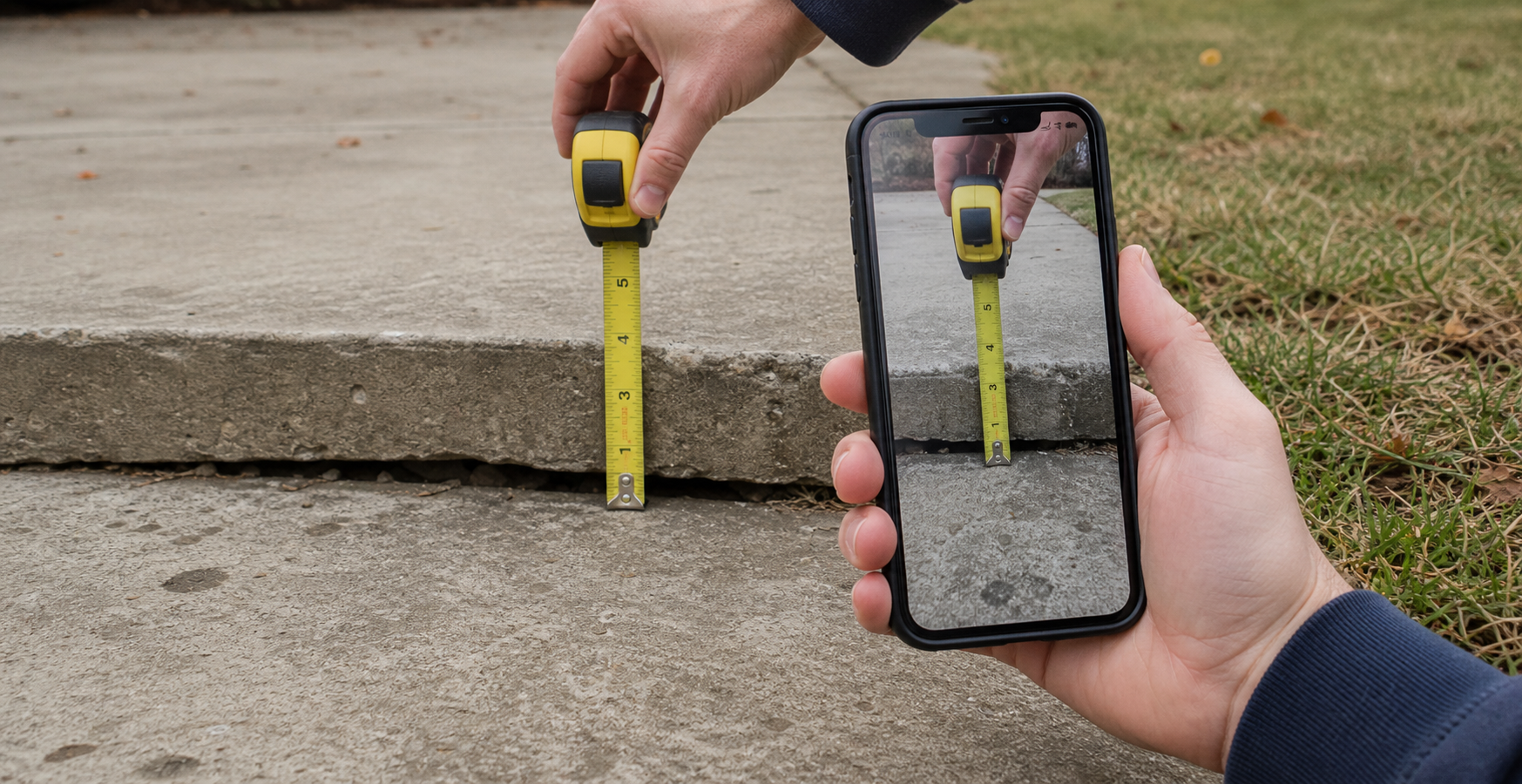
Text a wide shot, close-ups of the low joints, a tape measure showing the drop, and the address.
02
Review & quote
We look at the settlement, slab condition, and drainage, and follow up with a quote or questions.
03
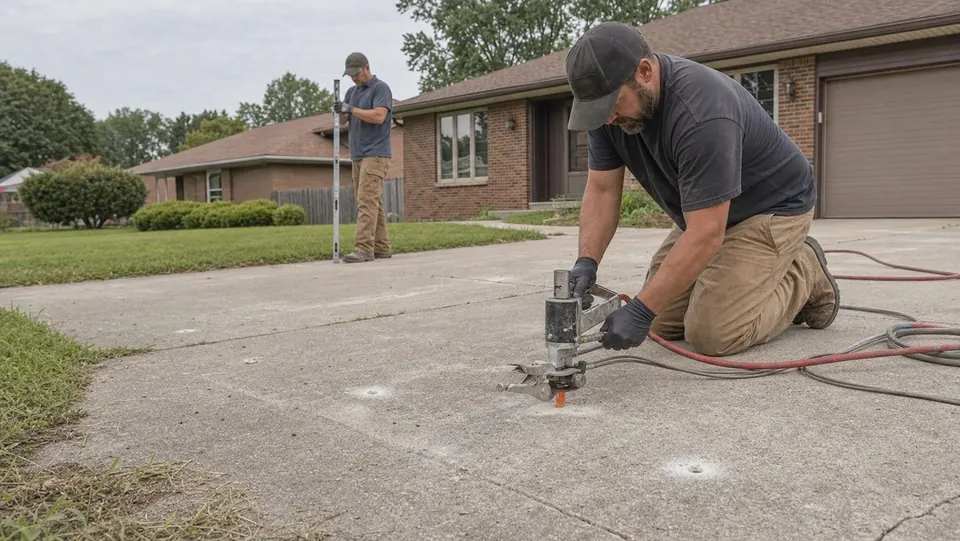
Drill small ports
On the day of the repair we drill small access holes at planned points across the settled slab.
04
Lift in stages
Expanding polyurethane fills the voids and raises the concrete gradually while we watch the transitions.
05
Patch & clean up
Ports are patched, the area is cleaned, and the surface can usually be used again soon after.
Services in Spring Hill
Concrete lifting services available in Spring Hill, KS.
Metro Wide lifts and stabilizes most types of flatwork. Choose a service to learn how the repair works.
Does it matter whether I'm on the Johnson County or Miami County side?
Not for our work. We serve all of Spring Hill, and the process is the same on both sides of the county line. Soil and settling conditions are similar across town; what matters more is whether your home is newer or older, where water drains, and the condition of the concrete. Text photos with your address to get started.
Why are the sidewalks over utility lines sinking?
When utilities are installed, a trench is dug and backfilled. If that backfill isn't fully compacted, it continues to settle for years, and any concrete across it drops along the line of the trench. Foam can fill the void and lift the slab. If the walk is in a public right-of-way, check with the city about who is responsible for repairs before scheduling work.
Is lifting worth it if my driveway is only slightly uneven?
Often, yes. Even a lip of half an inch or so can catch toes and snow shovels and let water run under the slab. Lifting a slightly settled panel is usually a smaller job than one that has dropped several inches, and addressing it early can keep the void from growing. Send a photo with a tape measure at the joint so we can see the difference.
How much does concrete leveling cost in Spring Hill?
Pricing depends on the size of the slab, how far it has settled, how much void space is underneath, access, and how many areas need work, so we do not publish a flat price. Text photos, rough measurements, and your Spring Hill address and we can usually provide a remote quote. Leveling is often far less disruptive than tearing out and replacing a slab that is still usable.
How soon can I use my driveway or walkway after leveling?
Polyurethane foam cures quickly, so foot traffic and normal use can usually resume much sooner than with newly poured concrete. The exact timing depends on the repair, and we give you specific instructions when the work is finished.
Will concrete leveling get rid of the cracks?
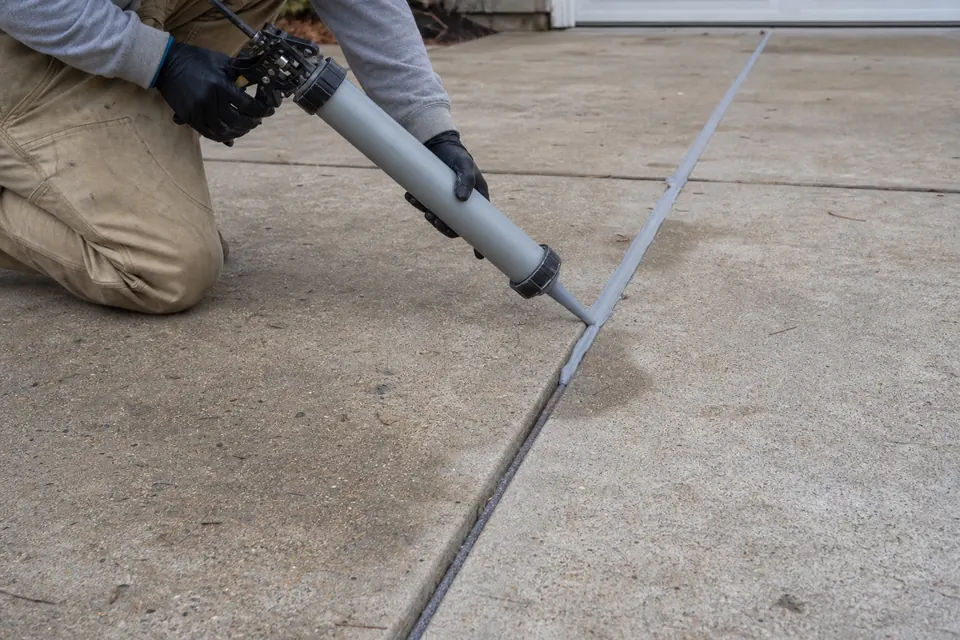
No. Lifting changes the position and support of the slab, but existing cracks stay visible. Raising the sections on either side can bring a crack back into alignment, and crack and joint sealing is available as a separate step to help keep water out.
Spring Hill Estimate
Find out if your Spring Hill concrete can be saved.
Text a wide photo, a close-up of the uneven area, a tape measure showing the drop, and your address. We will review it and follow up with a quote.
We accept Visa, Mastercard, American Express, Discover, Venmo, cash, and checks. Ask about payment details when scheduling your project.
Kansas City Metro Coverage
Explore our general service area.
Zoom, drag, or select a marker to explore communities within Metro Wide’s 75-mile Kansas City service radius. Scheduling varies by address and project type.
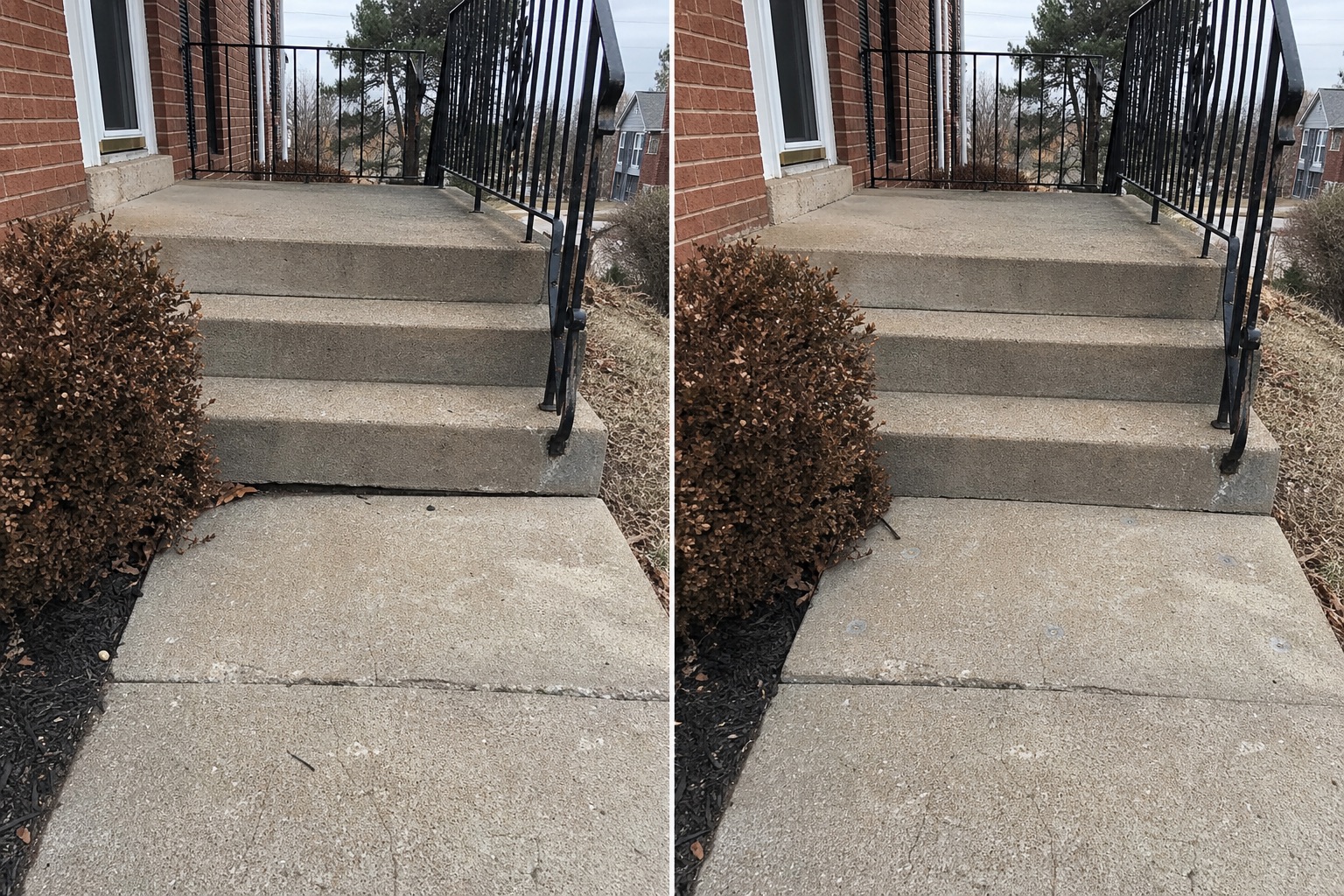
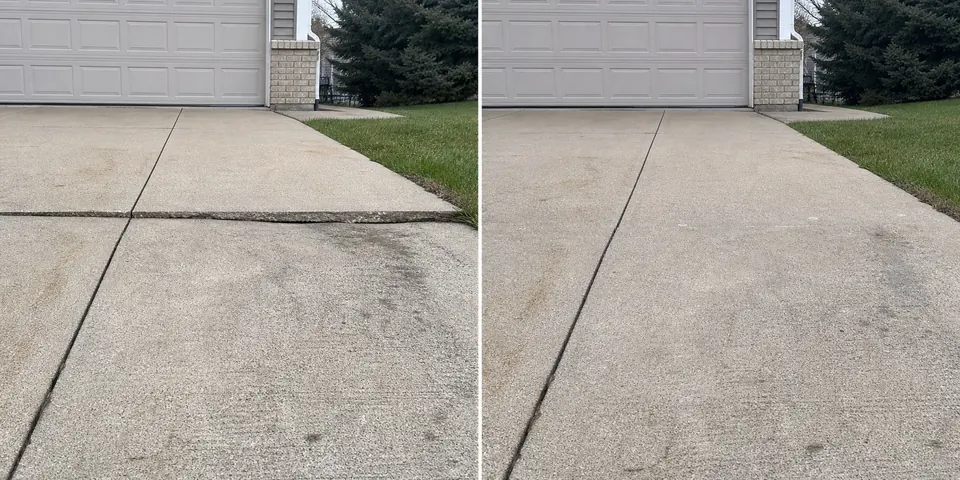 Driveway leveling
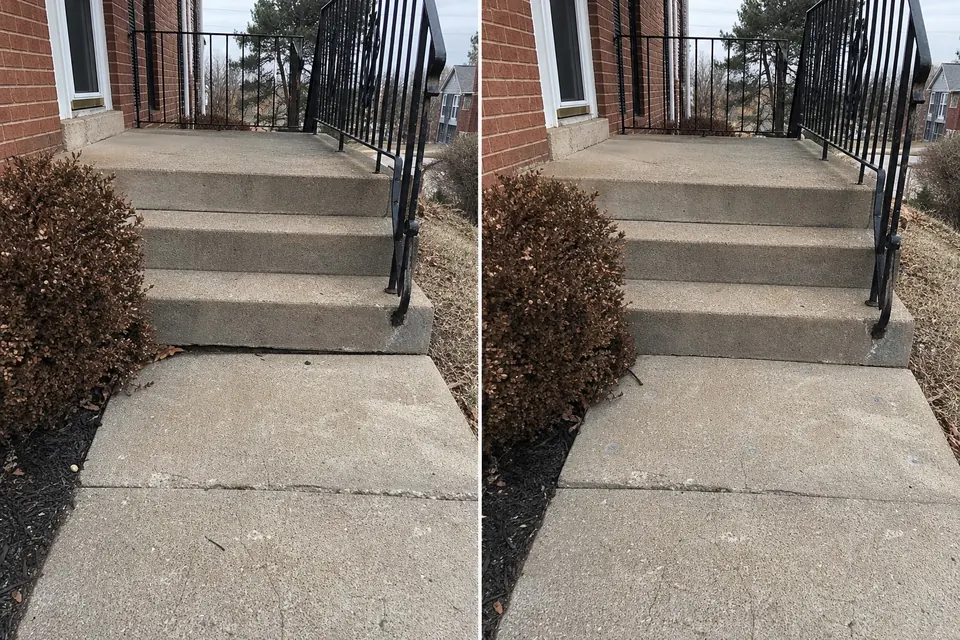 Steps leveling
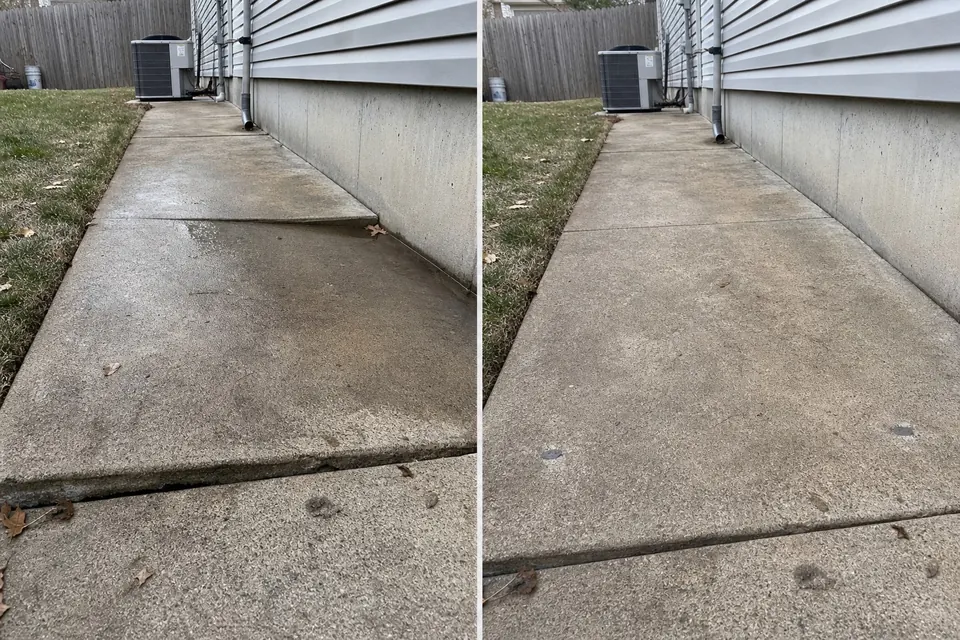 Porch & stoop leveling
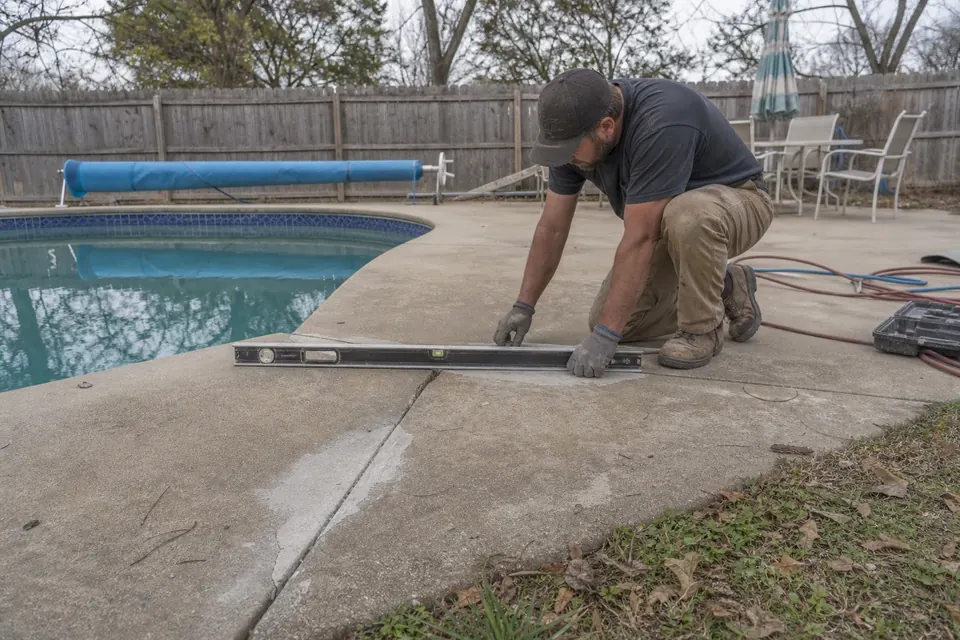 Pool deck leveling
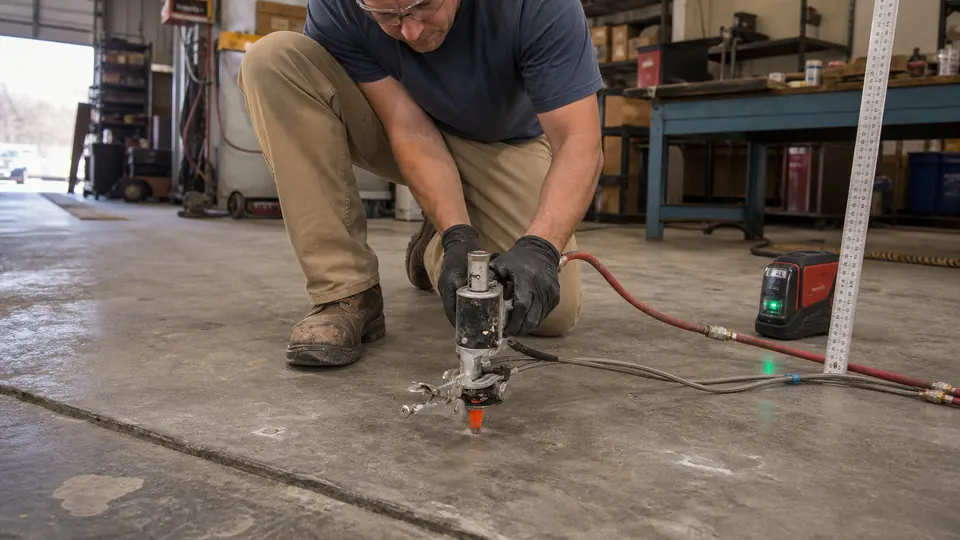 Concrete slab leveling
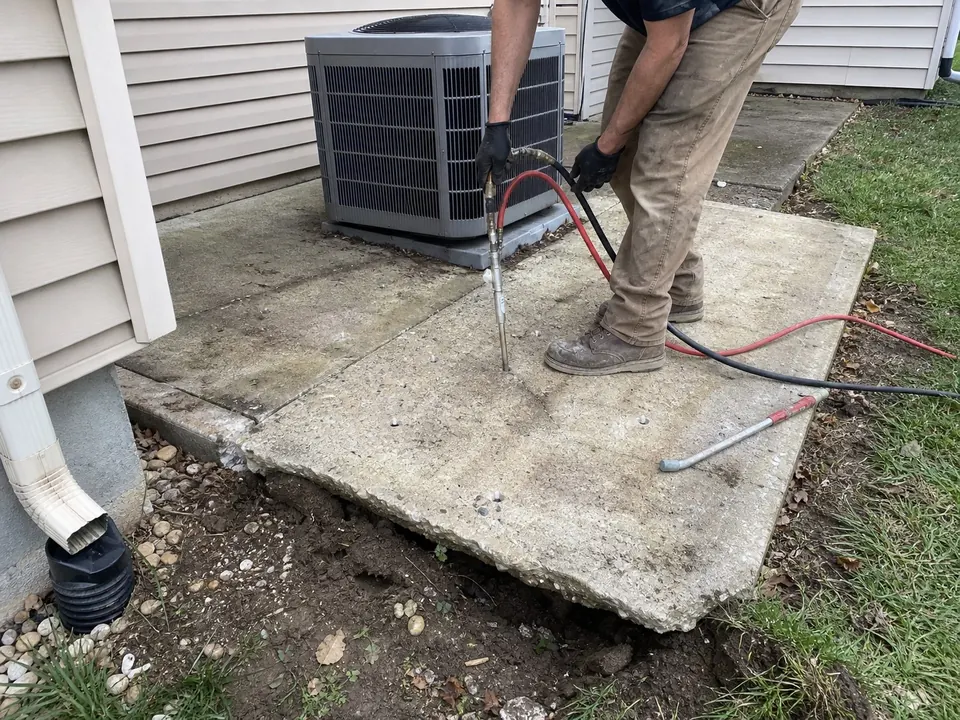 Void filling
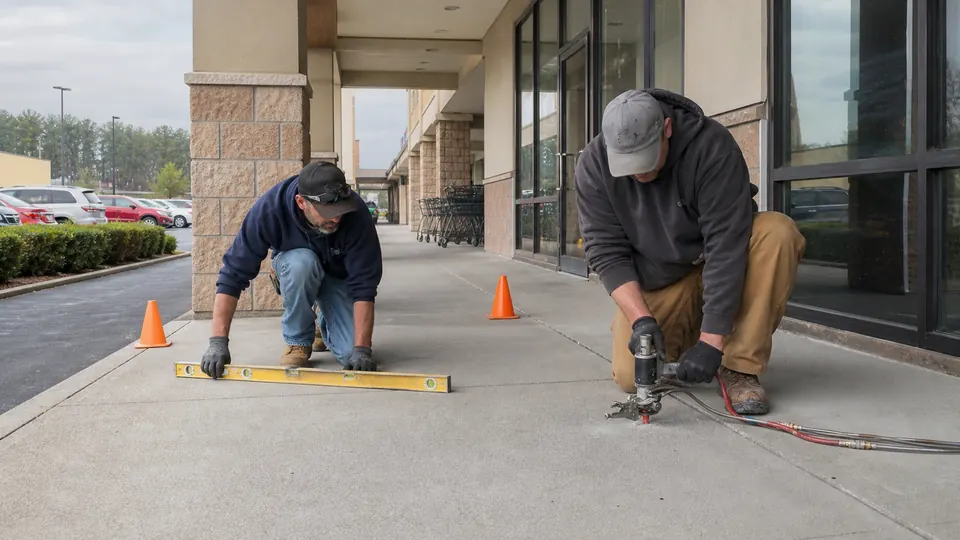 Commercial concrete leveling
 Crack & joint sealing