Olathe homeowners call us when a driveway panel drops at the garage, a front walk tips toward the house, or a patio starts holding water. Metro Wide lifts that settled concrete with polyurethane foam injected through small ports, so the slab you already have can stay.
As the Johnson County seat, Olathe has a little of everything: older homes on tree-lined streets near the downtown courthouse, ranch and split-level neighborhoods built through the 1970s and 1980s, and large newer subdivisions spreading west toward K-7 and south past 151st Street. Each of those housing eras tends to show settling in its own way, and the concrete around a house is usually where it shows up first.
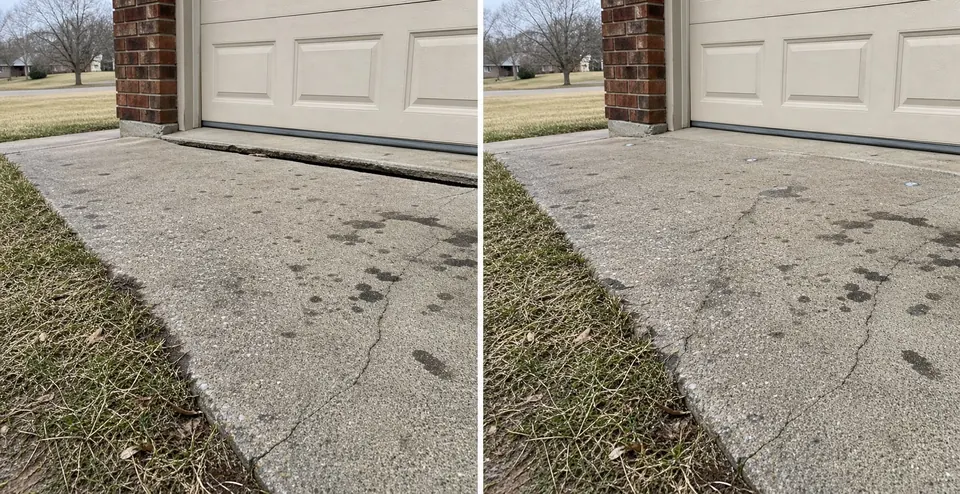
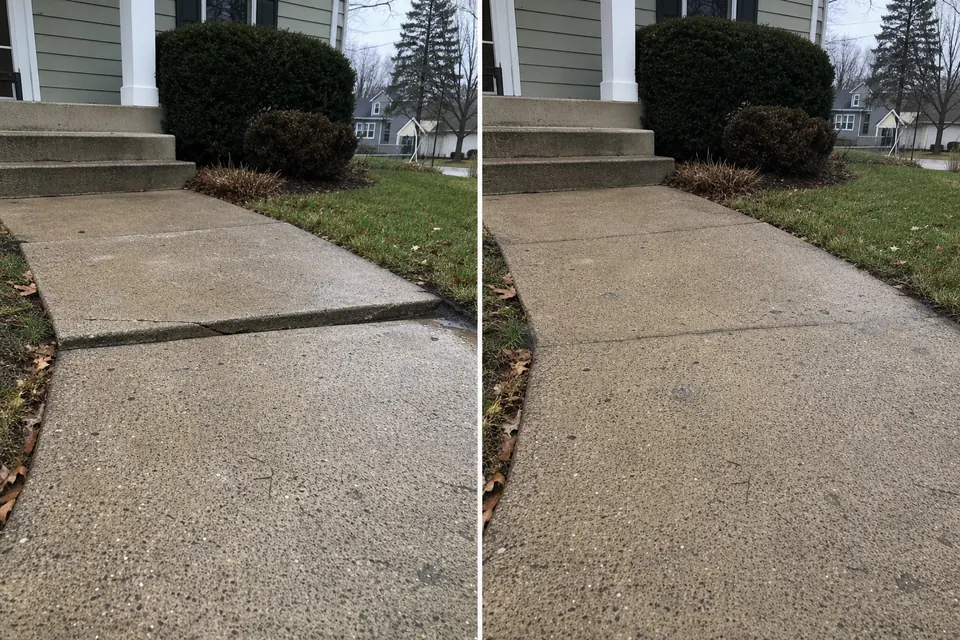
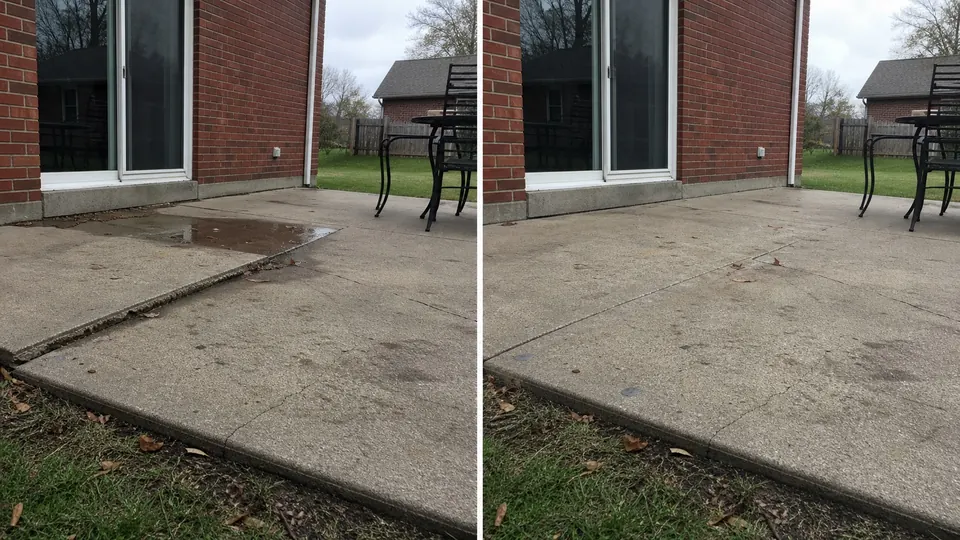
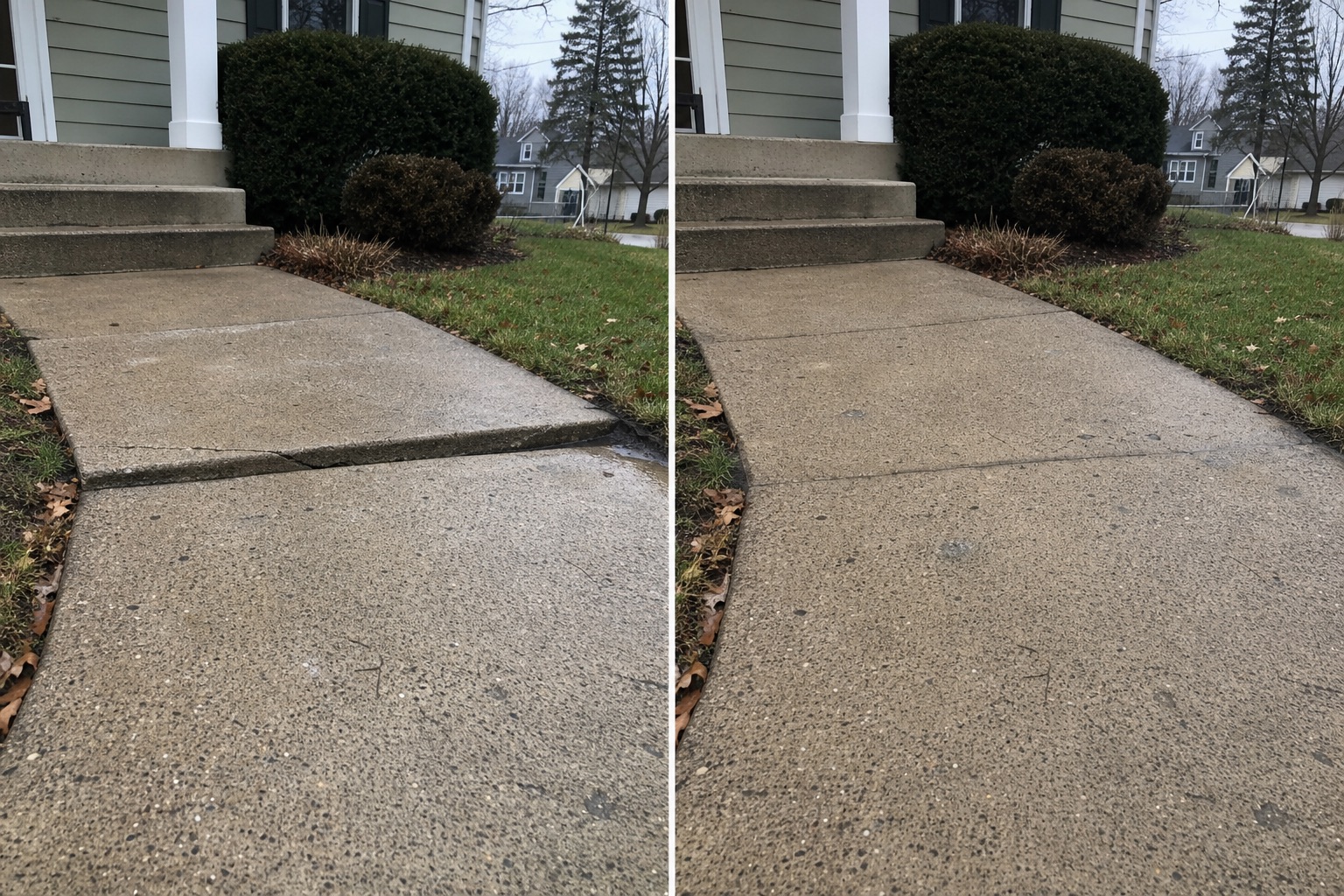
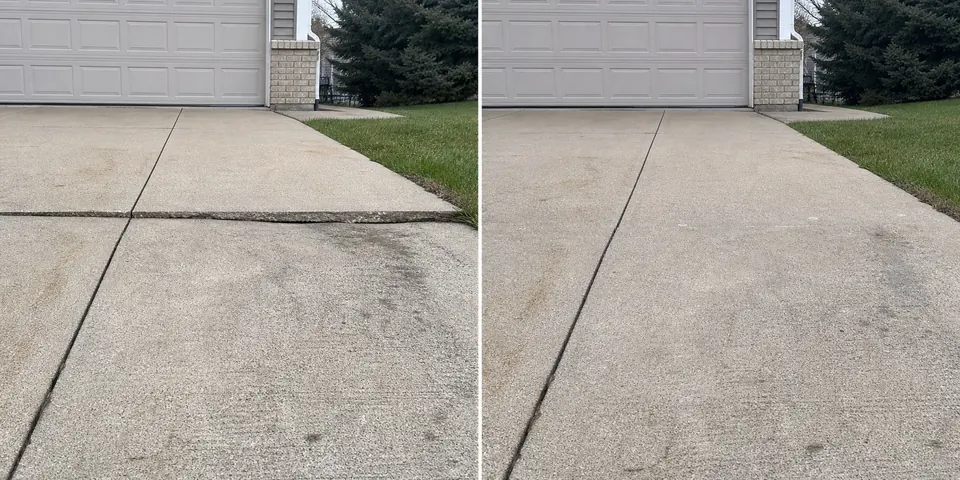
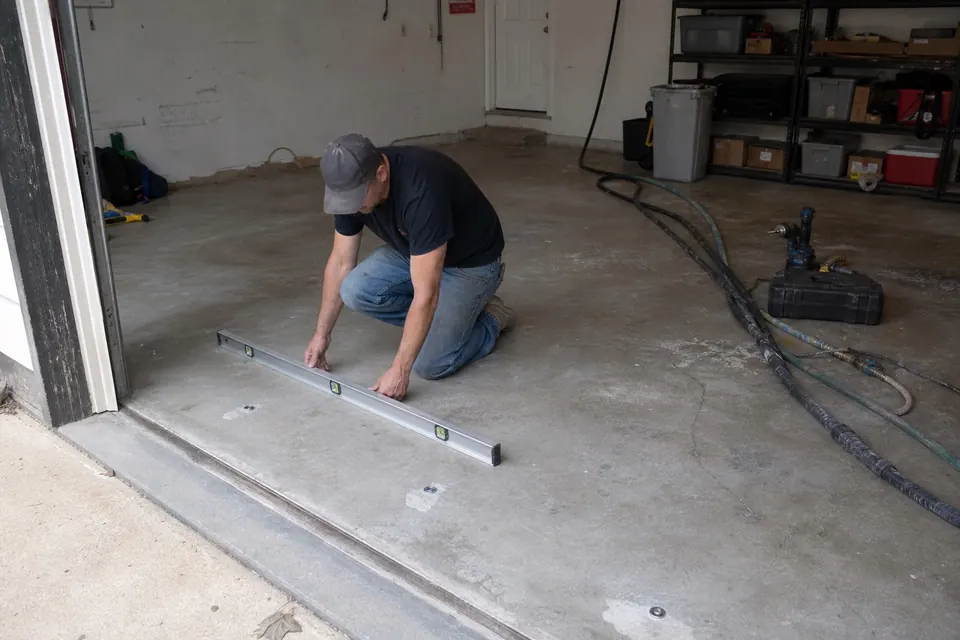
Most of the calls we get here involve everyday flatwork: a driveway that has sunk where it meets the garage slab, a sidewalk square that has dropped and now catches a toe, a back patio that tilts toward the foundation, or a garage floor with a step at the control joint. Polyurethane foam leveling raises those slabs from below through small ports, without breaking out the concrete or waiting days for a new pour to cure.
We also work on commercial properties, including office and light industrial sites along the I-35 corridor where sidewalks and entries carry steady foot traffic. Residential lifts are backed by our 2-year warranty.
Olathe at a glance
Location: Olathe, KS, Johnson County
Distance: about 20 miles southwest of downtown Kansas City
Method: polyurethane foam lifting through small ports
Estimates: free, often by text from your photos
Warranty: 2 years on residential lifting
Properties: residential and commercial
Olathe sits roughly 20 miles southwest of downtown Kansas City, well inside Metro Wide’s 75-mile coverage radius. Scheduling depends on the address and the size of the project, and a remote quote from your photos lets us plan the trip before we arrive.
Local Conditions
Why concrete settles in Olathe.
Olathe sits on rolling upland ground drained by Indian Creek, Cedar Creek and their smaller branches. The soils across much of the city are silty clays that swell when they soak up spring rain and shrink back when the ground dries out in July and August. Each cycle leaves a little less soil in contact with the bottom of the slab. Add a few dozen winters of freezing and thawing, and the voids under a driveway or walk get large enough for the concrete to drop.
Lots near the creek valleys and in the newer subdivisions on the west side add another factor: placed fill. When a builder grades a lot, the soil pushed in around the foundation and under the driveway approach is rarely as dense as undisturbed ground, and it keeps compressing for years. That is why a garage apron or the walk beside a three-car garage often settles while the rest of the driveway holds.
Drainage ties it together. Downspouts that empty next to a slab, sump lines discharging onto a walk, and sprinklers that overspray the driveway edge all wash fine soil out from underneath. When we lift a slab, we point out the water sources we see so the problem is less likely to come back.
Signs your slab has lost support
A lip or step-up at a driveway, sidewalk, or garage joint
A patio or walk that tips toward the house
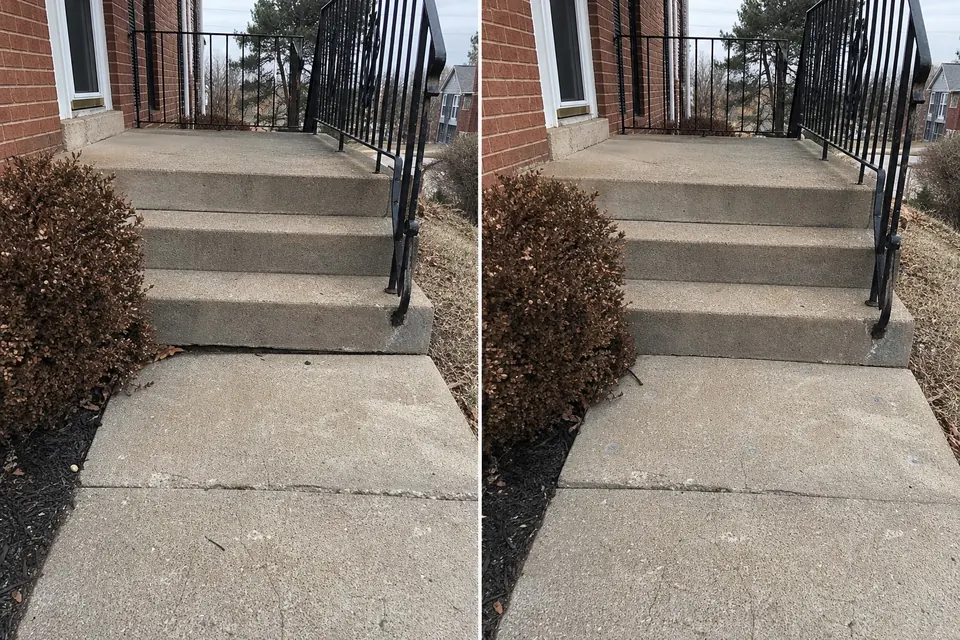
Gaps opening between steps, stoops, and the foundation
Water pooling on a slab or flowing toward the home
Hollow sounds or visible washout along a slab edge
Common Olathe Projects
The concrete we lift most often in Olathe.
Every slab is different, so we start with what is happening at your property. These are the repairs Olathe property owners ask us about most.
Three-car garage approaches
Many Olathe homes built since the 1990s have wide driveways that meet the garage over backfilled soil. When the panels nearest the garage drop, they leave a lip at the door and send water back toward the slab. Lifting the apron restores the transition without tearing out the whole drive.
Sidewalk squares on older streets
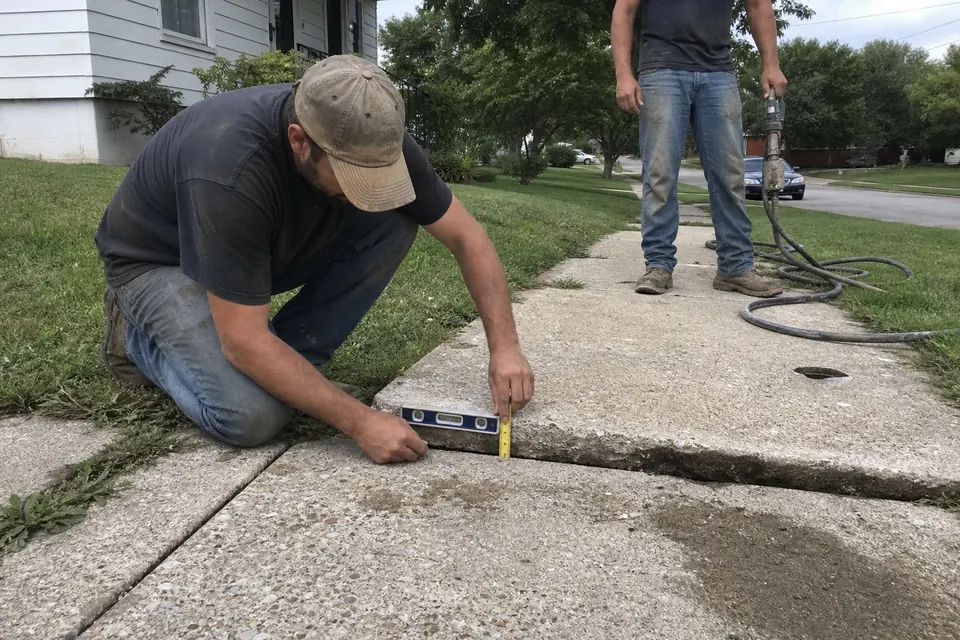
In the established neighborhoods around downtown, walks often have uneven joints from decades of settling. Raising the low square to meet its neighbor removes the trip edge. If the walk is in the public right-of-way, check with the city about who is responsible for repairs before scheduling.
Patios that hold water
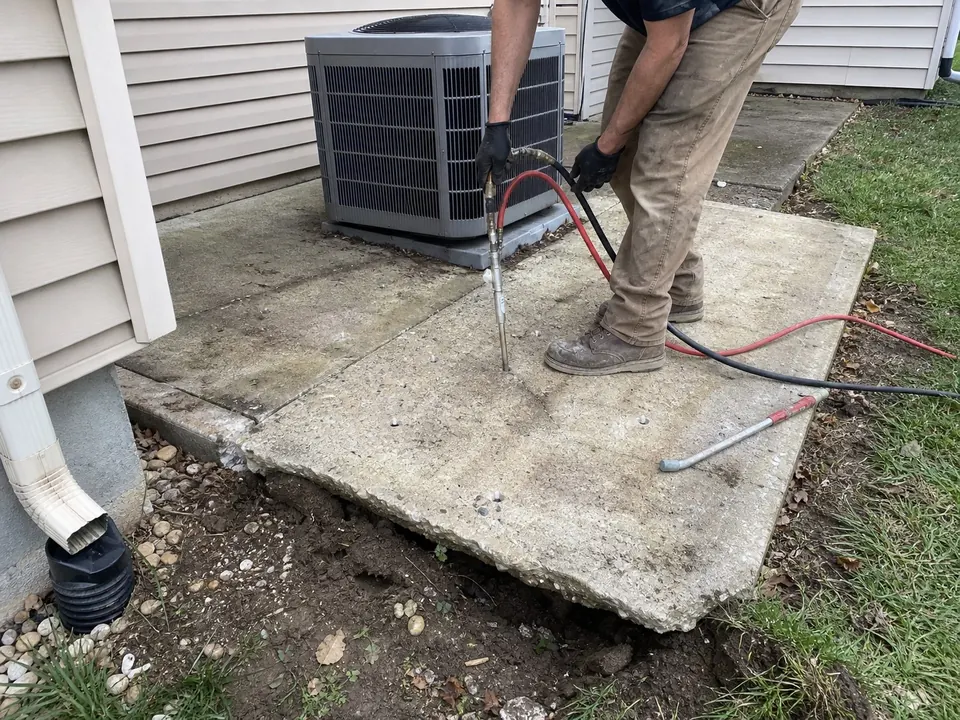
Back patios poured on loosely compacted soil beside the foundation often sink on the house side, leaving a puddle against the wall after every storm. We lift the low edge to bring back slope away from the home where the slab and surrounding grades allow it.
Commercial and light industrial slabs
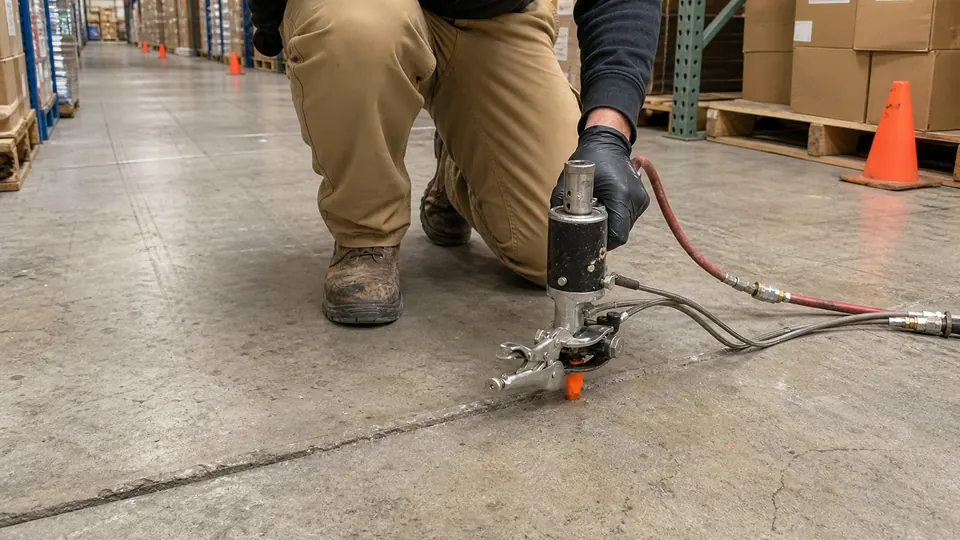
Offices, shops and warehouses along the I-35 corridor deal with settled sidewalks, entry pads and approaches. Foam leveling corrects many of these with less disruption than removal and replacement, and a lifted slab usually returns to service much sooner than new concrete would.
Our Olathe Leveling Process
What happens on the day of your repair.
01
Send photos
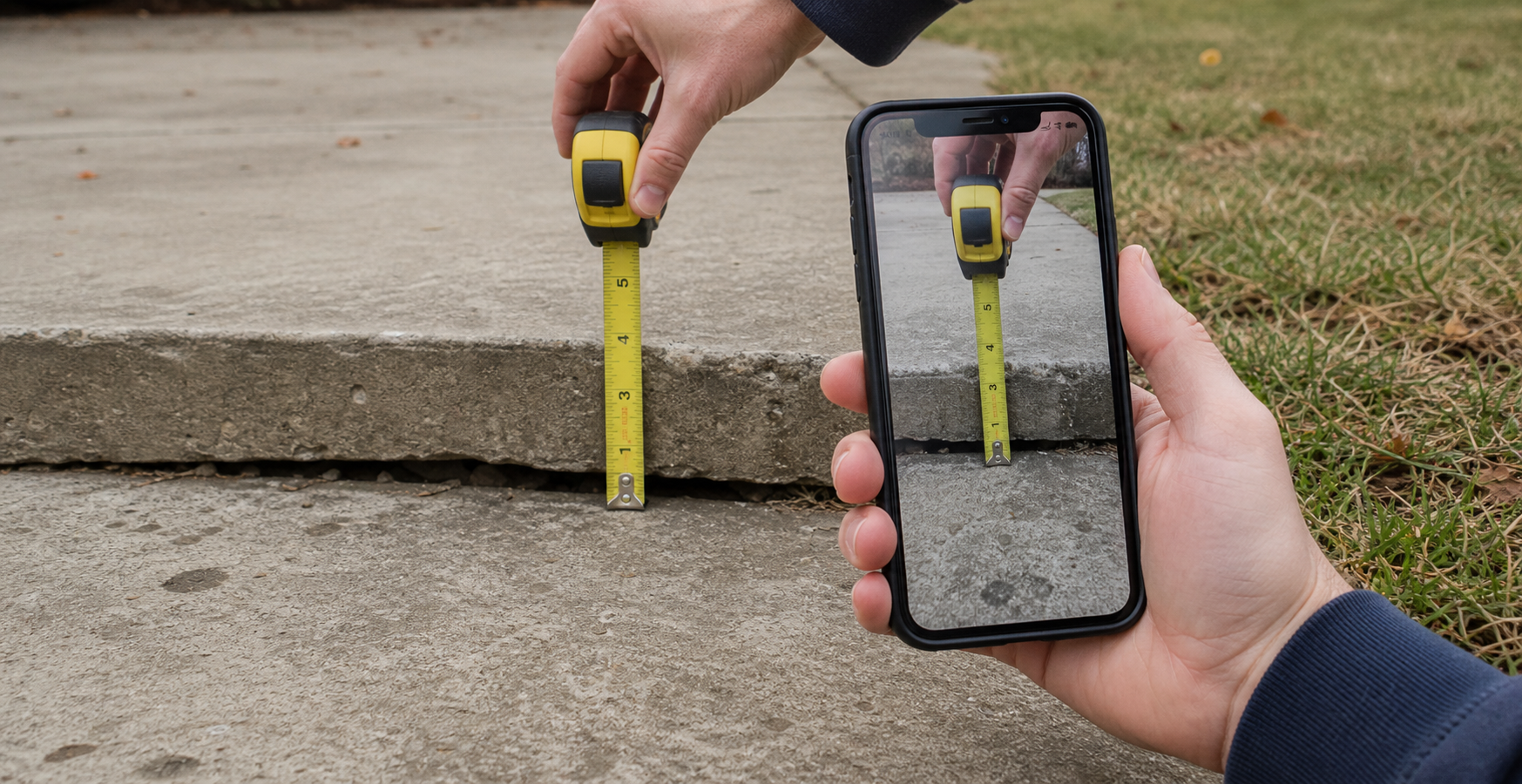
Text a wide shot, close-ups of the low joints, a tape measure showing the drop, and the address.
02
Review & quote
We look at the settlement, slab condition, and drainage, and follow up with a quote or questions.
03
Drill small ports
On the day of the repair we drill small access holes at planned points across the settled slab.
04
Lift in stages
Expanding polyurethane fills the voids and raises the concrete gradually while we watch the transitions.
05
Patch & clean up
Ports are patched, the area is cleaned, and the surface can usually be used again soon after.
Services in Olathe
Concrete lifting services available in Olathe, KS.
Metro Wide lifts and stabilizes most types of flatwork. Choose a service to learn how the repair works.
My house is near one of Olathe's creeks. Does that make settling more likely?
It can. Homes near Indian Creek, Cedar Creek and their tributaries often sit on lots that were cut and filled to level them, and the ground tends to stay wetter. Both conditions help soil shift under a slab. That does not mean the concrete can't be lifted. If the slab is still in reasonable shape, foam can fill the voids and raise it, and we will mention any drainage changes that would help.
Is it worth lifting a driveway that already has cracks?
Often, yes. A cracked panel that is still in large pieces can usually be lifted, and the cracks can be sealed afterward as a separate service. Lifting will not make the cracks disappear. If the concrete is broken into many small pieces or crumbling at the surface, replacement may be the better choice, and we will tell you that when we review your photos.
How do I get a quote for my Olathe driveway or patio?
Send us a few photos by text: one wide shot showing the whole slab, close-ups of the joints that have dropped, and a tape measure showing the height difference if you can. Include your address. We can often prepare a quote from those photos alone, and we will reach out if anything needs a closer look before we schedule.
Do you offer a warranty?
Yes. Residential concrete lifting from Metro Wide is backed by a 2-year warranty. We will explain what is covered for your project when we provide the quote.
When is replacement a better choice than leveling?
If the concrete is badly broken, crumbling, severely spalled, or cannot move without damaging a fixed structure, replacement may be the better investment. We tell you when a slab is not a good lifting candidate rather than recommending a repair that will not hold up. Our leveling vs. replacement guide covers the trade-offs.
Can leveling fix water running toward my foundation?
Sometimes. Raising a patio, walk, or driveway panel that settled toward the house can restore some pitch away from the foundation. Drainage also depends on gutters, downspouts, and surrounding grades, so we point out anything that is likely to undo the repair.
Olathe Estimate
Find out if your Olathe concrete can be saved.
Text a wide photo, a close-up of the uneven area, a tape measure showing the drop, and your address. We will review it and follow up with a quote.
We accept Visa, Mastercard, American Express, Discover, Venmo, cash, and checks. Ask about payment details when scheduling your project.
Kansas City Metro Coverage
Explore our general service area.
Zoom, drag, or select a marker to explore communities within Metro Wide’s 75-mile Kansas City service radius. Scheduling varies by address and project type.
 Driveway leveling
 Garage floor leveling
 Steps leveling
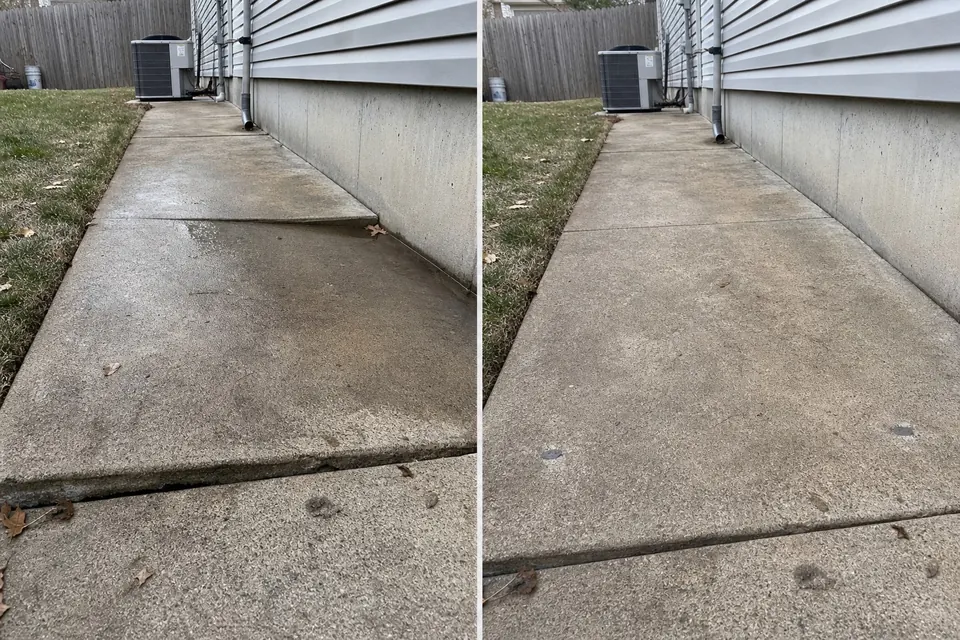 Porch & stoop leveling
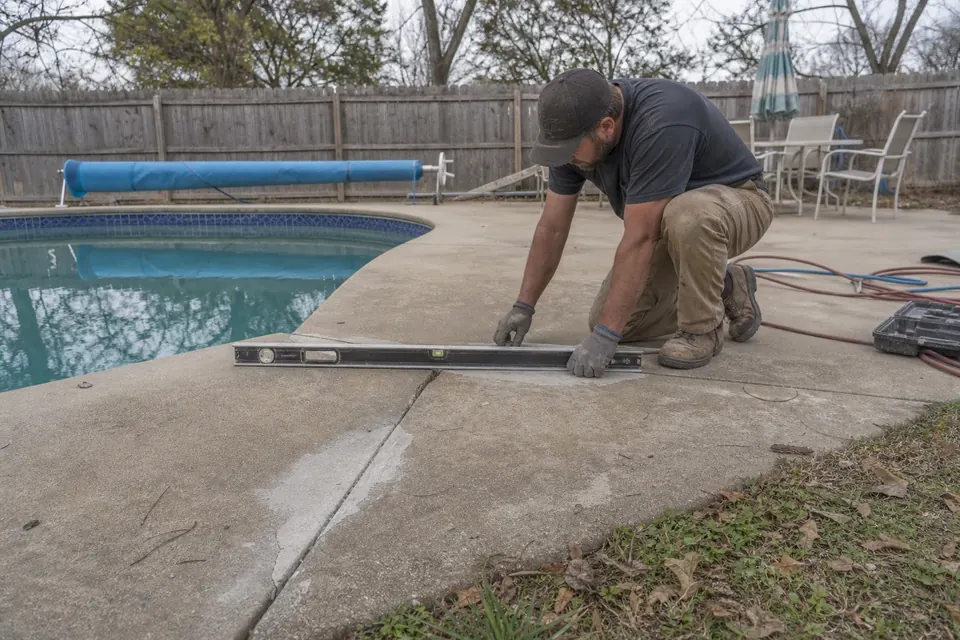 Pool deck leveling
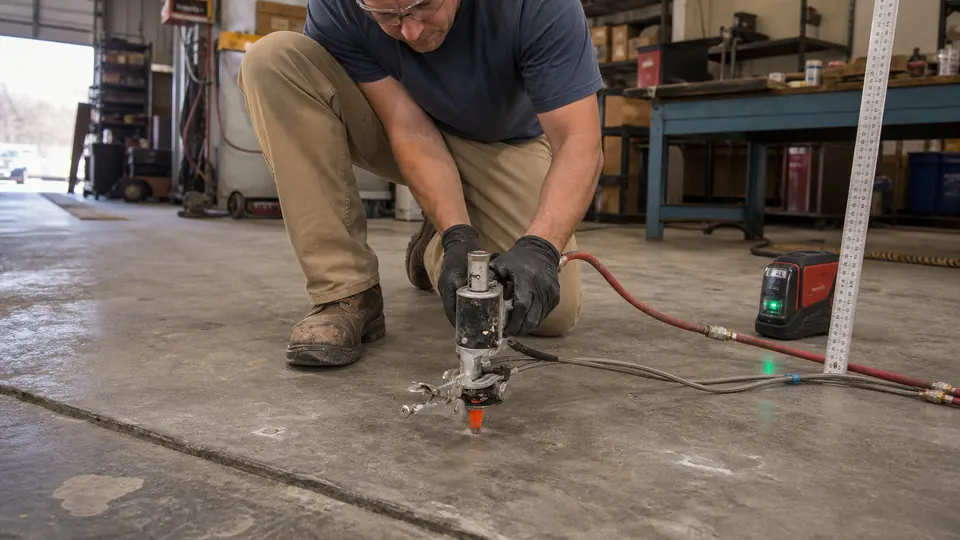 Concrete slab leveling
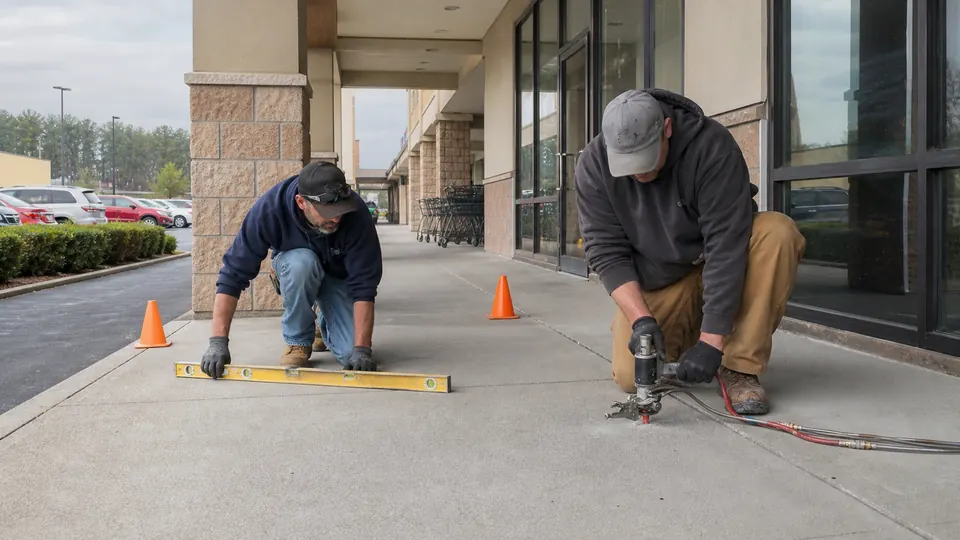 Commercial concrete leveling
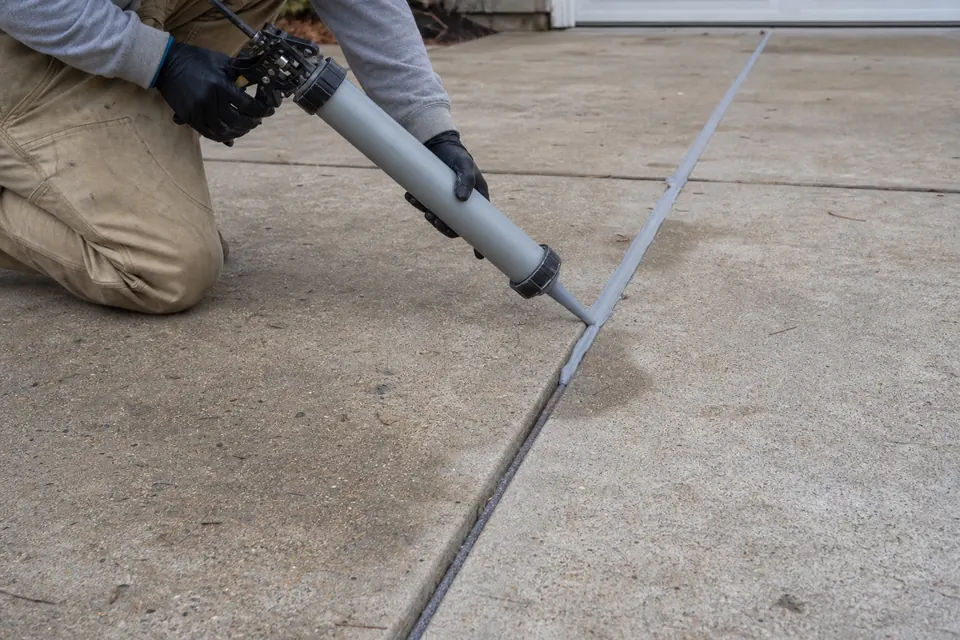 Crack & joint sealing