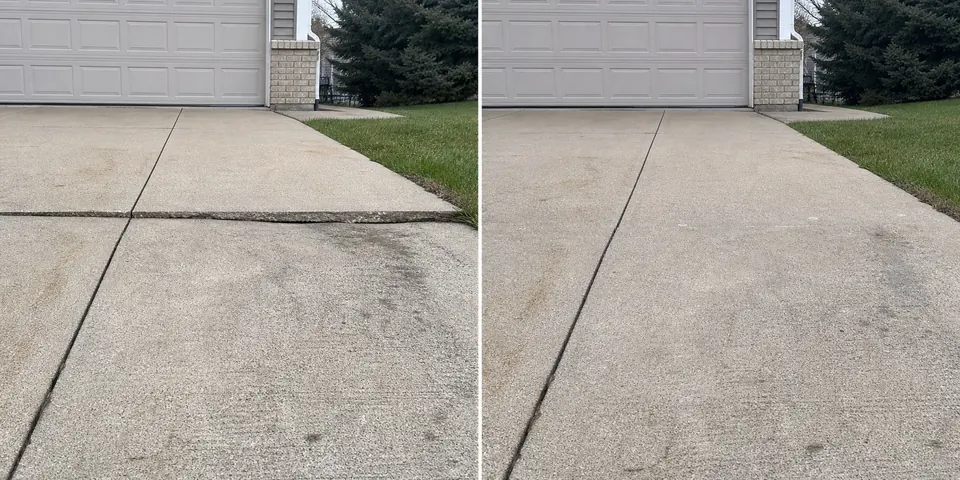
Steep driveways
Driveways that climb from the street often settle on the downhill edge or open a gap at a joint. Lifting the dropped section back into line reduces the edge and helps water run down the surface of the drive instead of under it.
Polyfoam Concrete Lifting · Atchison County
Atchison's river bluffs and steep streets make for striking views and a lot of concrete that has shifted. Metro Wide lifts settled driveways, walks, patios and garage floors with polyurethane foam, and we can often quote from photos before making the trip.
Concrete Leveling Near You
Atchison is the county seat of Atchison County, built on the bluffs and hills along the Missouri River northwest of Kansas City. It is home to Benedictine College and is known as the birthplace of Amelia Earhart. The town has a large stock of historic homes, many from the late 1800s, along with mid-century neighborhoods and newer houses on the outskirts.
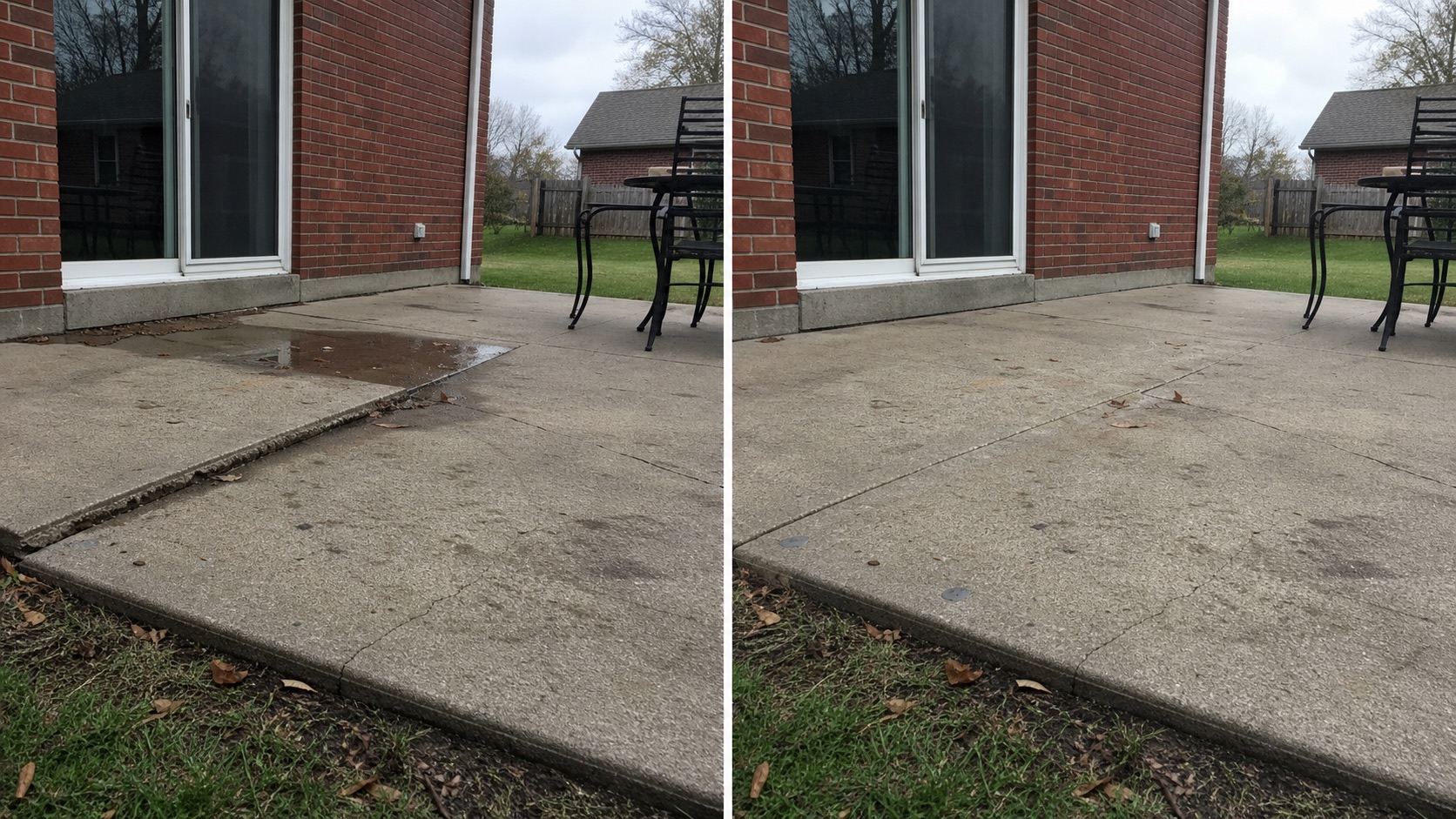
Steep terrain is the defining feature here. Many Atchison homes have driveways that climb from the street, retaining walls, long flights of steps and walks that follow the slope. When concrete on that kind of ground settles, it tends to drop on the downhill side or slide slightly away from the house. We also hear about patios behind older homes that have tipped, and garage floors that have sunk at the door.
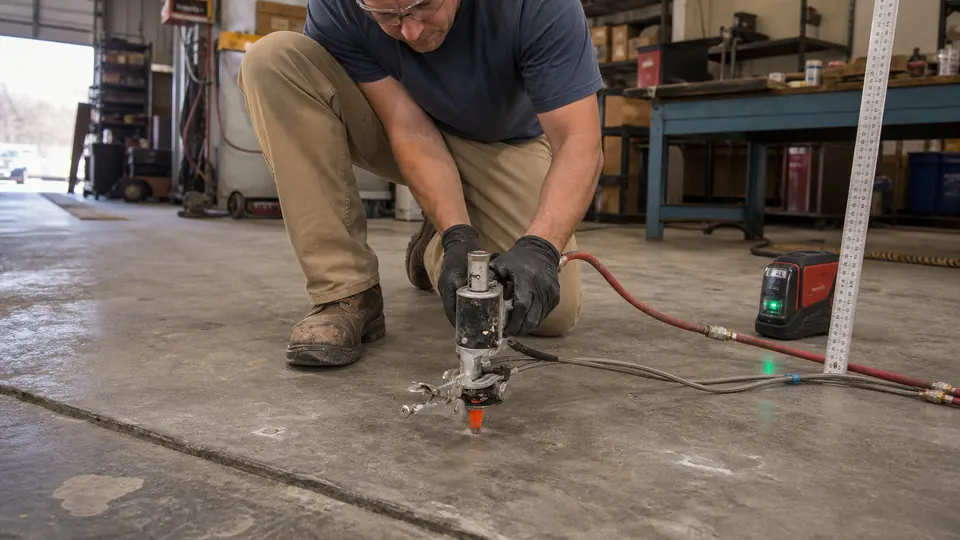
Foam leveling lifts intact slabs from below through small ports. There is no heavy equipment to drive up a steep driveway and no concrete to break out and haul off a tight lot. Residential lifts carry our 2-year warranty.
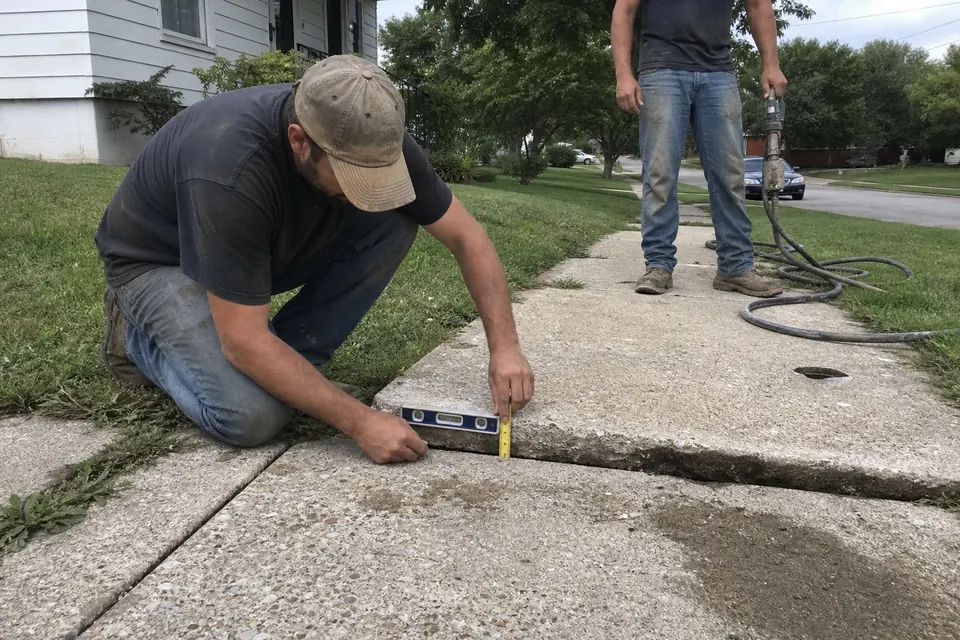
At roughly 43 miles northwest of downtown Kansas City, Atchison is in the outer part of our 75-mile coverage radius. We group projects by route, so starting with photos and measurements lets us quote the job remotely and schedule it efficiently.
Local Conditions
The bluffs along the Missouri River near Atchison are built largely of loess, a fine, windblown silt that can stand in steep banks when dry but loses strength when it becomes saturated. Under a slab, that means water from roofs and steep runoff can soften the soil and let it compress or wash away. Clay layers in the uplands add seasonal shrink-swell movement.
Hillside construction compounds the problem. Many older homes were built on terraced lots, with fill placed behind retaining walls and under drives and walks. Over a century or more, that fill continues to settle, and leaning walls or failed drains can let it move. Concrete across those areas often shows the results first.
Water moving downhill does a lot of the damage. Runoff from streets and neighboring lots, gutters emptying on steep ground, and old drain lines can all undercut a slab. Freeze-thaw cycles each winter then widen any gaps. We will point out drainage issues and any retaining wall concerns we notice so you can address them along with a lift.
Common Atchison Projects
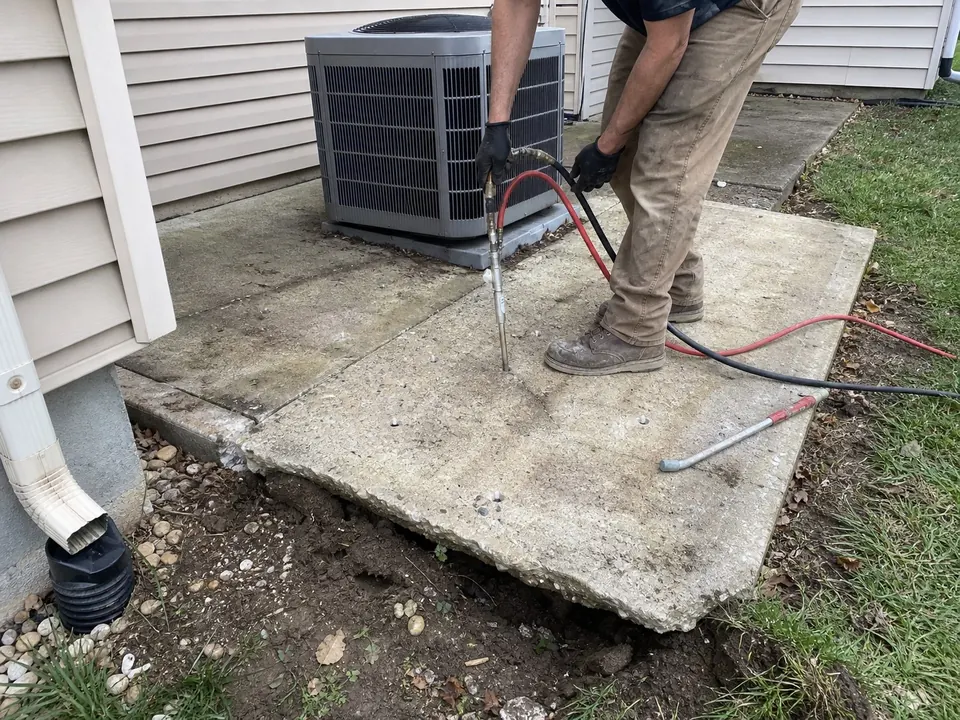
Every slab is different, so we start with what is happening at your property. These are the repairs Atchison property owners ask us about most.
Driveways that climb from the street often settle on the downhill edge or open a gap at a joint. Lifting the dropped section back into line reduces the edge and helps water run down the surface of the drive instead of under it.
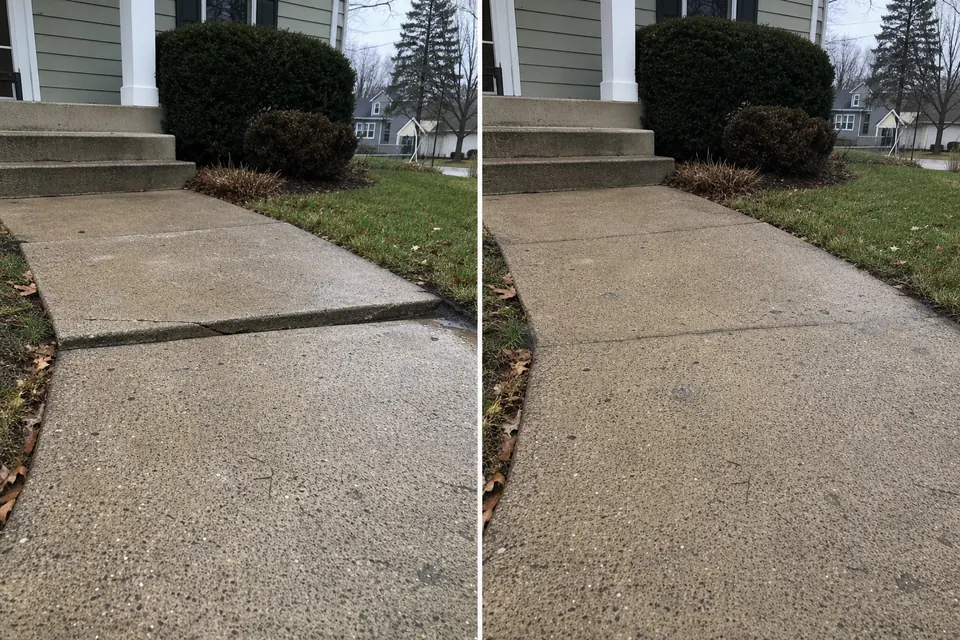
Walks running along a retaining wall can drop as the soil behind the wall shifts. Foam can lift an intact walk, but if the wall itself is leaning or failing, that needs attention first, and we will say so.
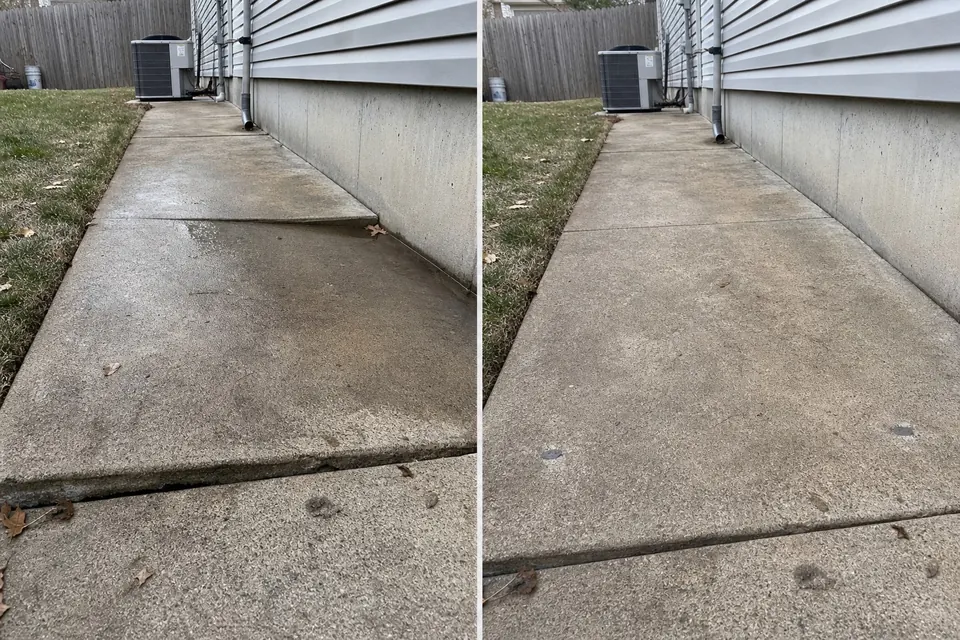
Older Atchison homes often have walks with squares that have settled at different rates over the years. Lifting the low squares smooths the path to the door while keeping the original concrete and the look that goes with the house.
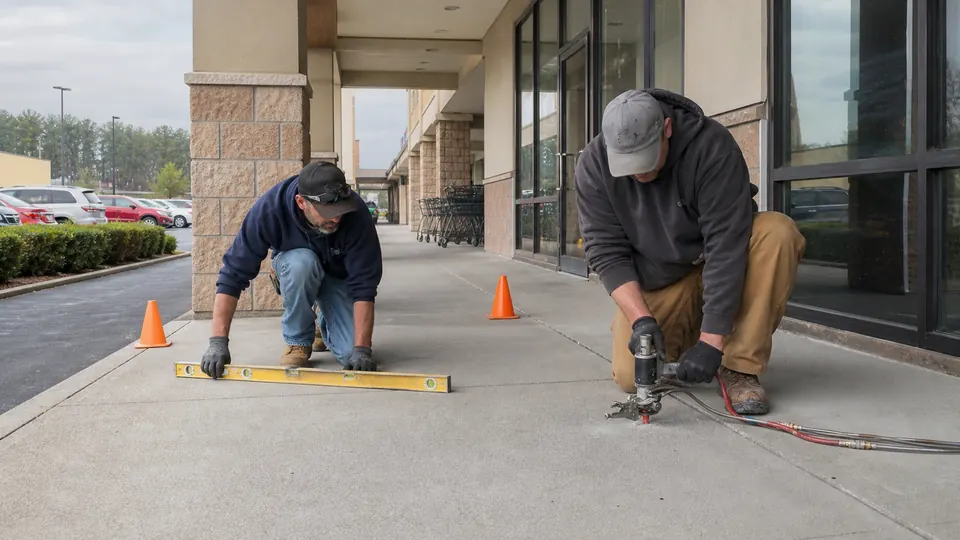
Businesses in downtown Atchison have entry walks and slabs that see daily foot traffic. Leveling settled sections can reduce trip hazards at the door with less disruption to customers than breaking out and replacing the concrete.
Our Atchison Leveling Process
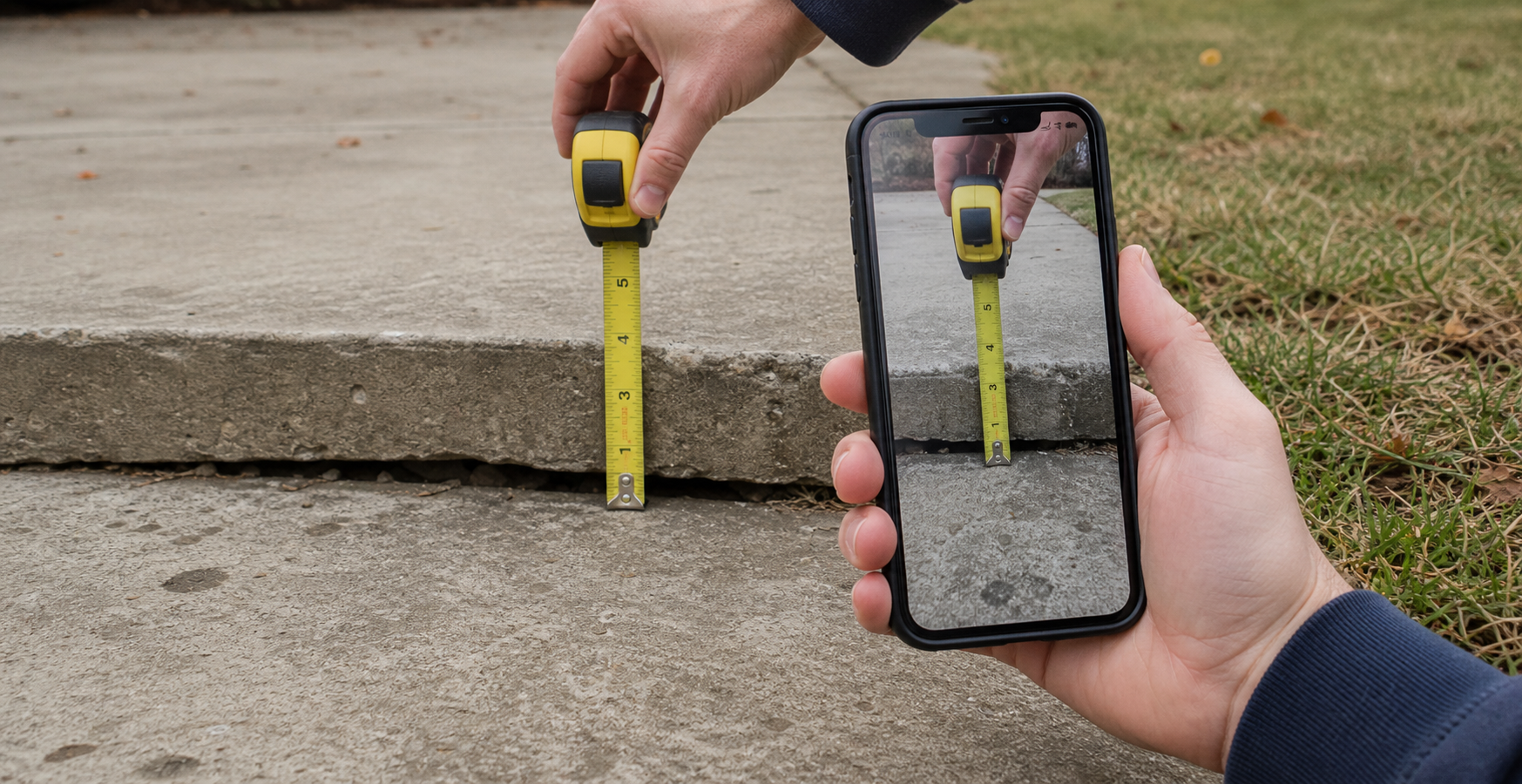
Text a wide shot, close-ups of the low joints, a tape measure showing the drop, and the address.
We look at the settlement, slab condition, and drainage, and follow up with a quote or questions.
On the day of the repair we drill small access holes at planned points across the settled slab.
Expanding polyurethane fills the voids and raises the concrete gradually while we watch the transitions.
Ports are patched, the area is cleaned, and the surface can usually be used again soon after.
Services in Atchison
Metro Wide lifts and stabilizes most types of flatwork. Choose a service to learn how the repair works.
Driveway levelingDropped panels at the garage, street apron, and expansion joints. 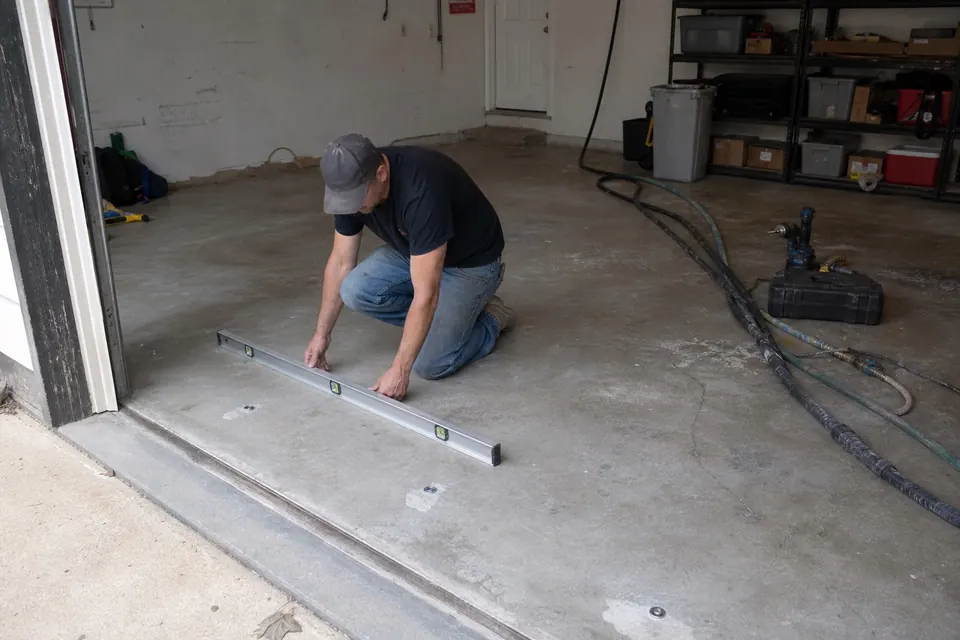 Garage floor levelingSettled garage slabs and the lip where the floor meets the driveway. Sidewalk & walkway levelingRaised or sunken joints that create trip hazards along walks.
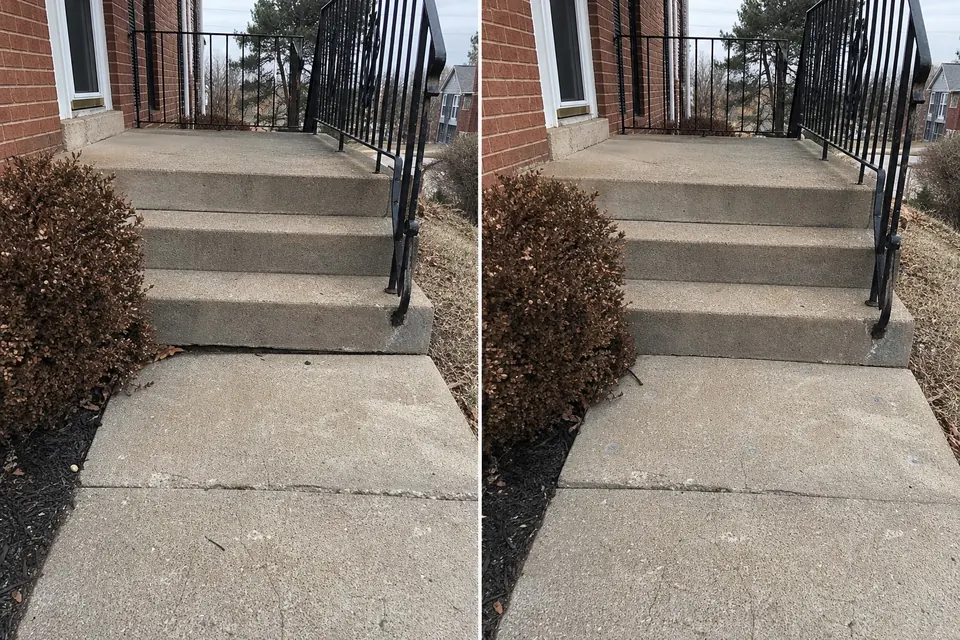 Steps levelingConcrete steps that have tipped, dropped, or pulled away from the house. Porch & stoop levelingFront porches and stoops that have settled at the door or foundation.
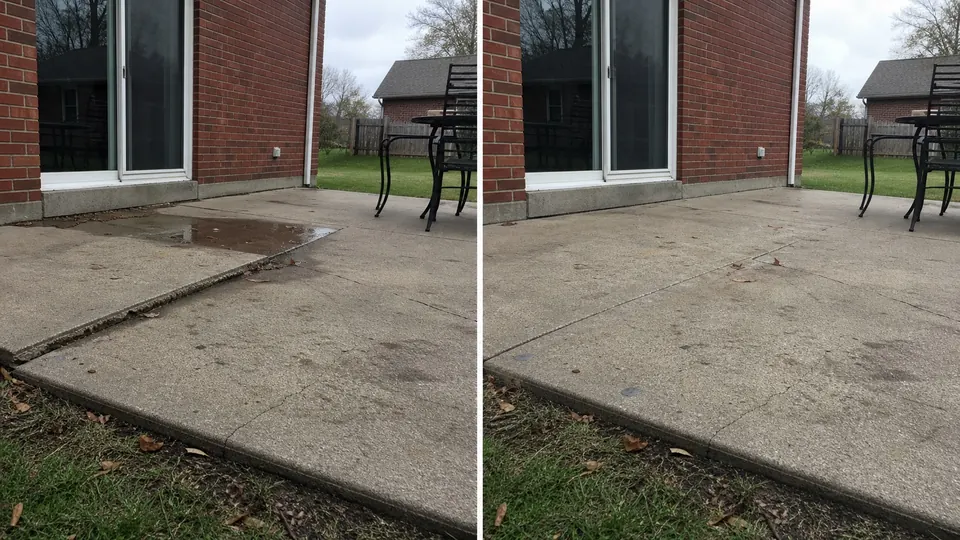 Patio levelingPatios that slope toward the house or have uneven sections.
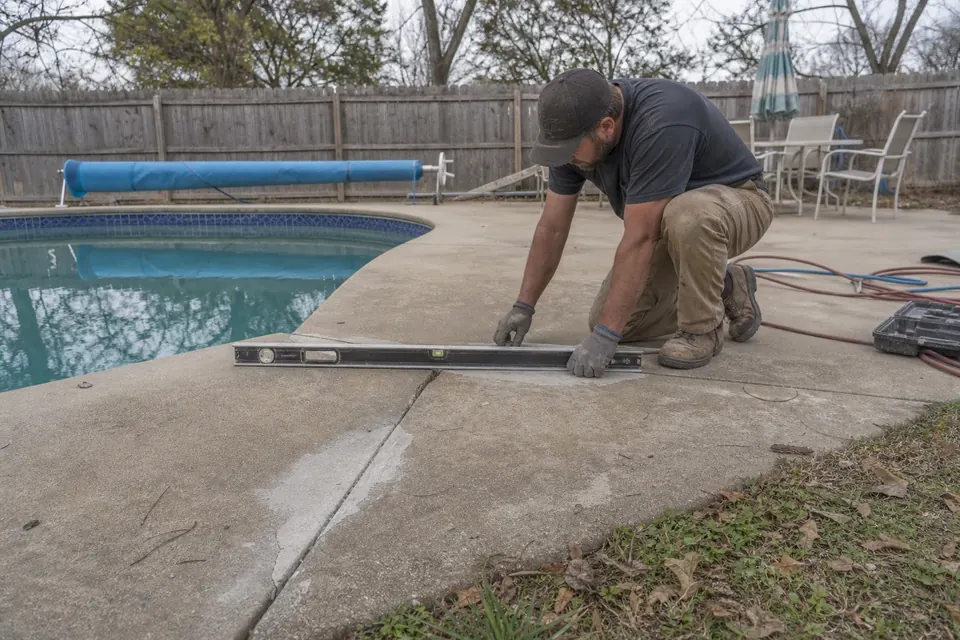 Pool deck levelingUneven pool deck panels and trip points around the water.
 Concrete slab levelingPads, shop slabs, and other flatwork that lost support. Void fillingHollow, washed-out areas under slabs that have not dropped yet. Commercial concrete levelingEntries, walks, warehouses, and loading areas with less downtime.
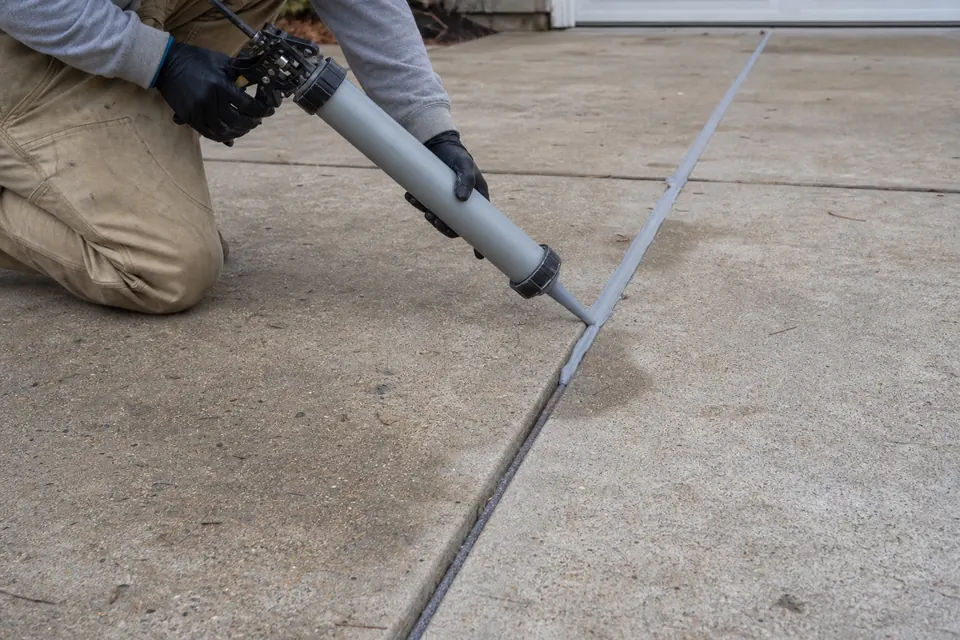 Crack & joint sealingSealing joints and cracks to slow water getting under the slab.
Comparing options? Read polyurethane vs. mudjacking, leveling cost vs. replacement, or see before & after photos.
Neighborhoods
ZIP codes: 66002
Nearby
Atchison Concrete Leveling FAQ
Yes. Atchison is within our general 75-mile service radius around Kansas City. Scheduling depends on your address and the project. A good first step is to text photos of the concrete along with your address, so we can review the job and send a remote quote before planning a visit. We will reach out if anything needs a closer look.
Often, yes. The slab doesn't need to be flat to be lifted; we bring it back into line with the surrounding concrete while keeping its intended slope. Steep sites need care with how water and soil move, and some slabs on very unstable ground may not stay put without drainage or wall repairs. We will look at your photos and tell you honestly whether lifting makes sense.
Steps and stoops sit on soil that was backfilled against the foundation, and on hilly lots that soil can also creep downhill over time. As it settles or moves, the steps tip away from the house. Solid concrete steps can often be lifted back toward the house, while hollow or masonry steps may need another repair. Photos from the side help us tell which you have.
Sometimes. Raising a patio, walk, or driveway panel that settled toward the house can restore some pitch away from the foundation. Drainage also depends on gutters, downspouts, and surrounding grades, so we point out anything that is likely to undo the repair.
Polyfoam lifting uses small access ports, much smaller than the holes used for traditional mudjacking. The number and placement depend on the slab. After the lift, the ports are patched.
Pricing depends on the size of the slab, how far it has settled, how much void space is underneath, access, and how many areas need work, so we do not publish a flat price. Text photos, rough measurements, and your Atchison address and we can usually provide a remote quote. Leveling is often far less disruptive than tearing out and replacing a slab that is still usable.
Atchison Estimate
Text a wide photo, a close-up of the uneven area, a tape measure showing the drop, and your address. We will review it and follow up with a quote.
Fast & Convenient
Send project photos, the address, and basic measurements. We can review the details remotely and follow up with a quote.
Text Project Photos Wide view · Close view · MeasurementText photos to 816-226-8707
Convenient Payment Options
We accept Visa, Mastercard, American Express, Discover, Venmo, cash, and checks. Ask about payment details when scheduling your project.
Kansas City Metro Coverage
Zoom, drag, or select a marker to explore communities within Metro Wide’s 75-mile Kansas City service radius. Scheduling varies by address and project type.
View the full service-area list →