Fairway's established streets of traditional mid-century homes have plenty of character, and plenty of concrete that has settled over the decades. Metro Wide lifts walks, stoops, driveways and patios with polyurethane foam, without tearing out the original slab.
Fairway is a small residential city in northeast Johnson County, neighboring Mission Hills, Prairie Village and Roeland Park. Much of it was developed by the J.C. Nichols Company in the years around World War II, and its streets are lined with traditional two-story homes, Cape Cods and ranches set back on well-kept lawns. The Shawnee Indian Mission State Historic Site sits within the city, and Shawnee Mission Parkway crosses its southern part.
Homes in Fairway tend to be a step up in size from the compact post-war houses just to the north, and many have been carefully renovated. Owners who have invested in a home's interior often want the exterior concrete to reflect that same care. Common requests include lifting a front walk that dips at every joint, raising a stoop that has pulled away from the house, and correcting a driveway that has dropped on its way back to the garage.
Polyurethane foam lifts the existing slab through small ports, so original concrete stays in place, and the repair blends in with the rest of the property better than a newly poured section usually does.
Fairway at a glance
Location: Fairway, KS, Johnson County
Distance: about 6 miles southwest of downtown Kansas City
Method: polyurethane foam lifting through small ports
Estimates: free, often by text from your photos
Warranty: 2 years on residential lifting
Properties: residential and commercial
Fairway is about 6 miles southwest of downtown Kansas City, close to the center of our service area, so it is a regular part of our schedule. Texting photos first is still the fastest way to get a quote.
Local Conditions
Why concrete settles in Fairway.
Fairway's soils are the same clay-heavy ground found across northeast Johnson County, shrinking during dry summers and swelling when wet. After many decades of those cycles, along with winter freeze-thaw, a lot of slabs have lost contact with the soil beneath them, especially along their edges and at joints where water gets in.
Landscaping plays a bigger role here than in many places. Fairway yards often have established foundation plantings, garden beds edged right up to walks, and irrigation systems added years after the concrete was poured. Sprinkler heads that overspray a walk, or beds that are watered heavily next to a driveway, keep the soil under the slab edge wet and can slowly carry it away. Large shade trees then dry the same soil out in late summer, so it swings between wet and dry more than open ground does.
We look at each situation individually. A slab that settled because soil shrank or washed out is usually a good candidate for foam. One being pushed up by a root may need the root addressed first, and we will say so.
Signs your slab has lost support
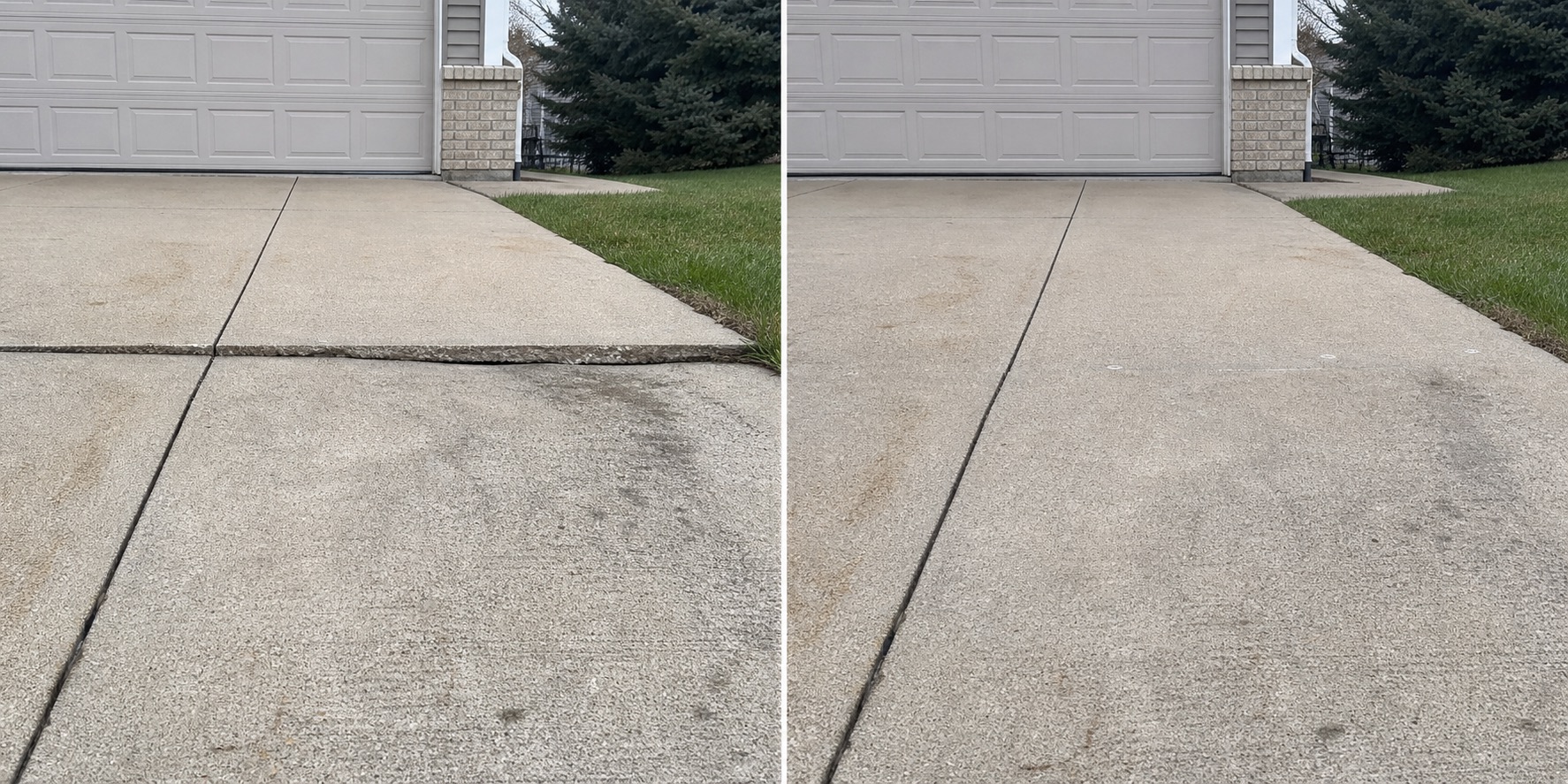
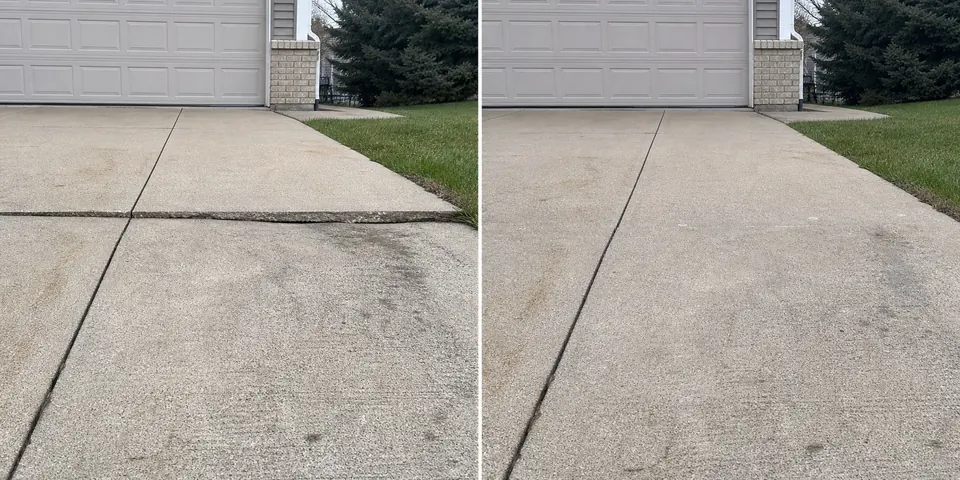
A lip or step-up at a driveway, sidewalk, or garage joint
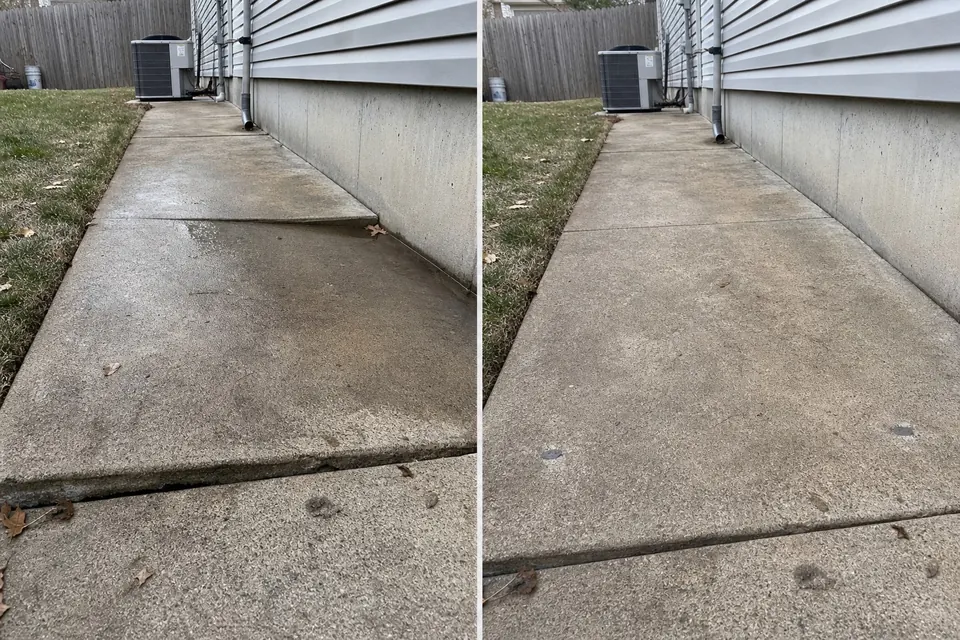
A patio or walk that tips toward the house
Gaps opening between steps, stoops, and the foundation
Water pooling on a slab or flowing toward the home
Hollow sounds or visible washout along a slab edge
Common Fairway Projects
The concrete we lift most often in Fairway.
Every slab is different, so we start with what is happening at your property. These are the repairs Fairway property owners ask us about most.
Front walks with dips at the joints
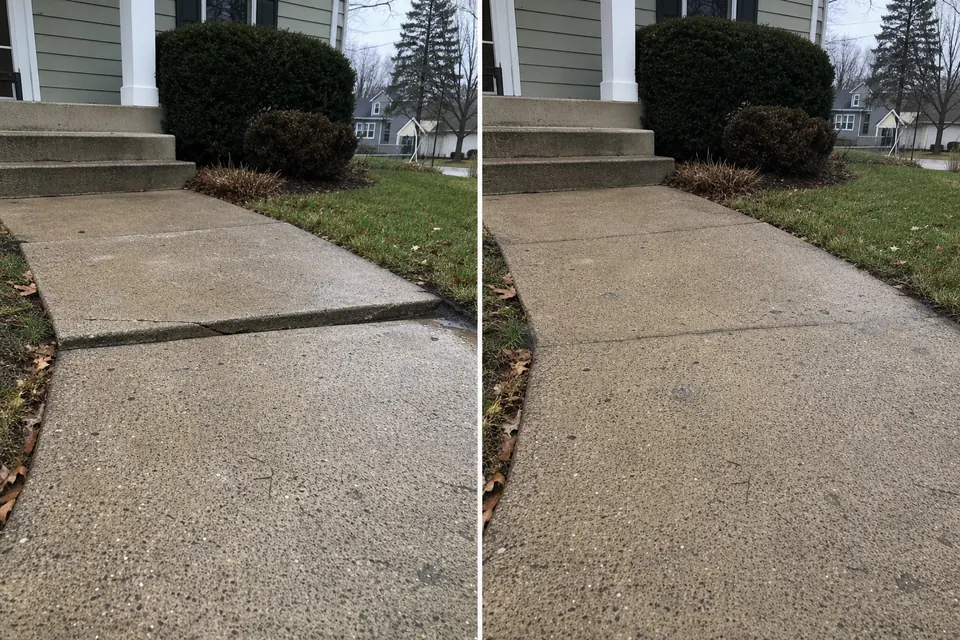
Long front walks from the street or driveway to the door often have several squares that have sunk. Lifting each low square back to meet its neighbors removes the trip edges while keeping the original walk and its weathered look.
Stoops pulled away from the house
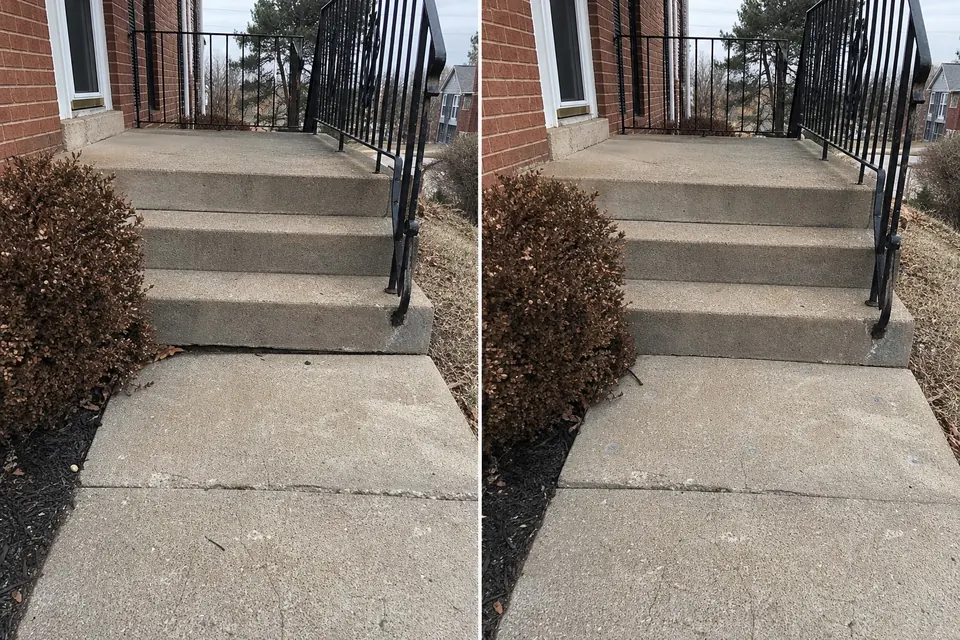
When a stoop settles away from the foundation, water runs into the gap and down the wall. Raising a solid stoop back toward the house reduces the gap, and we can seal the joint afterward as a separate service.
Driveways to rear garages
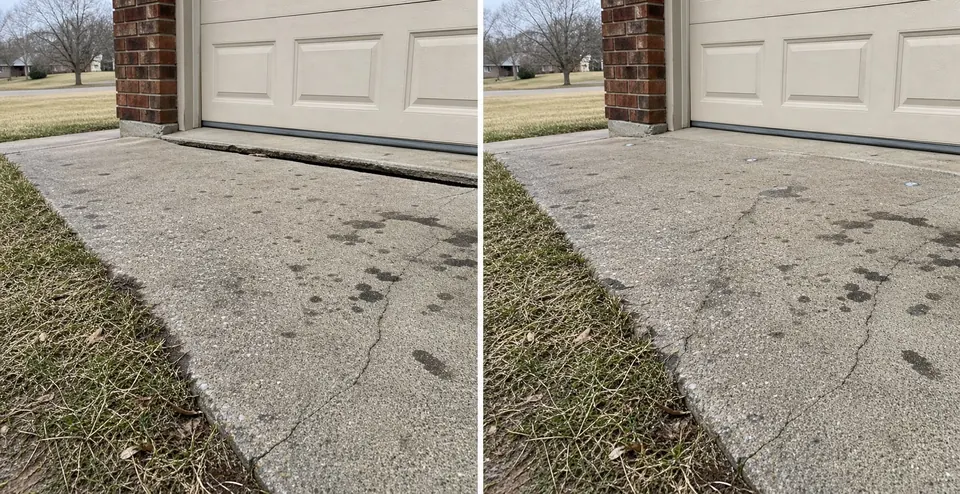
Some Fairway homes have longer driveways that run beside the house to a garage in back. Settled panels along the house can direct water toward the foundation, and lifting them can restore drainage away from it.
Patios bordered by garden beds
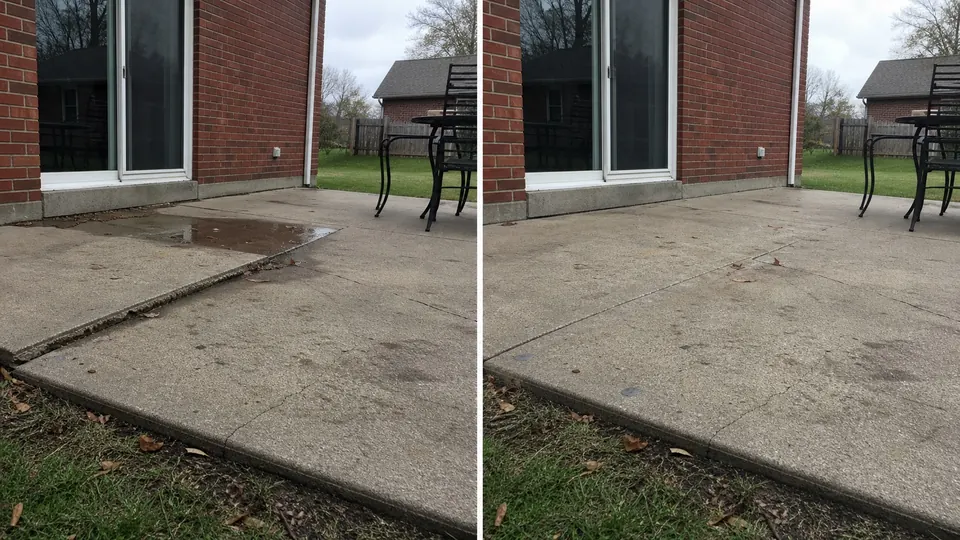
Patios edged by heavily watered beds often sink along that side first. Lifting the low edge and adjusting the irrigation nearby helps the slab stay where it belongs and keeps water moving off the surface.
Our Fairway Leveling Process
How a polyfoam lift works, step by step.
01
Send photos
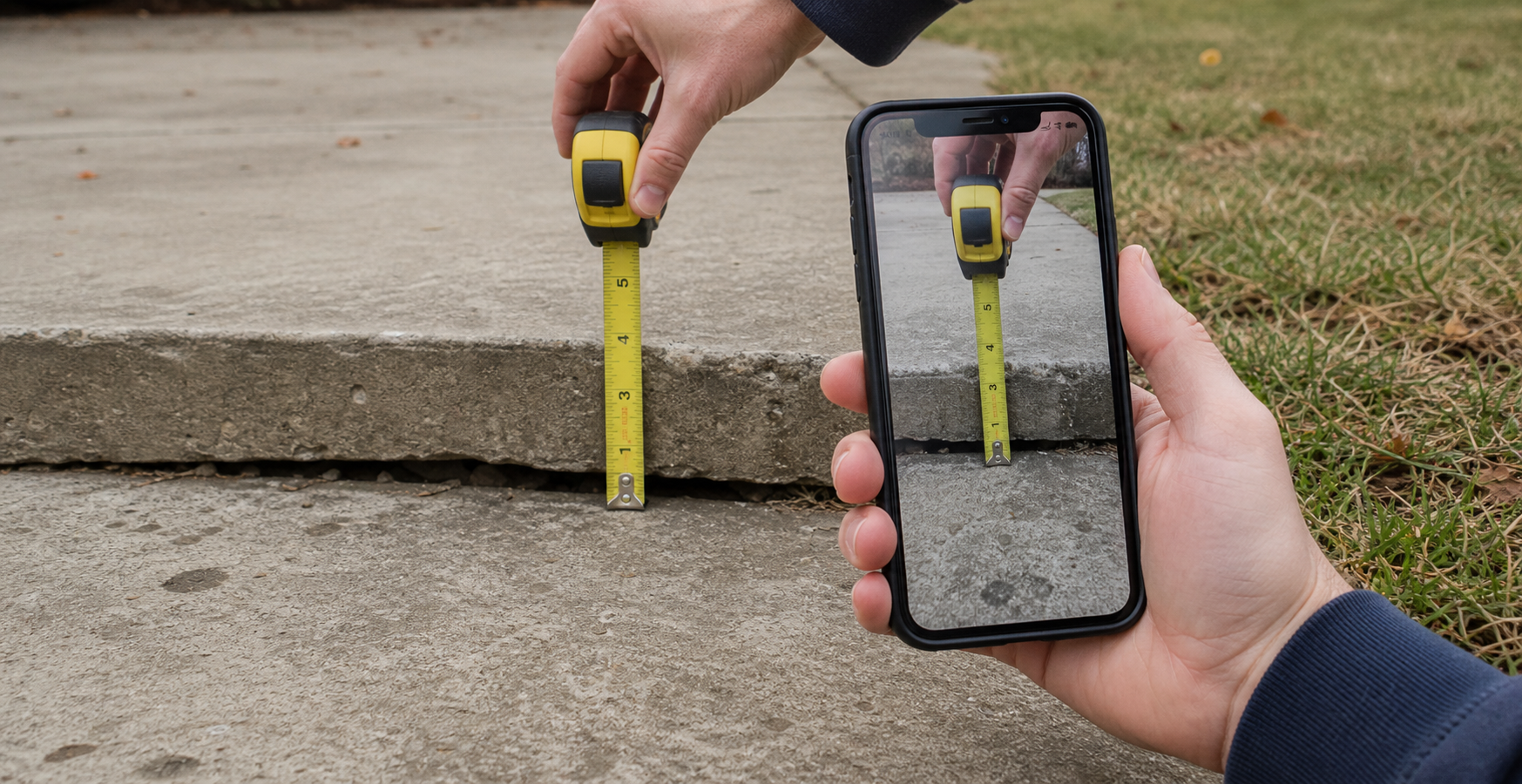
Text a wide shot, close-ups of the low joints, a tape measure showing the drop, and the address.
02
Review & quote
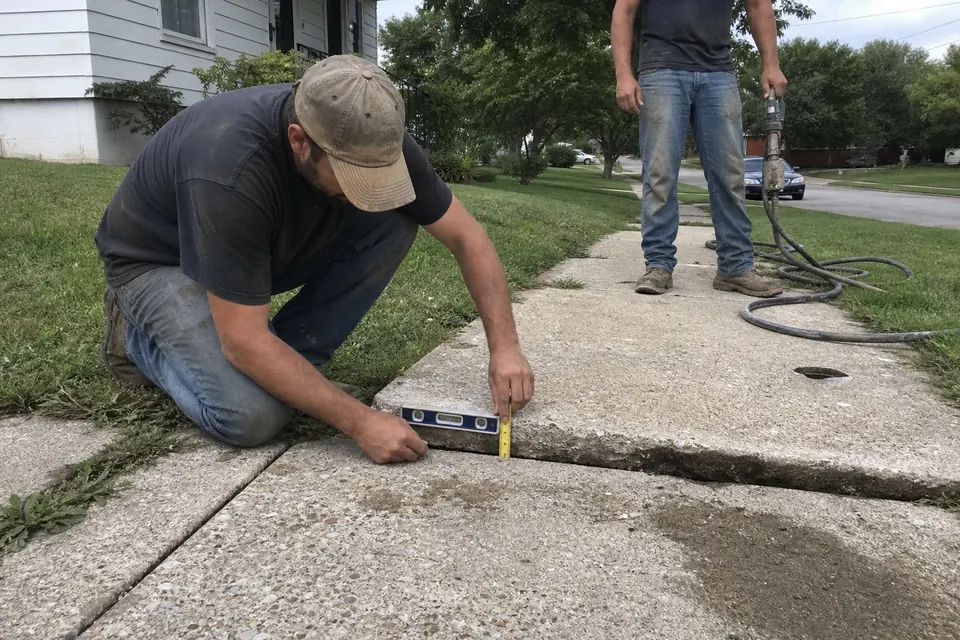
We look at the settlement, slab condition, and drainage, and follow up with a quote or questions.
03
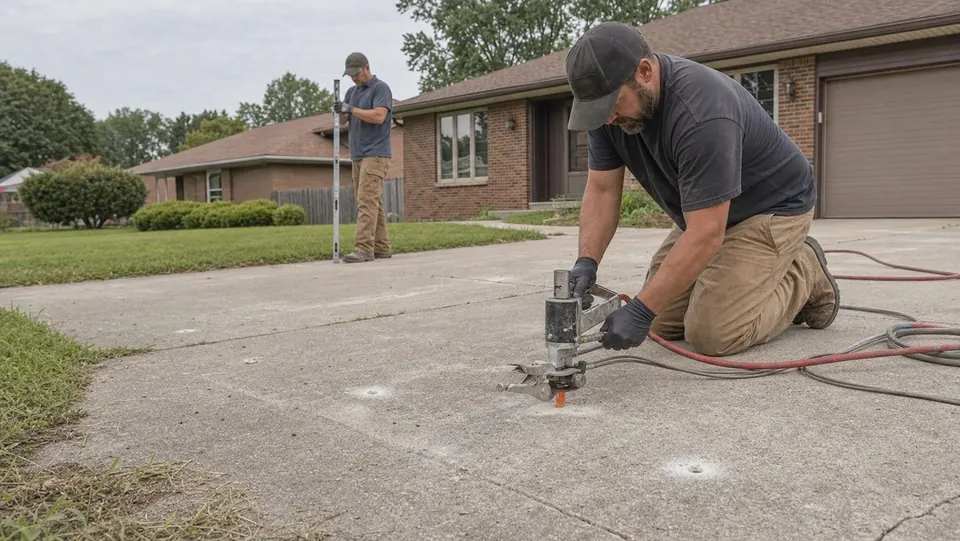
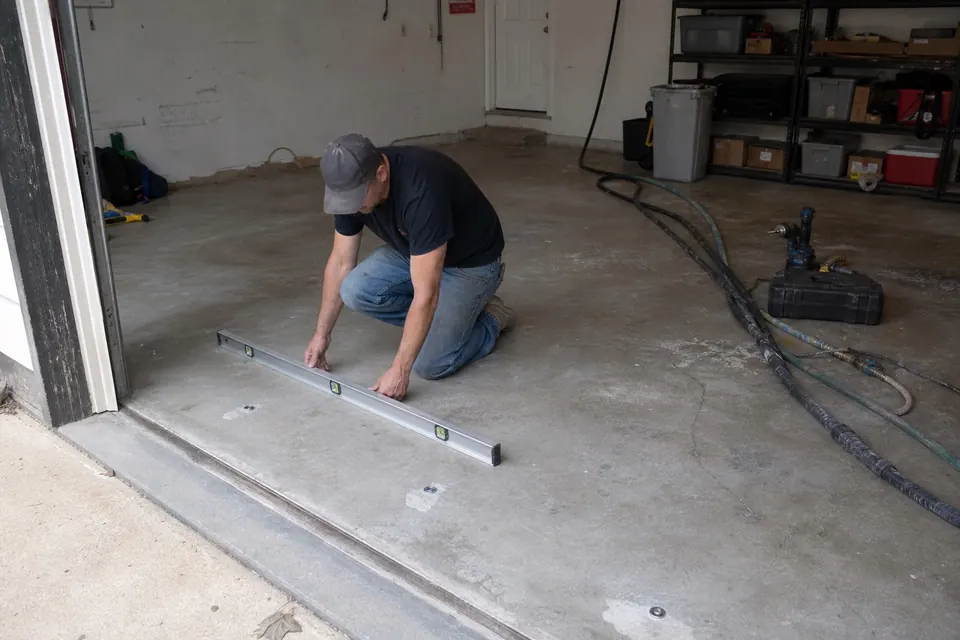
Drill small ports
On the day of the repair we drill small access holes at planned points across the settled slab.
04
Lift in stages
Expanding polyurethane fills the voids and raises the concrete gradually while we watch the transitions.
05
Patch & clean up
Ports are patched, the area is cleaned, and the surface can usually be used again soon after.
Services in Fairway
Concrete lifting services available in Fairway, KS.
Metro Wide lifts and stabilizes most types of flatwork. Choose a service to learn how the repair works.
Will the patched ports stand out on my older concrete?
The ports are small and are filled with a cement-based patch once the lift is done. On older, weathered concrete the patches may look a little lighter at first, and they will not be a perfect color match, but they are much less noticeable than a section of new concrete next to old. They also tend to blend in more as they weather.
My sprinklers hit the sidewalk. Could that be why it's sinking?
It can be part of it. Water that regularly soaks the soil at the edge of a slab softens it and can carry fine particles out from underneath, especially on sloped ground. Adjusting heads so they water the lawn and beds instead of the concrete is a simple step that helps. If the walk has already dropped, foam can fill the void and lift it back into line.
Can you level concrete around a traditional Fairway home without changing its look?
Lifting keeps the original slab, finish and edges in place, so the walk, stoop or drive keeps the character it has now. The only changes are a few small patched ports and any joints we seal. If a slab is too damaged to lift, replacement is an option, but we will talk that through with you before recommending it.
How soon can I use my driveway or walkway after leveling?
Polyurethane foam cures quickly, so foot traffic and normal use can usually resume much sooner than with newly poured concrete. The exact timing depends on the repair, and we give you specific instructions when the work is finished.
Will concrete leveling get rid of the cracks?
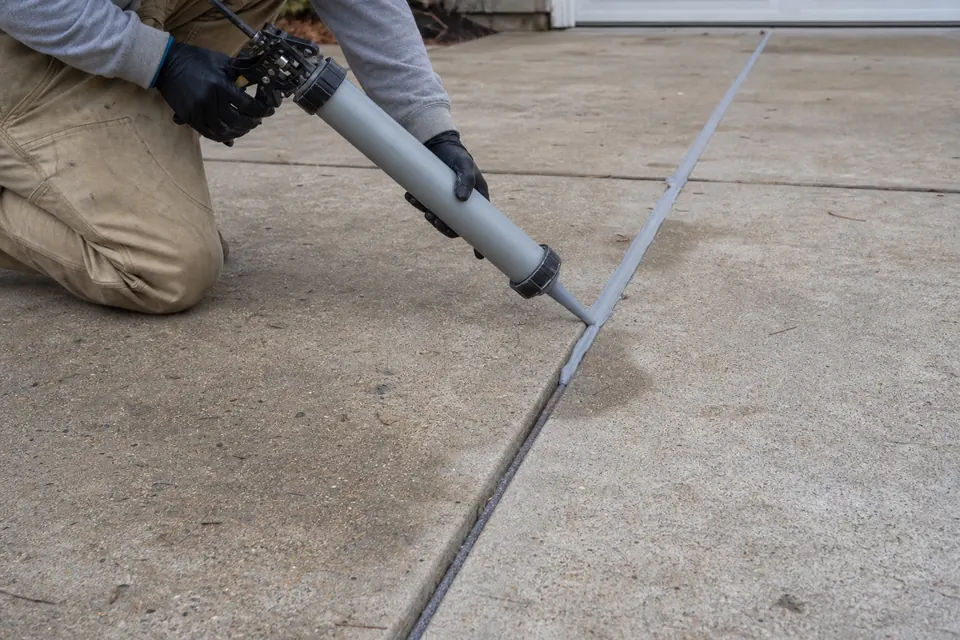
No. Lifting changes the position and support of the slab, but existing cracks stay visible. Raising the sections on either side can bring a crack back into alignment, and crack and joint sealing is available as a separate step to help keep water out.
Is polyurethane foam better than mudjacking?
Both methods lift concrete by filling the space underneath it. Polyurethane uses smaller holes, weighs far less than a cement slurry, cures quickly, and resists washing out. See our polyurethane vs. mudjacking comparison for a full breakdown.
Fairway Estimate
Find out if your Fairway concrete can be saved.
Text a wide photo, a close-up of the uneven area, a tape measure showing the drop, and your address. We will review it and follow up with a quote.
We accept Visa, Mastercard, American Express, Discover, Venmo, cash, and checks. Ask about payment details when scheduling your project.
Kansas City Metro Coverage
Explore our general service area.
Zoom, drag, or select a marker to explore communities within Metro Wide’s 75-mile Kansas City service radius. Scheduling varies by address and project type.
 Driveway leveling
 Garage floor leveling
 Porch & stoop leveling
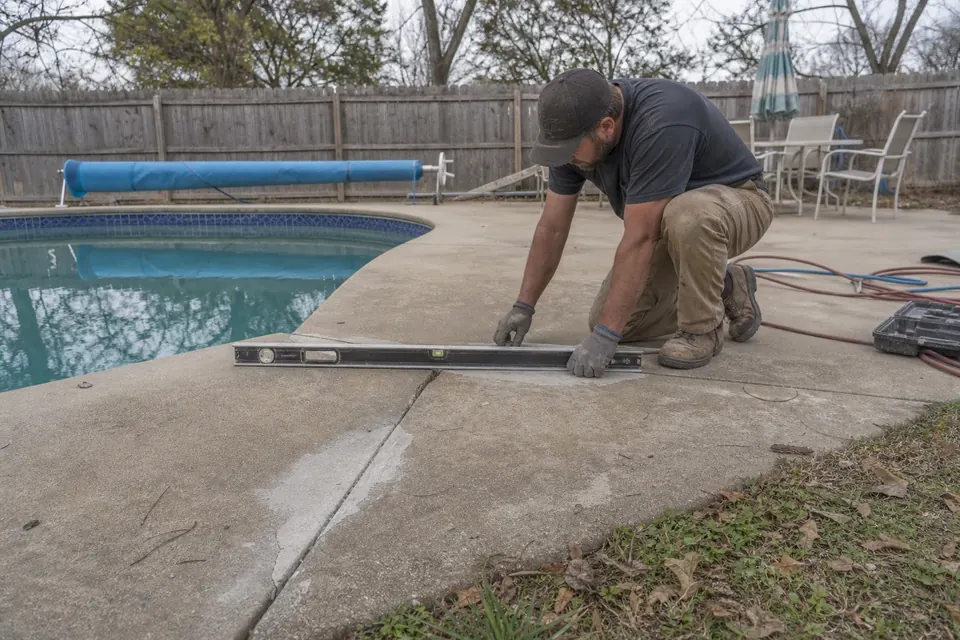 Pool deck leveling
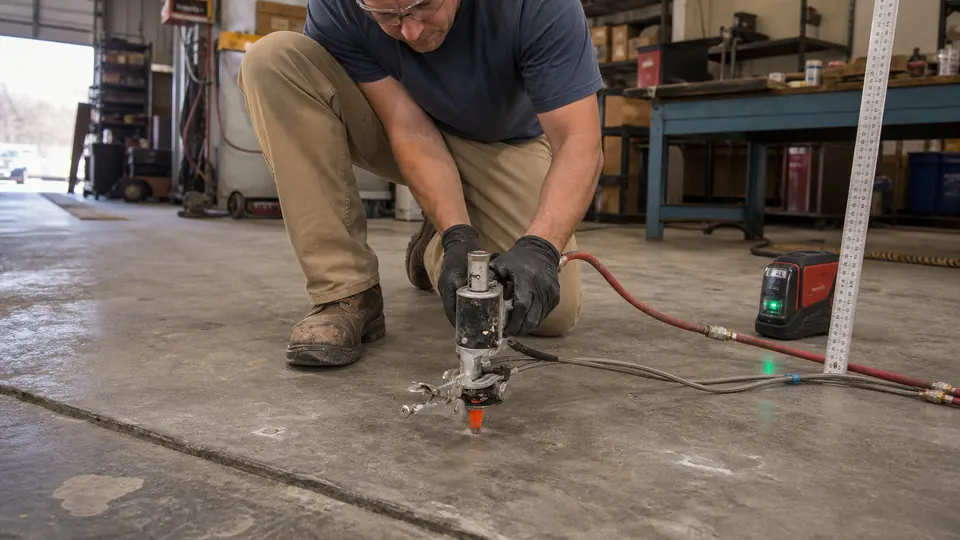 Concrete slab leveling
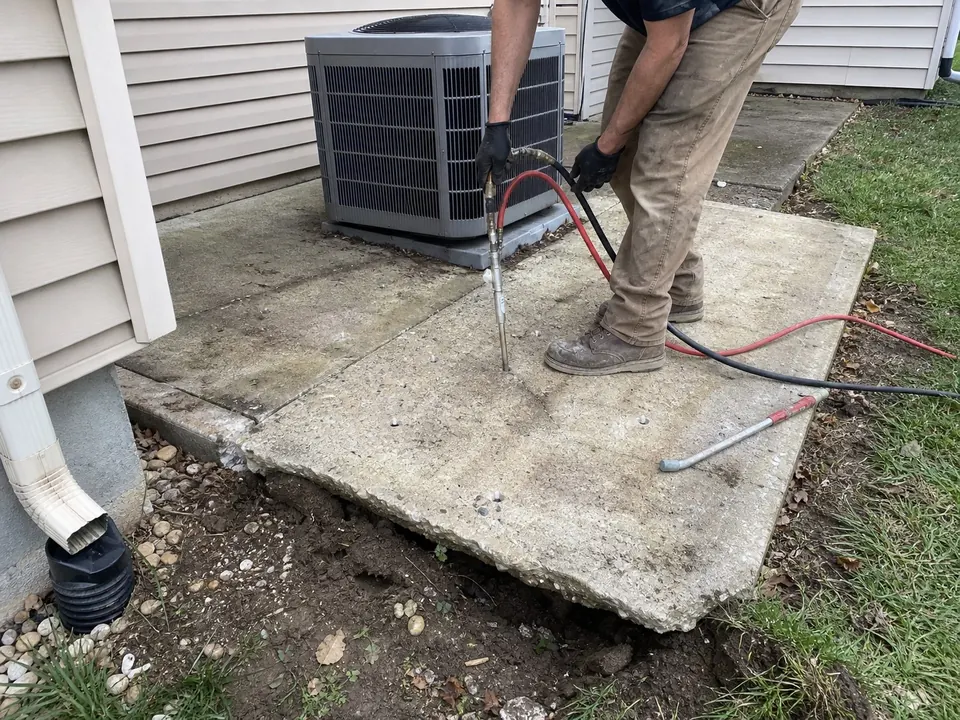 Void filling
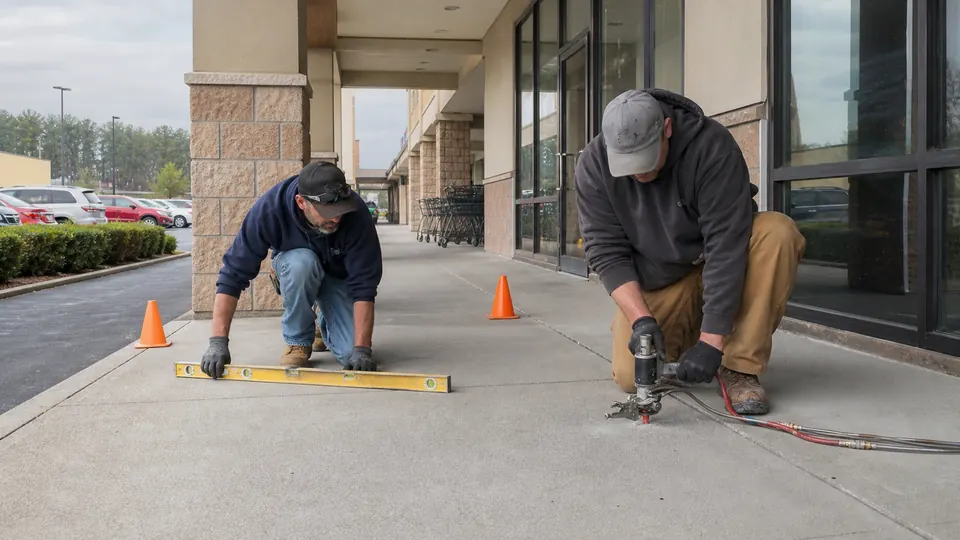 Commercial concrete leveling
 Crack & joint sealing