Harrisonville is the Cass County seat, with a historic courthouse square, established neighborhoods, and newer homes along the I-49 corridor. Metro Wide lifts sunken driveways, sidewalks, patios, and business walkways using polyurethane foam injected through small ports.
Harrisonville has a mix of property types that keeps the work varied. Around the courthouse square you will find older commercial buildings with public-facing sidewalks and entry slabs. The residential streets nearby include homes from many decades, each with its own style of driveway and front walk. Out toward I-49 and along the highways leading out of town, there are newer houses, commercial lots, and rural properties with shops and long approaches. Each setting comes with its own reasons for concrete to move, and its own expectations for how the repair should look.
For homeowners, the usual problem is a driveway or walk that has developed a step at one joint, or a patio that now leans toward the house. For business owners, it is often a sidewalk section or entry slab that has become a trip hazard for customers. Polyfoam leveling raises the existing concrete instead of replacing it, which means less disruption to a yard, a parking area, or a storefront. When a slab is too broken to lift, we say so plainly rather than trying to save something that should be repoured.
Harrisonville at a glance
Location: Harrisonville, MO, Cass County
Distance: about 33 miles south of downtown Kansas City
Method: polyurethane foam lifting through small ports
Estimates: free, often by text from your photos
Warranty: 2 years on residential lifting
Properties: residential and commercial
Harrisonville sits roughly 33 miles south of downtown Kansas City, well inside Metro Wide’s 75-mile coverage radius. Scheduling depends on the address and the size of the project, and a remote quote from your photos lets us plan the trip before we arrive.
Local Conditions
Why concrete settles in Harrisonville.
The ground around Harrisonville is mostly clay-rich prairie soil, and much of Cass County drains toward the South Grand River through a network of creeks and draws. Clay holds water after heavy rains and then shrinks during long dry stretches, so the soil under a slab rarely stays the same volume from one season to the next. Over time that movement leaves gaps under the concrete, and the slab eventually drops into them. Slabs along edges and corners, where rain reaches the soil first, usually show it before the middle of the slab does.
Older parts of town add another factor: slabs poured decades ago were sometimes placed on thin or uneven base, and tree roots near walks and drives have had a long time to grow and then decay. Around newer construction, the issue is more often backfill and graded fill that continue to settle after the house is finished. Freeze–thaw cycles open joints a little more each winter, and water running off roofs and parking areas finds those openings. Lifting fills the voids, and correcting the water source helps the results last.
Signs your slab has lost support
A lip or step-up at a driveway, sidewalk, or garage joint
A patio or walk that tips toward the house
Gaps opening between steps, stoops, and the foundation
Water pooling on a slab or flowing toward the home
Hollow sounds or visible washout along a slab edge
Common Harrisonville Projects
The concrete we lift most often in Harrisonville.
Every slab is different, so we start with what is happening at your property. These are the repairs Harrisonville property owners ask us about most.
Storefront sidewalks and entries
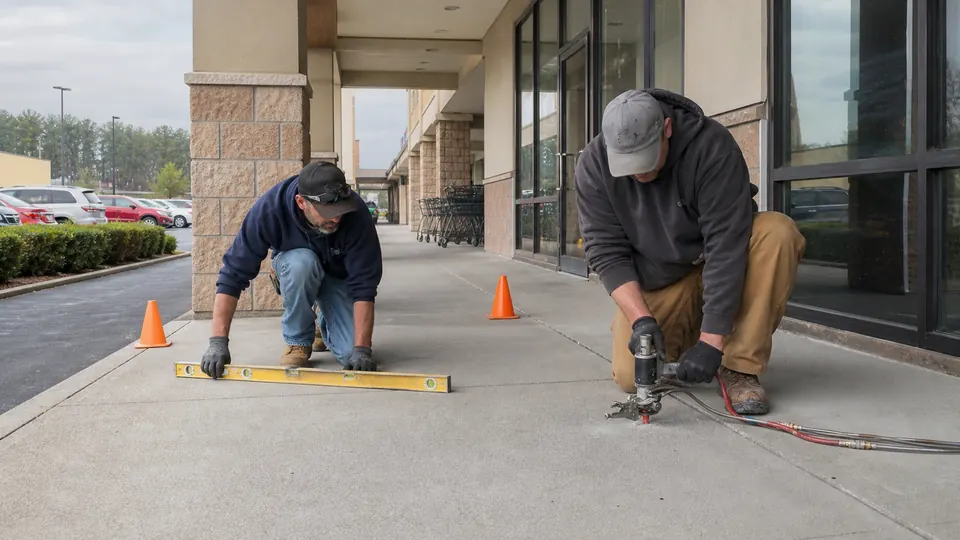
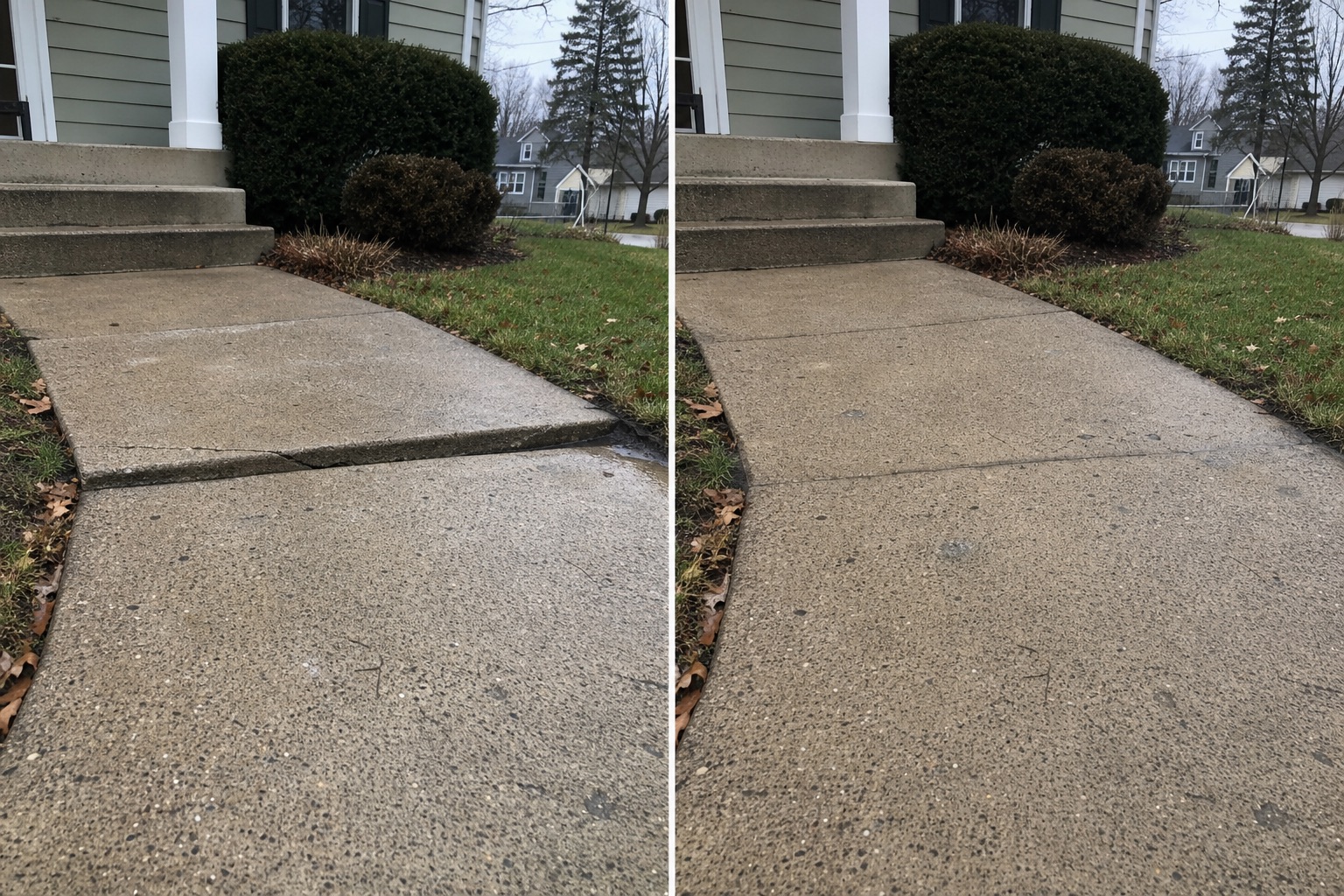
Businesses around the Harrisonville square often deal with sidewalk sections and entry slabs that have sunk or tilted. Lifting them reduces trip hazards at the door with far less disruption to customers than breaking out and repouring.
Driveways with one low joint
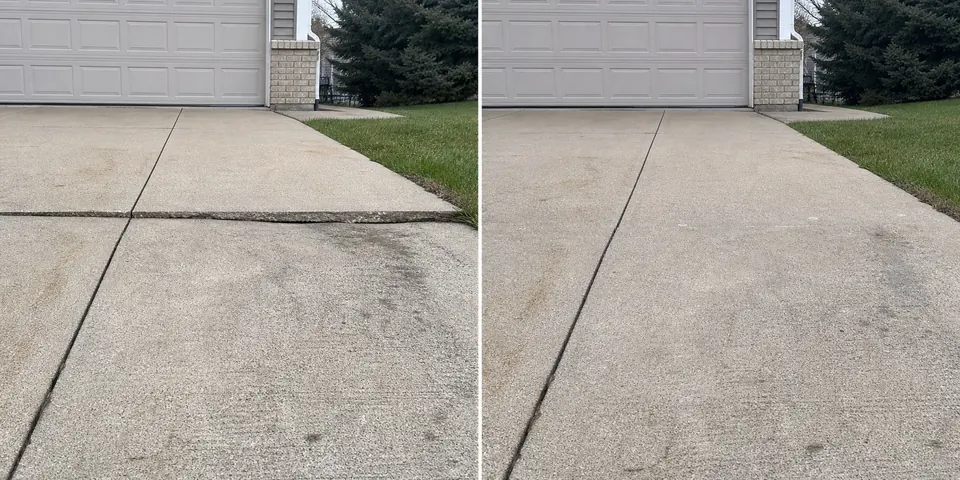
A single settled panel can create a ridge that catches tires and holds water. We raise the low panel to meet its neighbors as closely as the slab allows, then patch the ports so the driveway stays in use.
Front walks and porch steps
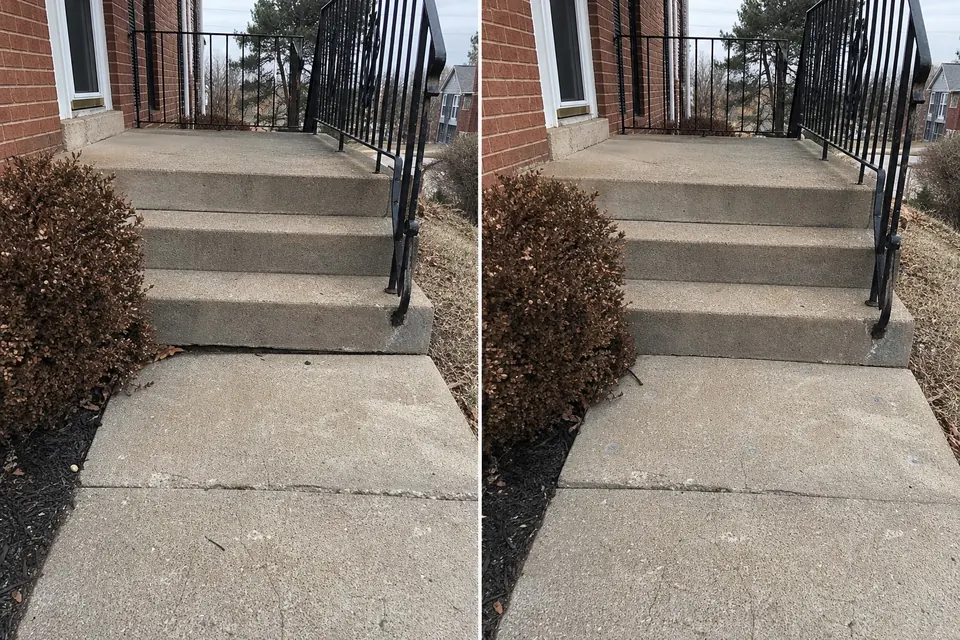
Walks that slope toward the house or have pulled away from the porch let water reach the foundation. Raising them can close the gap and restore a slope that carries rain away from the home.
Commercial lots and shop aprons
Concrete aprons at shop doors and loading areas take heavy traffic. When the soil under them washes out, foam lifting can bring the slab back up without shutting the area down for a full replacement.
Our Harrisonville Leveling Process
How a polyfoam lift works, step by step.
01
Send photos
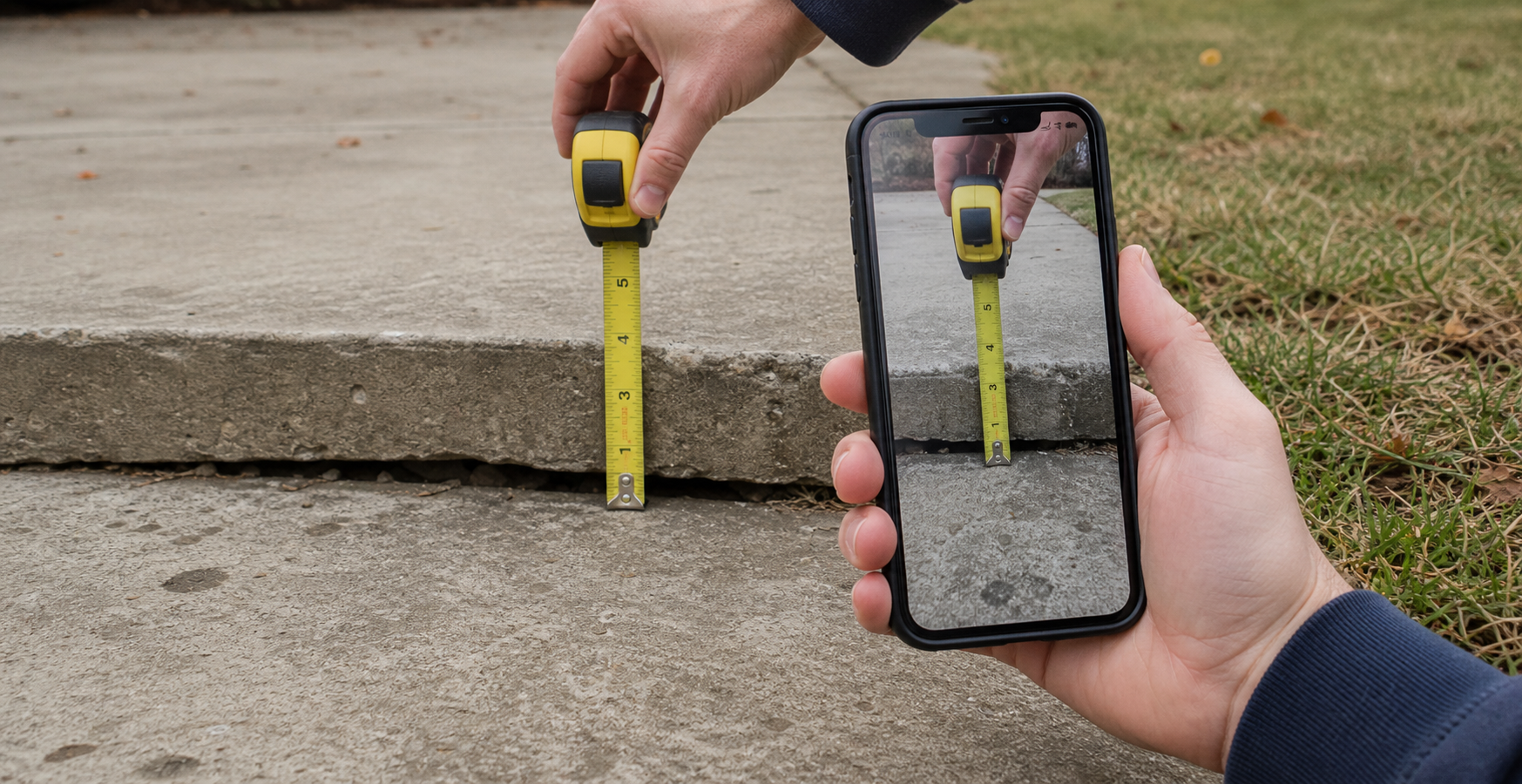
Text a wide shot, close-ups of the low joints, a tape measure showing the drop, and the address.
02
Review & quote
We look at the settlement, slab condition, and drainage, and follow up with a quote or questions.
03
Drill small ports
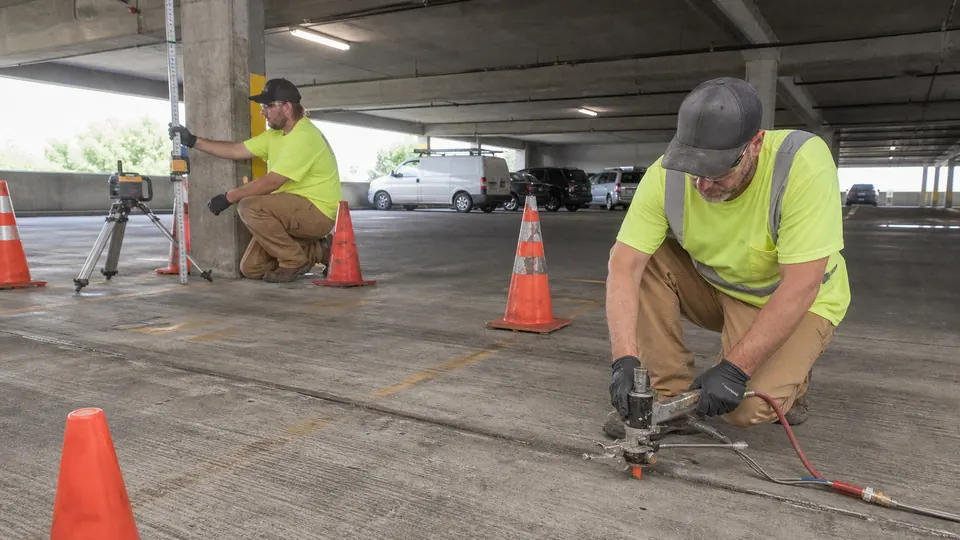
On the day of the repair we drill small access holes at planned points across the settled slab.
04
Lift in stages
Expanding polyurethane fills the voids and raises the concrete gradually while we watch the transitions.
05
Patch & clean up
Ports are patched, the area is cleaned, and the surface can usually be used again soon after.
Services in Harrisonville
Concrete lifting services available in Harrisonville, MO.
Metro Wide lifts and stabilizes most types of flatwork. Choose a service to learn how the repair works.
Can you level the sidewalk in front of my business near the Harrisonville square?
In many cases, yes. We do commercial as well as residential leveling, and storefront walks and entry slabs are common requests. If the sidewalk is public right-of-way, check with the city about who is responsible for repairs before scheduling. Send photos of the area and a quick note about foot traffic and hours, and we can talk through options that limit disruption.
How is polyurethane foam different from mudjacking?
Both methods lift a slab by filling the space beneath it. Mudjacking pumps a heavy cement slurry through larger holes. Polyurethane foam is much lighter, goes in through small ports, and cures quickly, so it adds less weight to soil that has already proven weak. For most driveways and walks in Harrisonville, foam gives a cleaner finish with smaller patches.
Will the cracks in my driveway go away after lifting?
No. Lifting raises the concrete and closes the height difference between sections, but existing cracks will still be visible. We offer crack and joint sealing as a separate service, which helps keep water out of those openings so it is less likely to wash soil from under the slab again. We can quote both together if you want.
Will concrete leveling get rid of the cracks?
No. Lifting changes the position and support of the slab, but existing cracks stay visible. Raising the sections on either side can bring a crack back into alignment, and crack and joint sealing is available as a separate step to help keep water out.
Is polyurethane foam better than mudjacking?
Both methods lift concrete by filling the space underneath it. Polyurethane uses smaller holes, weighs far less than a cement slurry, cures quickly, and resists washing out. See our polyurethane vs. mudjacking comparison for a full breakdown.
Do you offer a warranty?
Yes. Residential concrete lifting from Metro Wide is backed by a 2-year warranty. We will explain what is covered for your project when we provide the quote.
Harrisonville Estimate
Find out if your Harrisonville concrete can be saved.
Text a wide photo, a close-up of the uneven area, a tape measure showing the drop, and your address. We will review it and follow up with a quote.
We accept Visa, Mastercard, American Express, Discover, Venmo, cash, and checks. Ask about payment details when scheduling your project.
Kansas City Metro Coverage
Explore our general service area.
Zoom, drag, or select a marker to explore communities within Metro Wide’s 75-mile Kansas City service radius. Scheduling varies by address and project type.
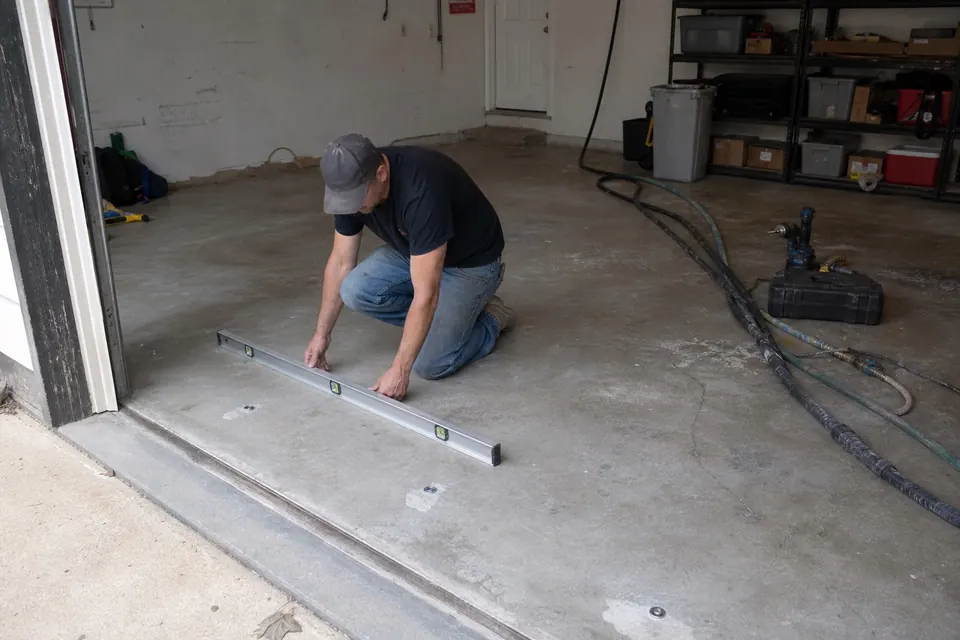 Garage floor leveling
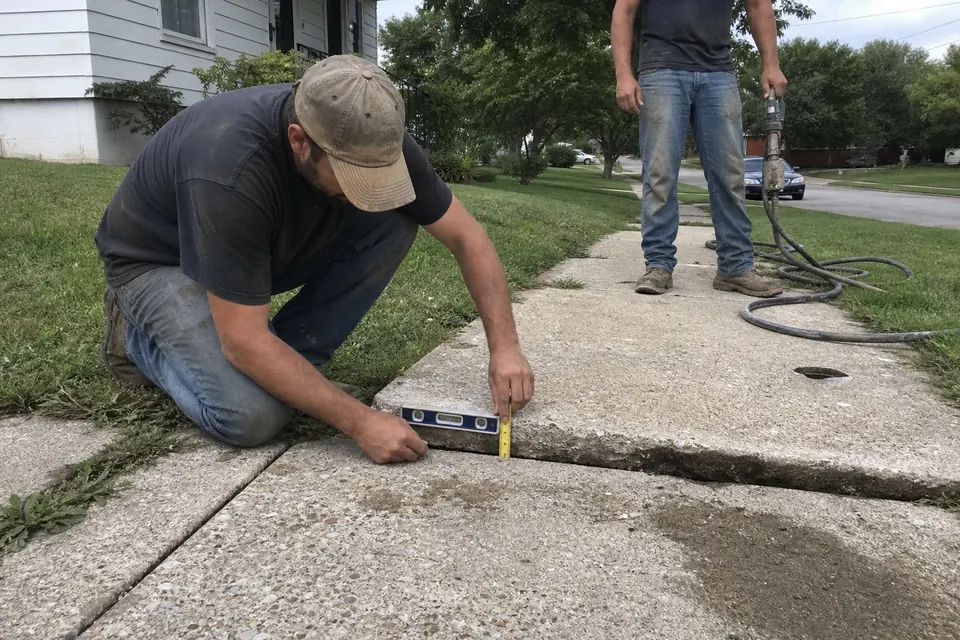
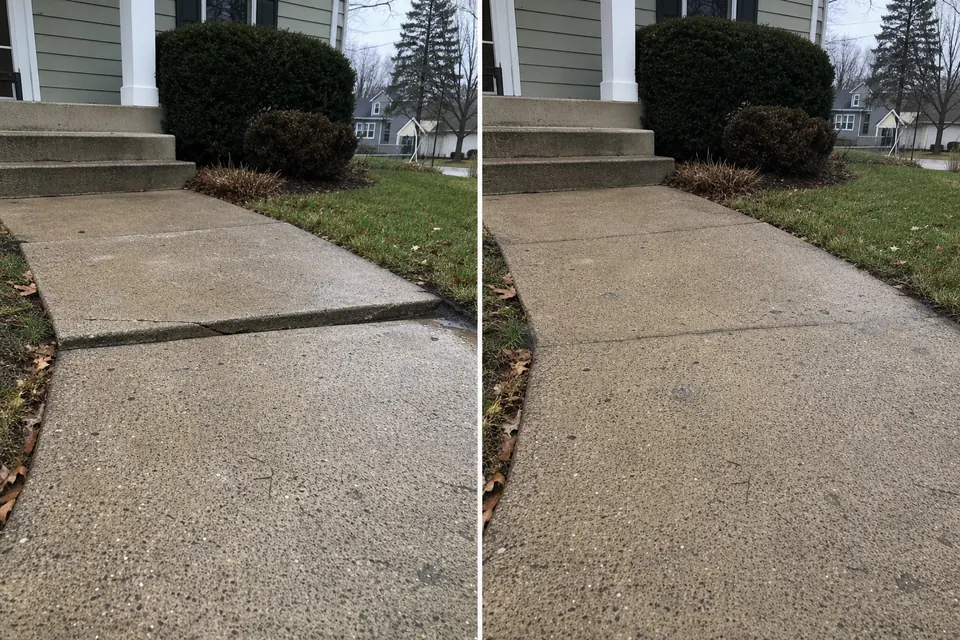 Sidewalk & walkway leveling
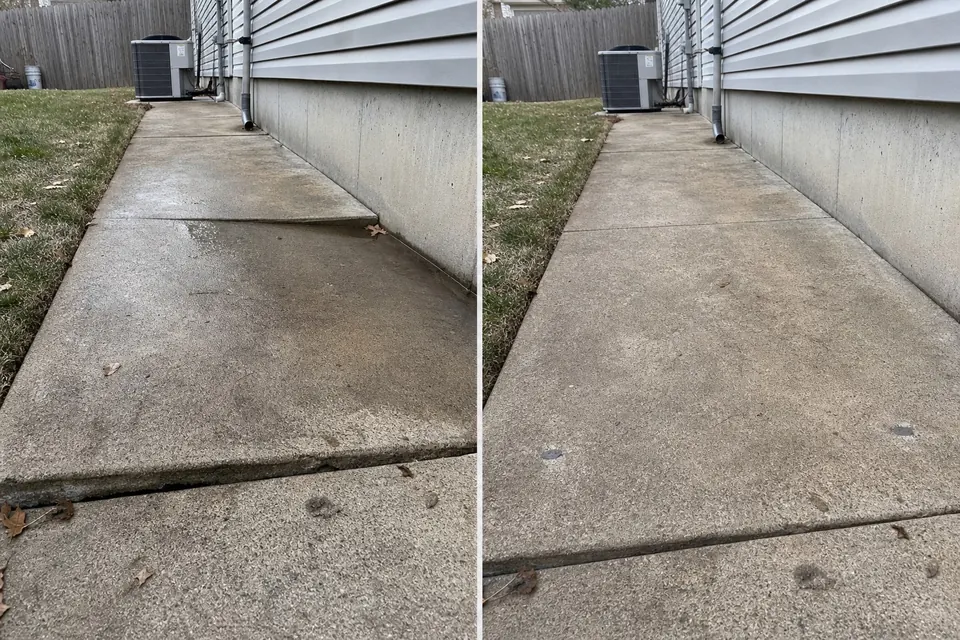 Porch & stoop leveling
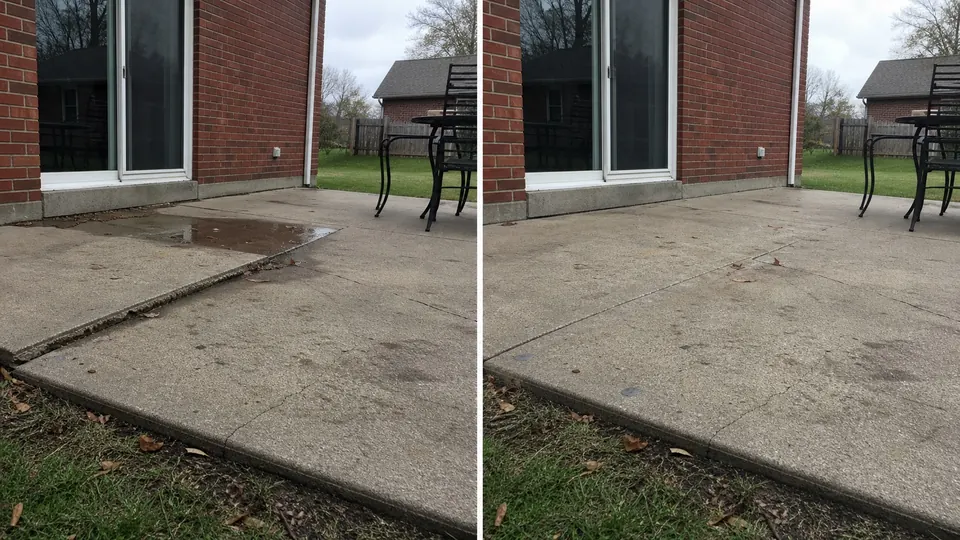 Patio leveling
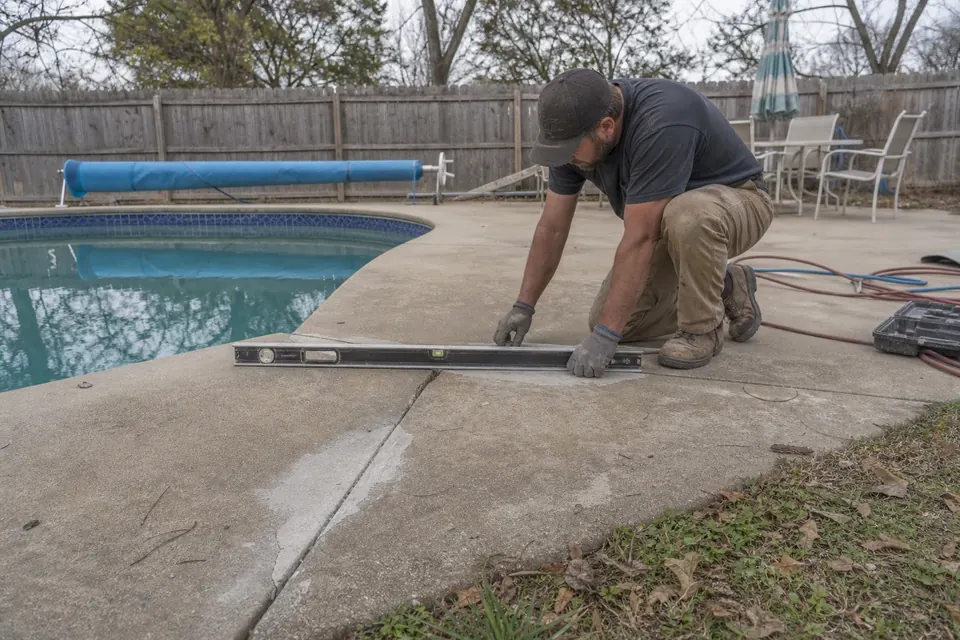 Pool deck leveling
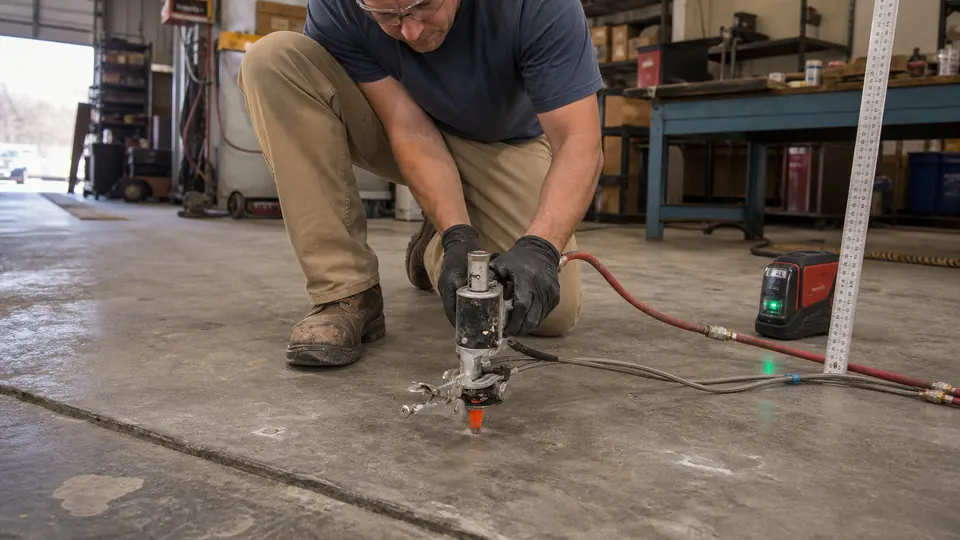 Concrete slab leveling
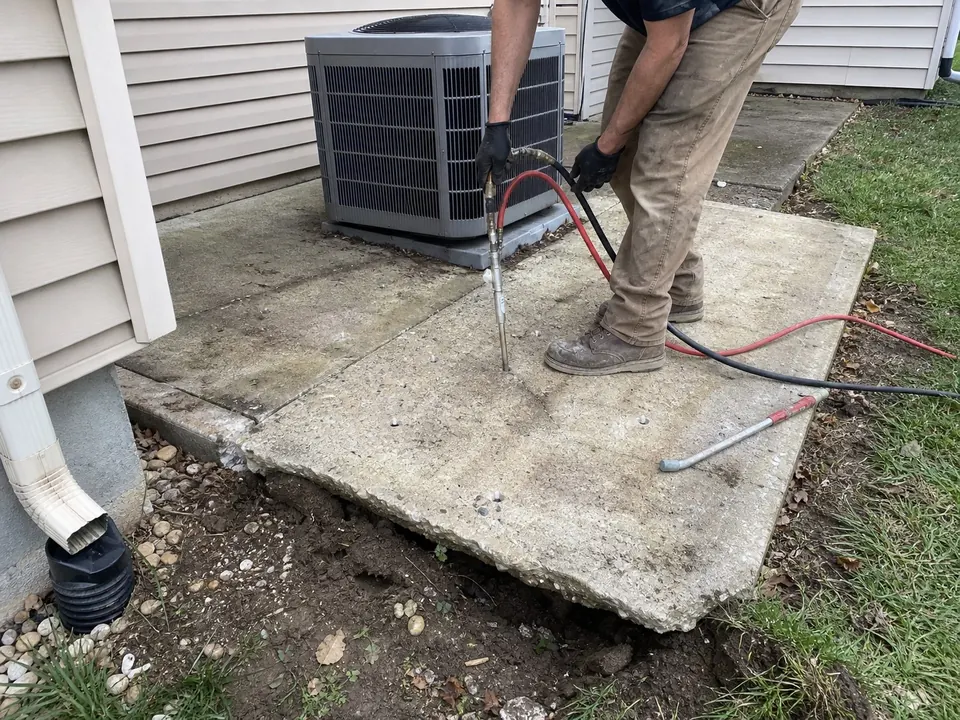 Void filling
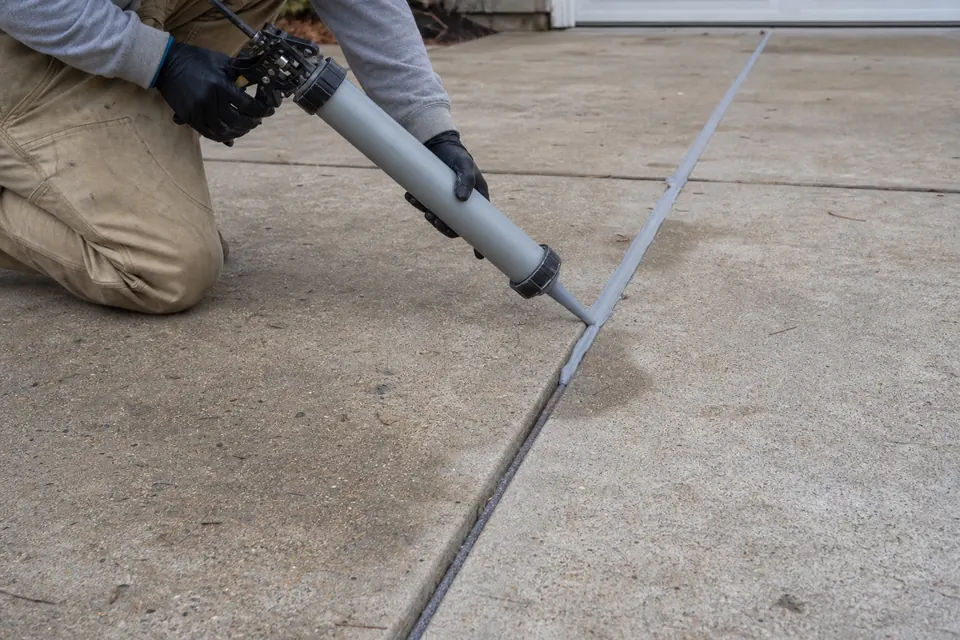 Crack & joint sealing