Gladstone is full of solid mid-century homes, and many of their driveways, walks, and patios have been settling for 50 years or more. Metro Wide lifts those slabs with polyurethane foam, so you can fix the trip points and drainage problems without replacing good concrete.
Gladstone is surrounded by Kansas City’s Northland, but it has its own character: tree-lined streets of ranch homes, split-levels, and modest two-stories, most of them built in the decades after World War II. Many still have their original concrete. That means driveways, walks, carport slabs, and back patios that are well past middle age and have had decades of freeze–thaw, tree roots, and runoff working on them.
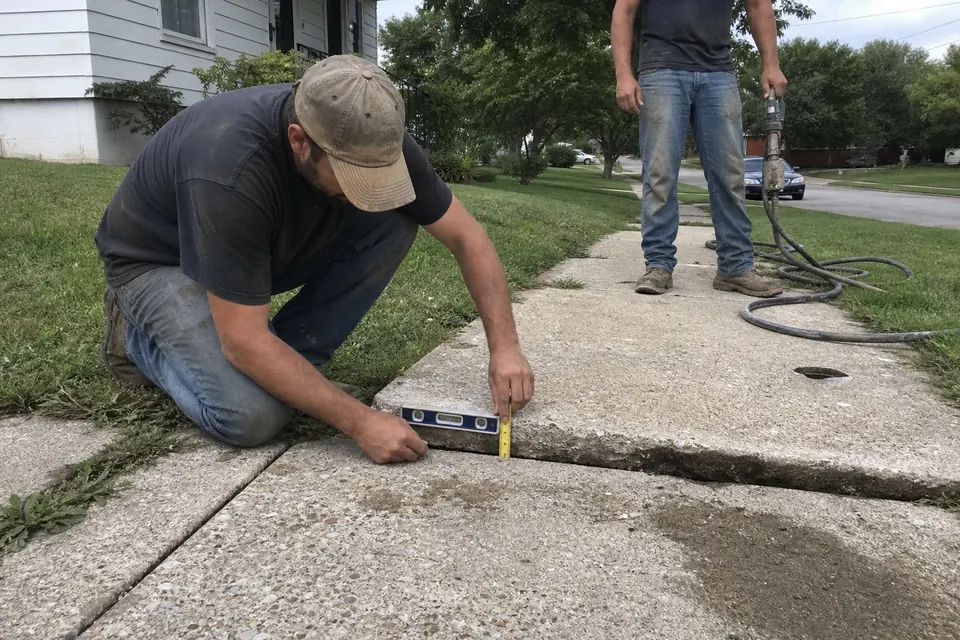
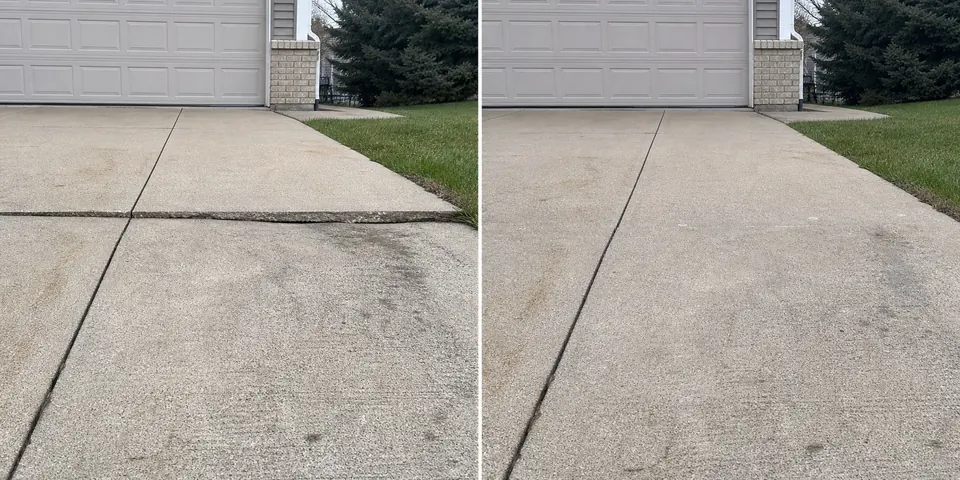
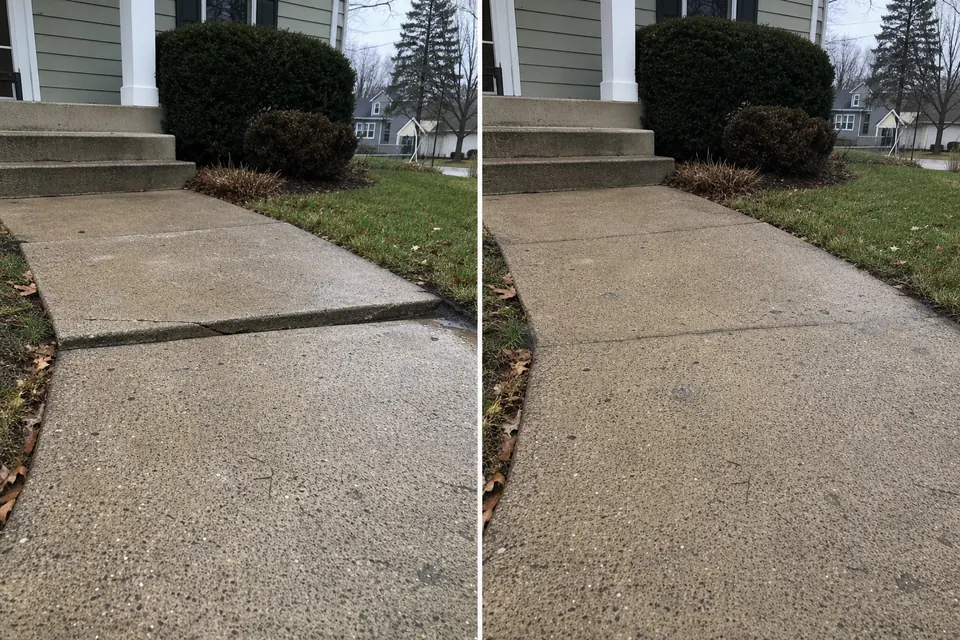
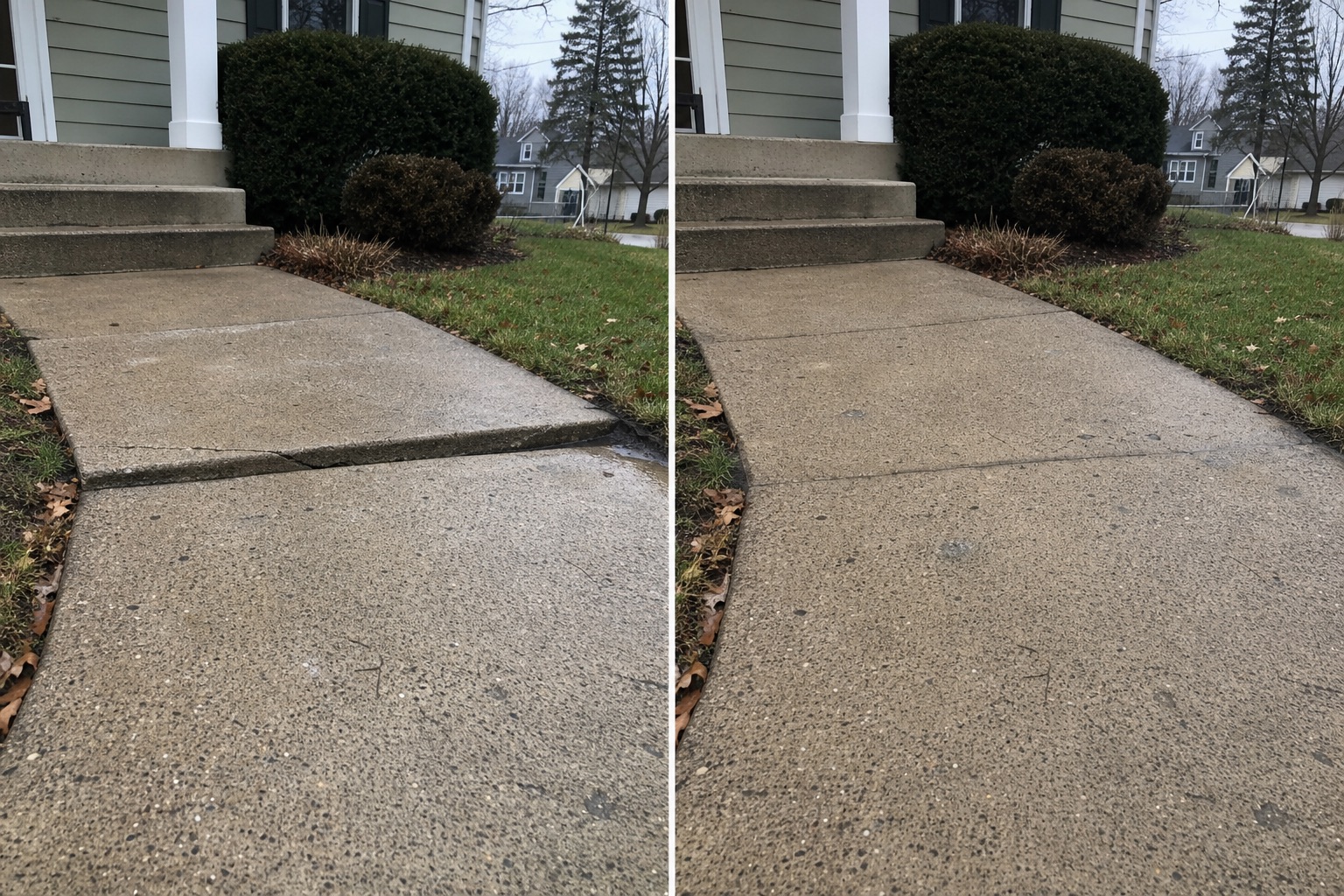
The problems we see here tend to be the ones that come with age. A driveway panel has dropped at the garage or the street. A front walk has tipped so water runs back toward the stoop. A patio poured decades ago now slopes into the house. Sidewalks along the street have offset joints that catch toes and stroller wheels.
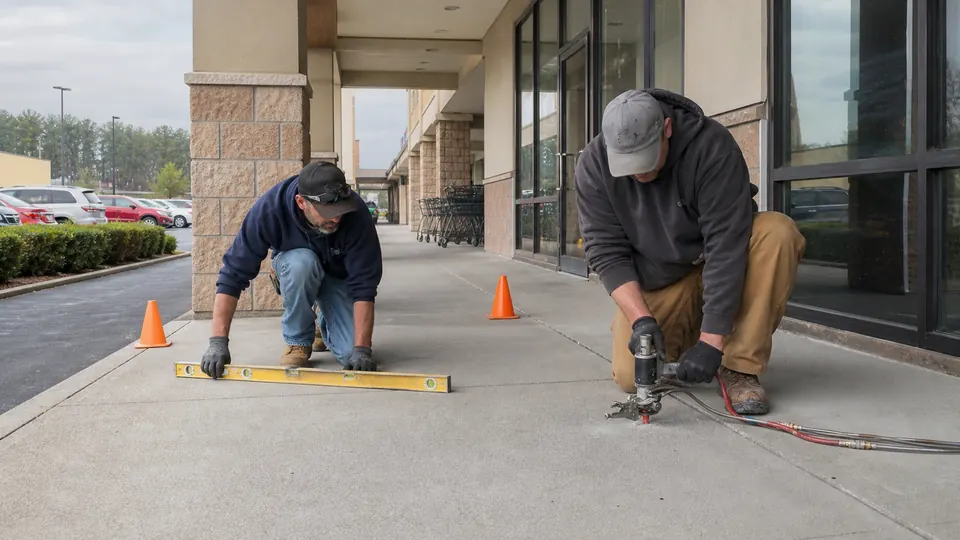
If the concrete itself is still in decent shape, polyurethane foam lifting can raise those slabs back toward their original position through small ports and fill the gaps underneath. It is usually quicker and less disruptive than replacing an entire driveway or patio, and it keeps the yard intact. We also work on commercial properties along North Oak Trafficway and other corridors.
Gladstone at a glance
Location: Gladstone, MO, Clay County
Distance: about 7 miles north of downtown Kansas City
Method: polyurethane foam lifting through small ports
Estimates: free, often by text from your photos
Warranty: 2 years on residential lifting
Properties: residential and commercial
Gladstone is about 7 miles north of downtown Kansas City, close to the center of our service area, so it is a regular part of our schedule. Texting photos first is still the fastest way to get a quote.
Local Conditions
Why concrete settles in Gladstone.
The city sits on the upland north of the Missouri River, where the soil is mostly loess, a fine silt carried by wind long ago, over clay and glacial deposits. Loess is firm when dry but can wash out when water moves through it, which is exactly what happens along driveway edges and under walks over the years. Once a small channel forms, each heavy rain makes it a little larger.
The terrain is gently rolling with small creek valleys, and many lots slope toward the street. Runoff from roofs and lawns follows the concrete, gets under the edges, and carries fine soil away. Mature trees, common in Gladstone’s older neighborhoods, can also lift some slabs while drying out the soil under others.
Age is the other factor. Slabs poured in the 1950s through the 1970s often sit on a thin base, and after decades of freeze–thaw cycles, the support underneath may be uneven. Foam fills the voids that have formed and lifts the slab back up. We will also mention gutters, downspouts, or grading that may keep the problem coming back.
Signs your slab has lost support
A lip or step-up at a driveway, sidewalk, or garage joint
A patio or walk that tips toward the house
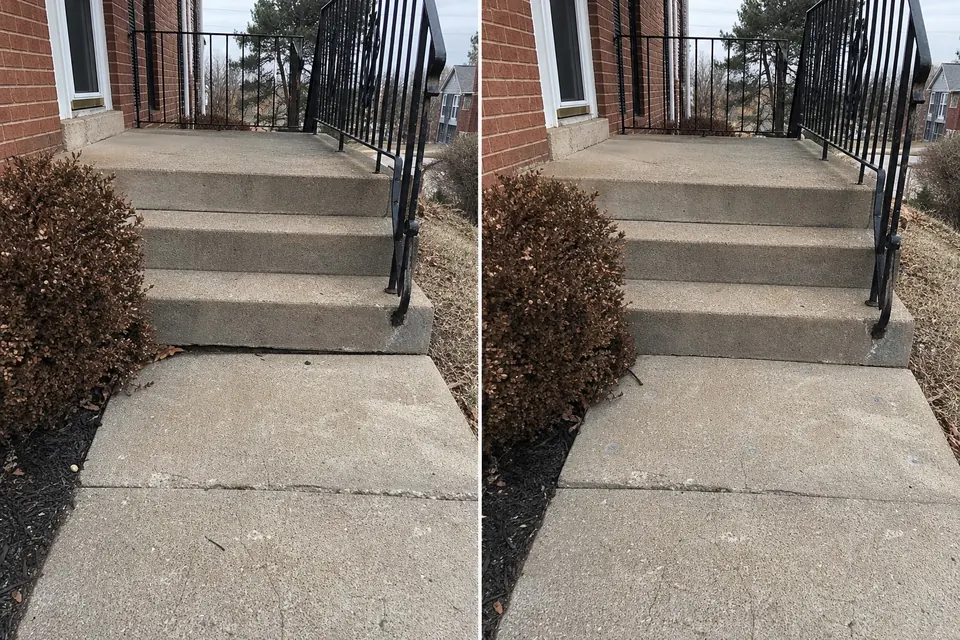
Gaps opening between steps, stoops, and the foundation
Water pooling on a slab or flowing toward the home
Hollow sounds or visible washout along a slab edge
Common Gladstone Projects
The concrete we lift most often in Gladstone.
Every slab is different, so we start with what is happening at your property. These are the repairs Gladstone property owners ask us about most.
Original driveways on mid-century homes
Many driveways here are original to the house and have been carrying cars for decades. When a panel near the garage or the street drops, lifting can bring it back into line and remove the bump without replacing an entire driveway that is otherwise still serviceable.
Carport and side-entry slabs
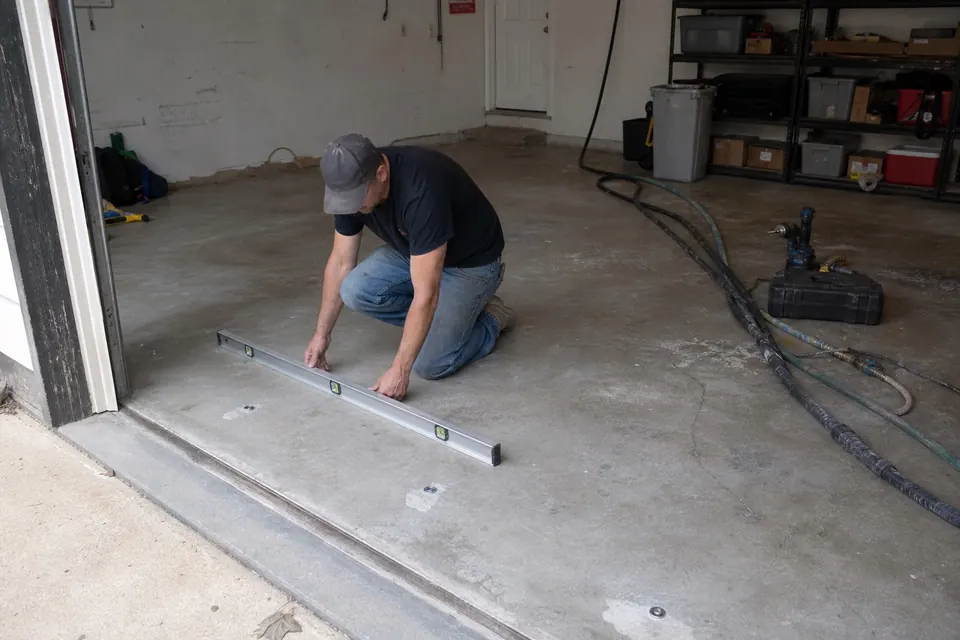
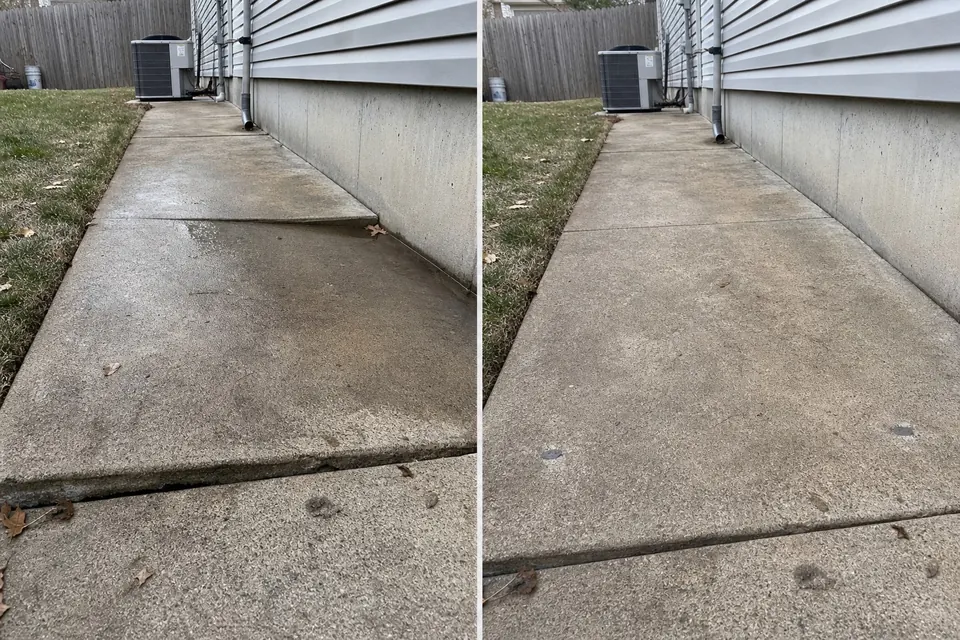
Some older homes have carports or side-entry slabs that have tipped over the years, leaving water standing by the door and a taller step into the house. Raising them can improve drainage and reduce that step at the entry.
Front walks with offset joints
Walks that have settled at the joints create trip hazards for neighbors, guests, and delivery drivers, especially after dark. Lifting the low panels lines up the edges again and makes the walk safer, while keeping the original concrete and the look of the yard.
Commercial walks along main corridors
Businesses, offices, and multifamily buildings along North Oak Trafficway and other main roads use foam leveling to correct uneven sidewalks and entries. The work is quick to set up and allows the area to reopen with limited downtime.
Our Gladstone Leveling Process
A controlled lift with a small footprint.
01
Send photos
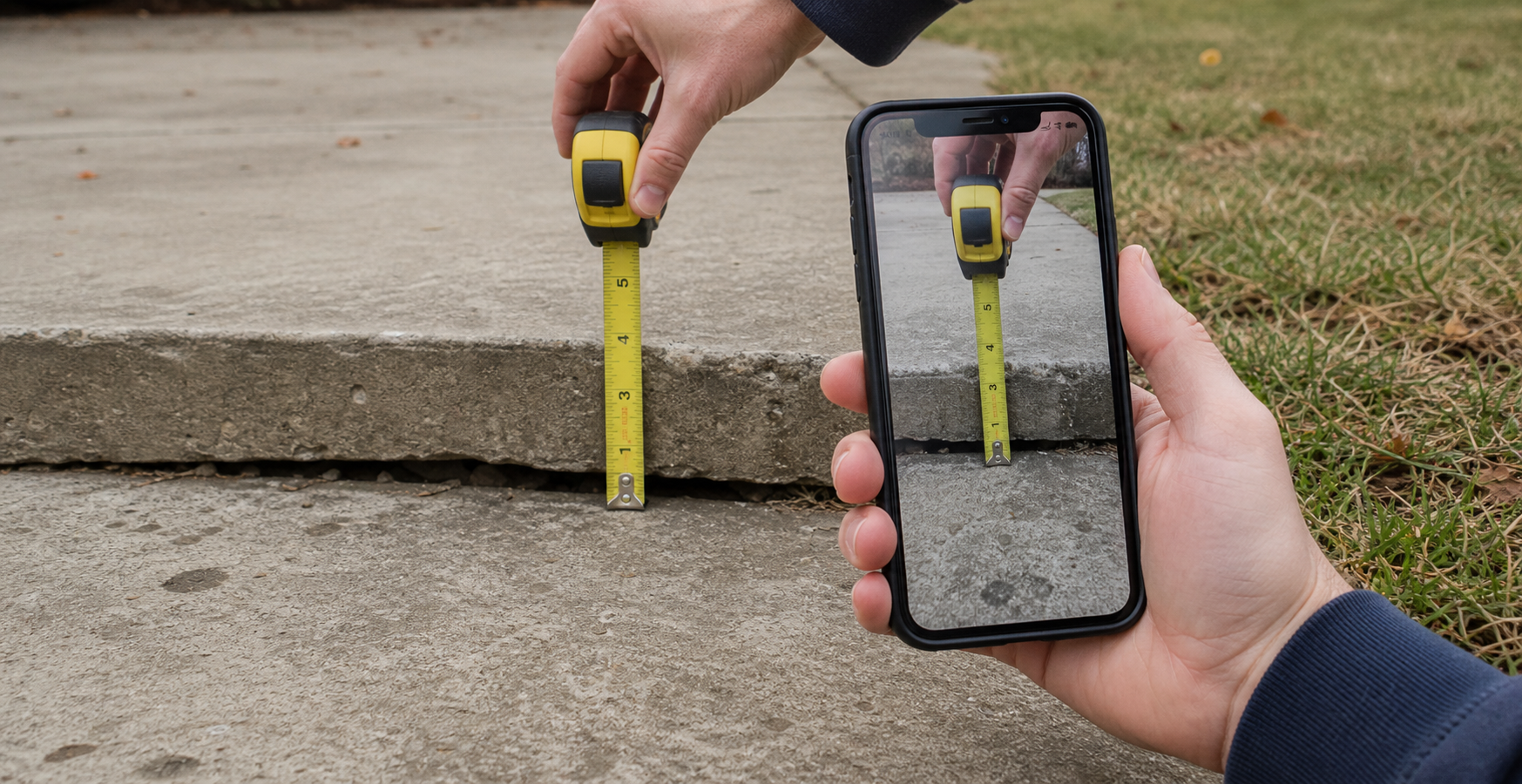
Text a wide shot, close-ups of the low joints, a tape measure showing the drop, and the address.
02
Review & quote
We look at the settlement, slab condition, and drainage, and follow up with a quote or questions.
03
Drill small ports
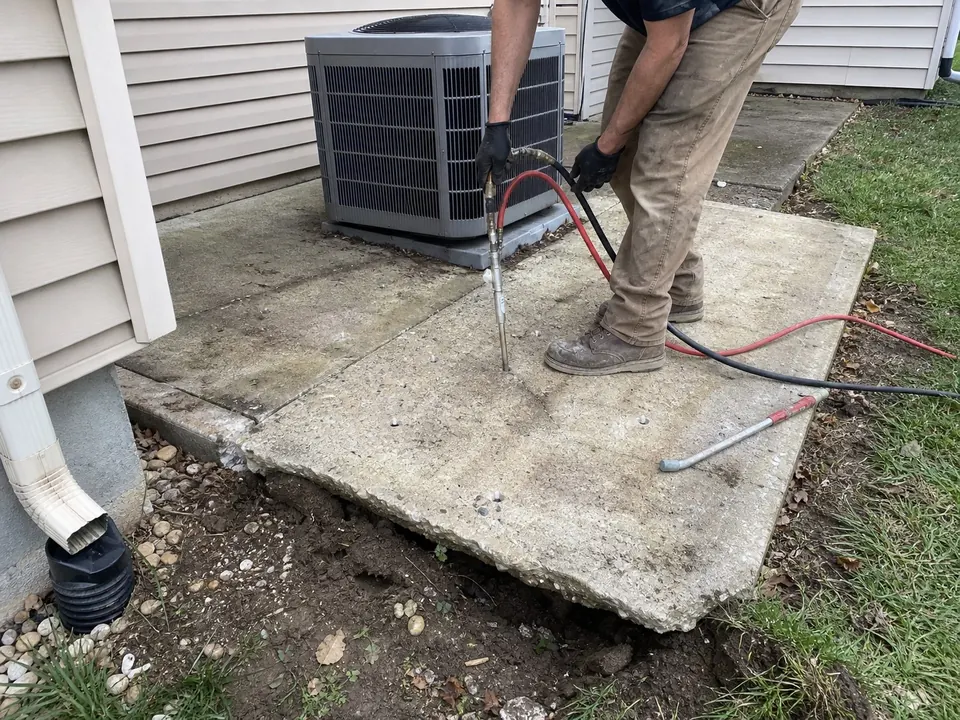
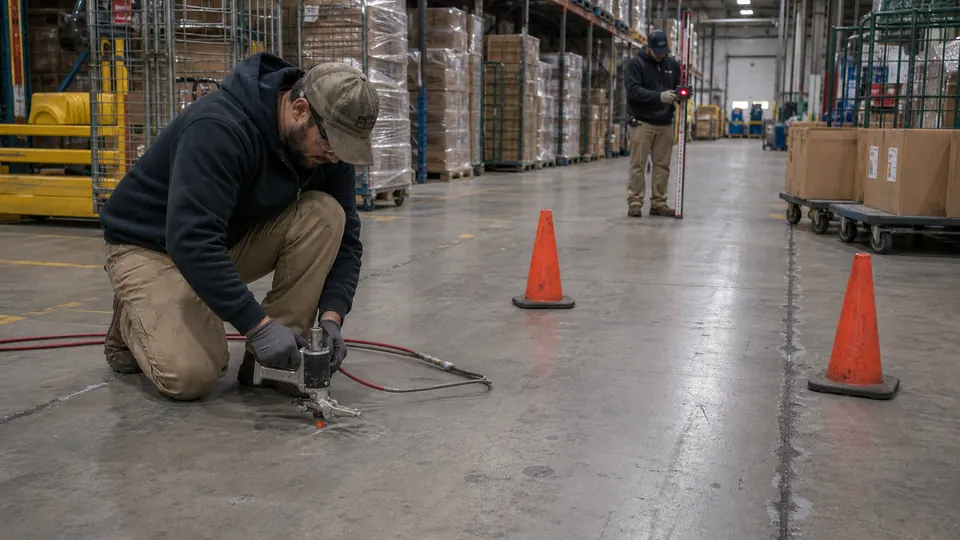
On the day of the repair we drill small access holes at planned points across the settled slab.
04
Lift in stages
Expanding polyurethane fills the voids and raises the concrete gradually while we watch the transitions.
05
Patch & clean up
Ports are patched, the area is cleaned, and the surface can usually be used again soon after.
Services in Gladstone
Concrete lifting services available in Gladstone, MO.
Metro Wide lifts and stabilizes most types of flatwork. Choose a service to learn how the repair works.
My Gladstone driveway is the original from the 1960s. Is it too old to lift?
Not necessarily. Age alone is not the issue; condition is. If the slab is still in large, solid pieces, it can often be lifted. If it is badly crumbling, broken into many small pieces, or the surface is flaking away, replacement may make more sense. Send photos and we will give you an honest opinion about which way to go.
Tree roots lifted part of my sidewalk. Can you fix that?
Foam lifting raises slabs that have sunk; it cannot lower a slab that a root has pushed up. In some cases we can raise the adjoining low panels to reduce the offset, but a heaved section may need to be cut, ground, or replaced. Photos of the area from a few angles help us tell which situation you have before you spend anything.
Can you quote my project from photos?
Usually, yes. Text a wide shot of the slab, close-ups of the low joints, a tape measure showing the drop, and your address. We look over the photos and reply with a quote or questions. An initial onsite visit is not always needed, and we will tell you if something in the pictures makes us want to see it in person.
Can leveling fix water running toward my foundation?
Sometimes. Raising a patio, walk, or driveway panel that settled toward the house can restore some pitch away from the foundation. Drainage also depends on gutters, downspouts, and surrounding grades, so we point out anything that is likely to undo the repair.
How big are the holes you drill?
Polyfoam lifting uses small access ports, much smaller than the holes used for traditional mudjacking. The number and placement depend on the slab. After the lift, the ports are patched.
How much does concrete leveling cost in Gladstone?
Pricing depends on the size of the slab, how far it has settled, how much void space is underneath, access, and how many areas need work, so we do not publish a flat price. Text photos, rough measurements, and your Gladstone address and we can usually provide a remote quote. Leveling is often far less disruptive than tearing out and replacing a slab that is still usable.
Gladstone Estimate
Find out if your Gladstone concrete can be saved.
Text a wide photo, a close-up of the uneven area, a tape measure showing the drop, and your address. We will review it and follow up with a quote.
We accept Visa, Mastercard, American Express, Discover, Venmo, cash, and checks. Ask about payment details when scheduling your project.
Kansas City Metro Coverage
Explore our general service area.
Zoom, drag, or select a marker to explore communities within Metro Wide’s 75-mile Kansas City service radius. Scheduling varies by address and project type.
 Garage floor leveling
 Steps leveling
 Porch & stoop leveling
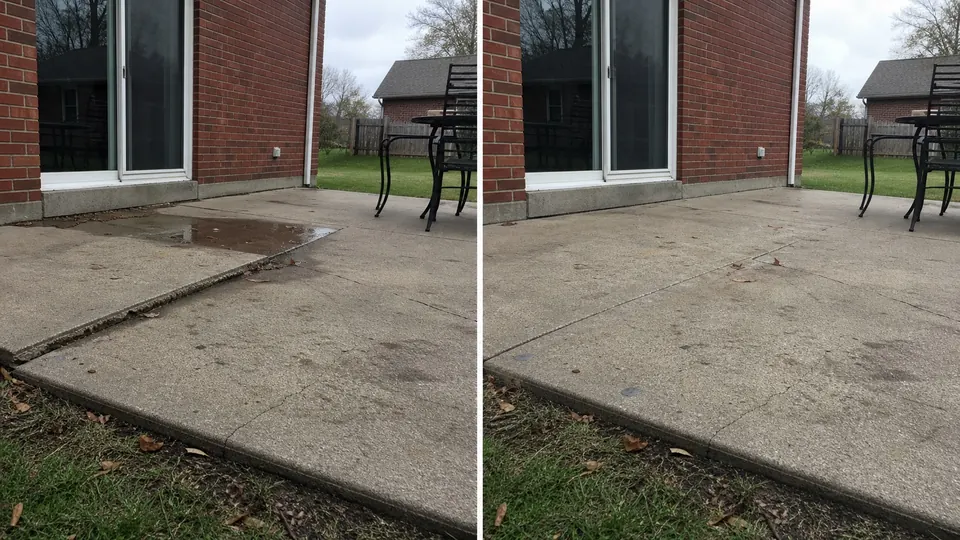 Patio leveling
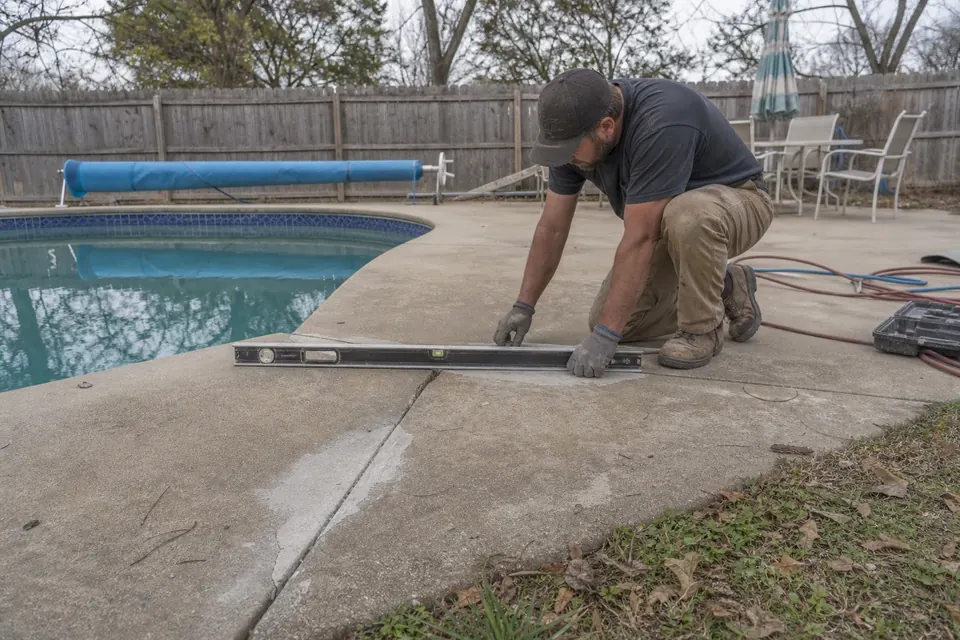 Pool deck leveling
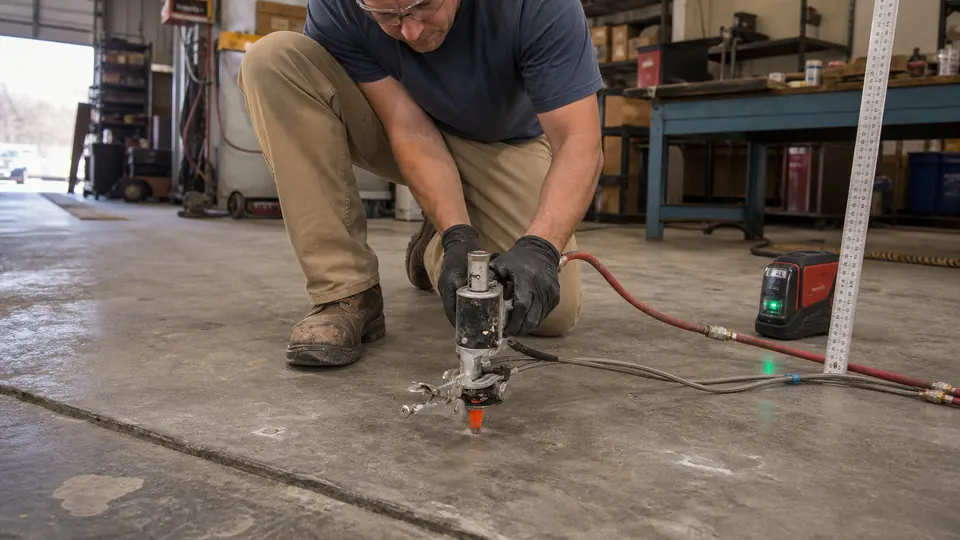 Concrete slab leveling
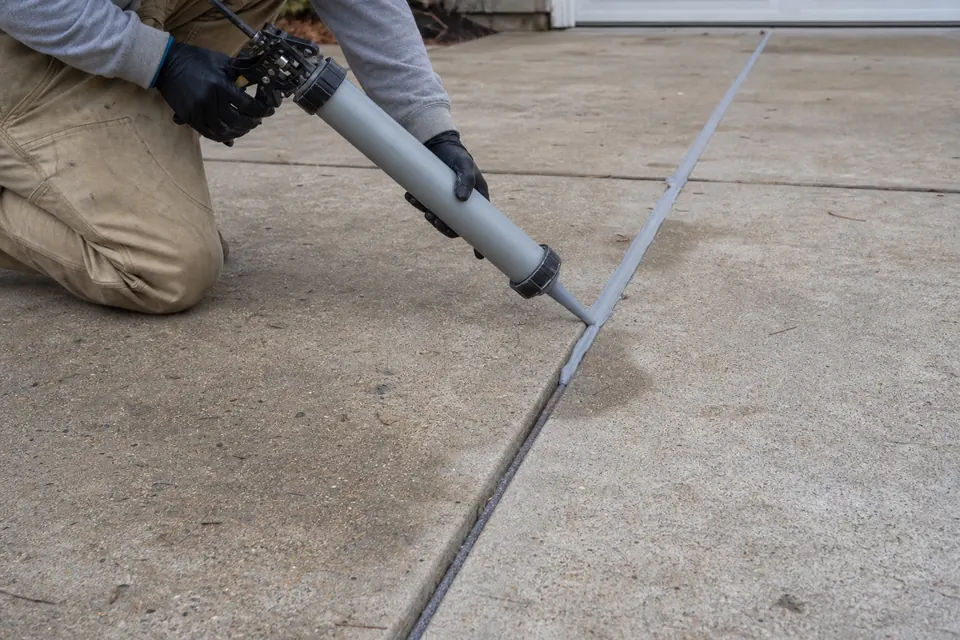 Crack & joint sealing