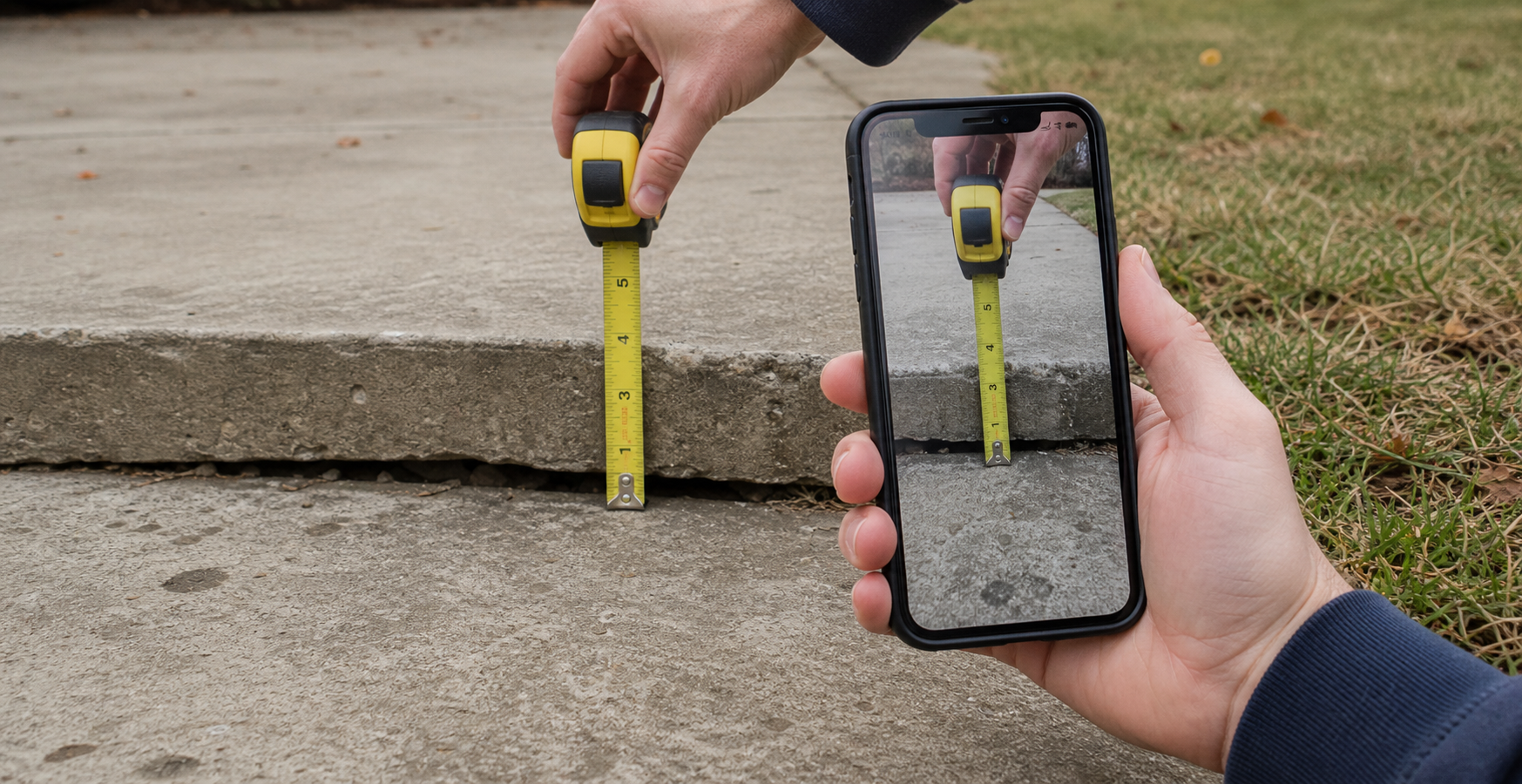
Garden City is a small town in southeastern Cass County, surrounded by farms and rural homes. Metro Wide lifts sunken porch slabs, walks, driveways, and outbuilding floors with polyurethane foam, and texted photos let us quote many projects remotely.
Most properties around Garden City are either homes in town on traditional lots or houses on acreage with outbuildings, long drives, and room to spread out. Both have concrete that settles over time. In town, we usually hear about porches, sidewalks, and driveway sections that have shifted. Out in the country, it is more often a shop floor, a slab in front of a barn or machine shed, or a patio behind a farmhouse that has tipped toward the foundation. Those slabs are often the ones people use every day, so a drop is hard to ignore.
Before you decide to break out and repour, it is worth knowing whether the concrete can be lifted. Polyurethane foam goes in through small ports drilled in the slab and expands to fill the empty space underneath, raising the concrete as it does. There is no heavy equipment, no haul-off, and no long cure time. We will look at your photos and tell you honestly whether lifting will work, or whether the slab is too far gone and should be replaced.
Garden City at a glance
Location: Garden City, MO, Cass County
Distance: about 43 miles southeast of downtown Kansas City
Method: polyurethane foam lifting through small ports
Estimates: free, often by text from your photos
Warranty: 2 years on residential lifting
Properties: residential and commercial
At roughly 43 miles southeast of downtown Kansas City, Garden City is in the outer part of our 75-mile coverage radius. We group projects by route, so starting with photos and measurements lets us quote the job remotely and schedule it efficiently.
Local Conditions
Why concrete settles in Garden City.
Southeastern Cass County has heavy clay soils, and clay is the main reason slabs move here. It expands when it absorbs water and contracts as it dries, so a wet spring followed by a hot summer can change the support under a slab noticeably in one year. Over many seasons, voids form along edges and under joints, and the concrete settles into them.
Rural properties often have little in the way of gutters, drainage pipe, or engineered grading. Water off a roof or down a driveway goes wherever the ground slopes, and that often means along a slab edge or under a patio. Older porches and walks may have been poured on minimal base. Freeze–thaw cycles in winter open joints a little more each year. And where a home or outbuilding was built on ground that was filled to make it level, that fill can keep compacting for a long time. We consider all of this when we look at your project. On older farmhouses, porches and stoops were sometimes added later and poured on less base than the original foundation.
Signs your slab has lost support
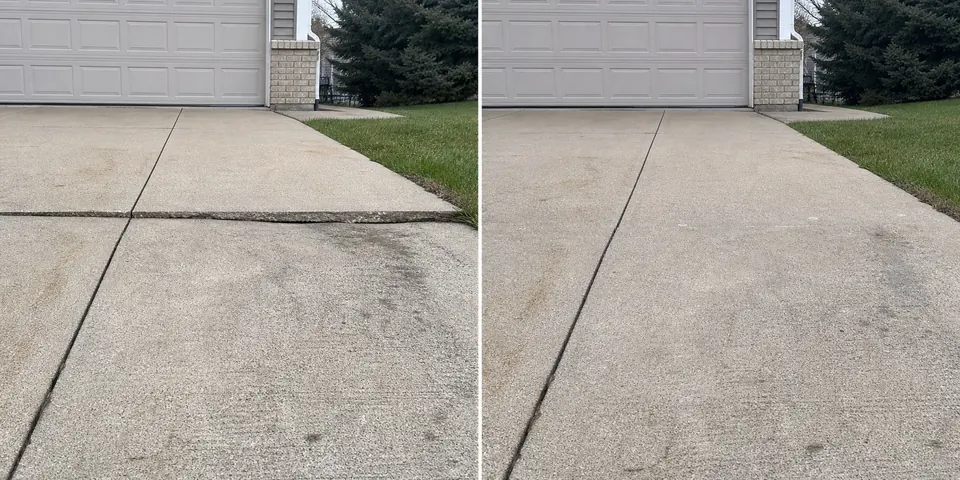
A lip or step-up at a driveway, sidewalk, or garage joint
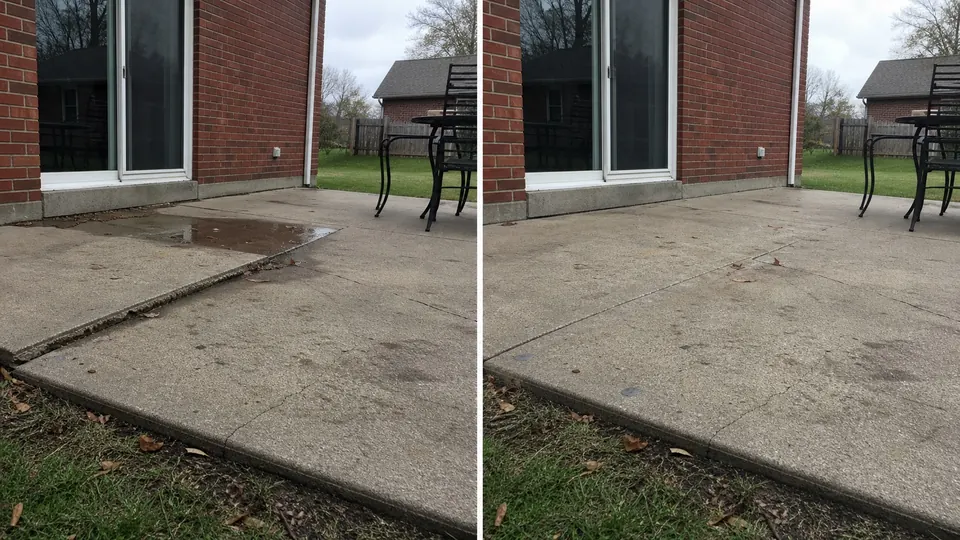
A patio or walk that tips toward the house
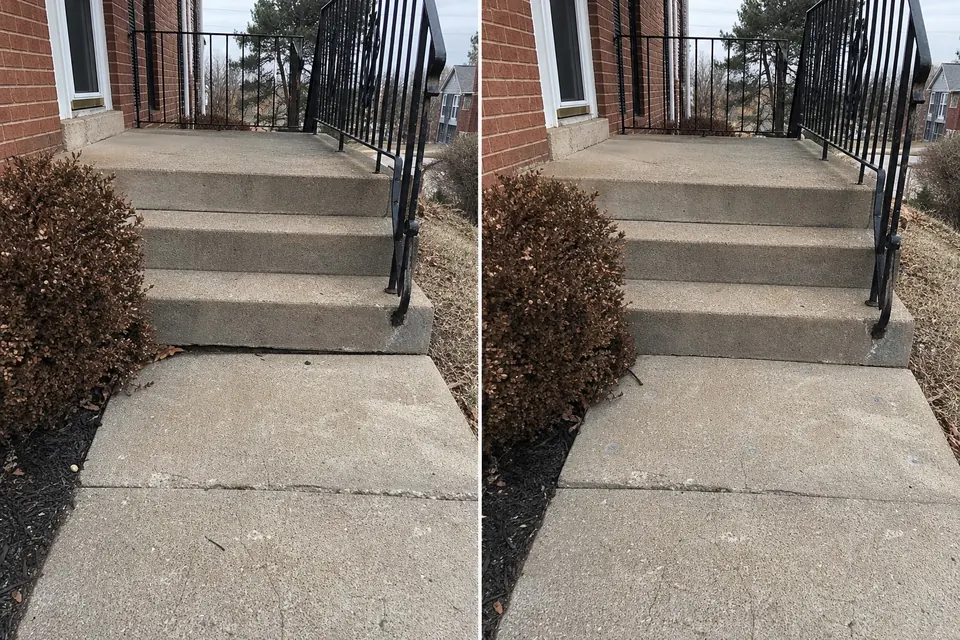
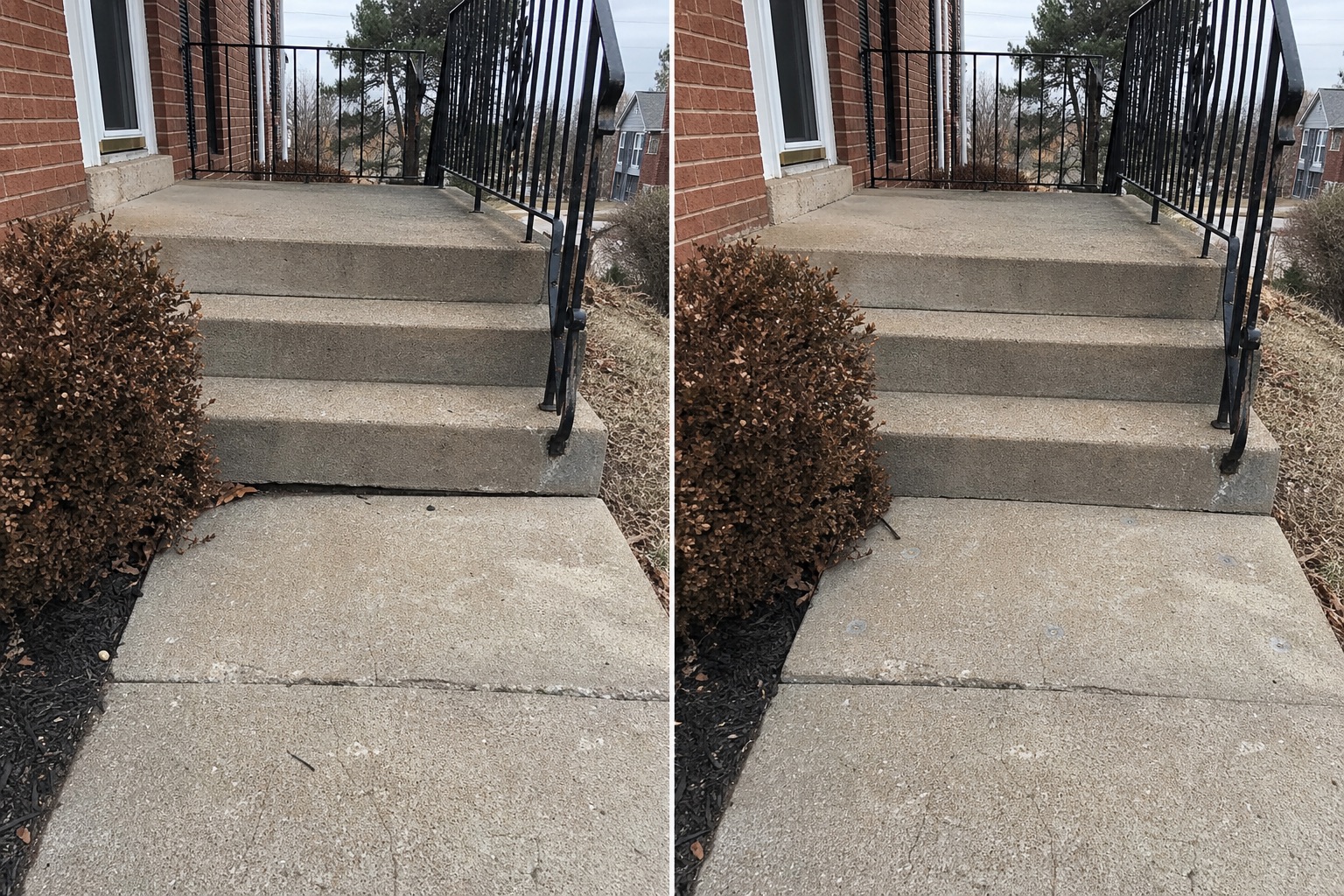
Gaps opening between steps, stoops, and the foundation
Water pooling on a slab or flowing toward the home
Hollow sounds or visible washout along a slab edge
Common Garden City Projects
The concrete we lift most often in Garden City.
Every slab is different, so we start with what is happening at your property. These are the repairs Garden City property owners ask us about most.
Farmhouse patios and back steps
Patios behind older farmhouses often settle toward the house, sending rain against the foundation. Raising the low side can restore slope away from the home when the slab is still in good condition. If the patio is cracked through in several places, we will tell you whether lifting still makes sense.
Slabs in front of barns and sheds
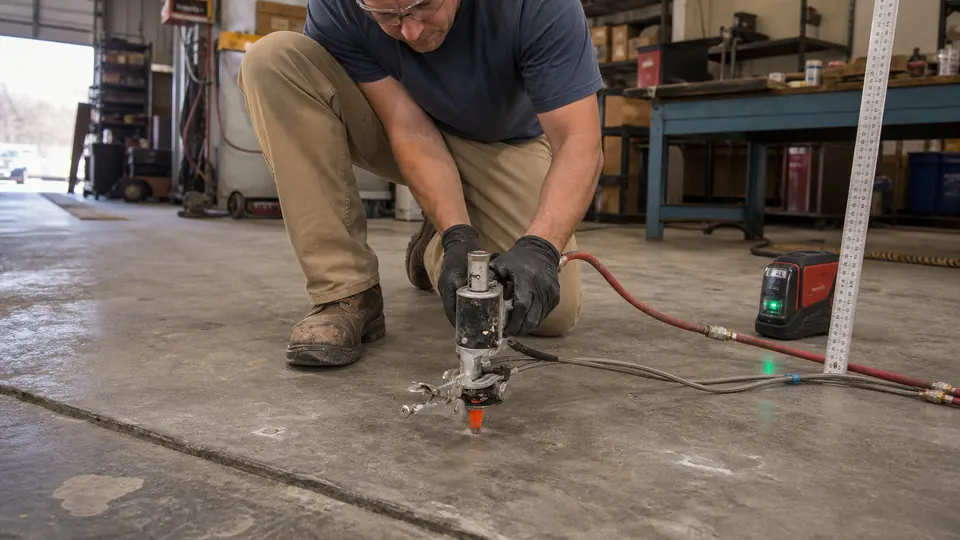
Concrete aprons in front of barns and machine sheds take heavy traffic and roof runoff. Lifting a sunken apron smooths the transition into the building and reduces water pooling at the door. That also makes it easier to drive equipment in without jolting it over a lip.
Porches pulling away from the house
When a porch slab drops at the house side, a gap opens that lets water reach the foundation. Lifting can close much of that gap and level the step to the door. Existing cracks will still show, but the porch will sit closer to where it started.
Sections of long driveways
Rural driveways rarely sink evenly. Often one or two sections drop near a culvert or low spot. We can lift just the settled sections so they line up with the rest of the drive. The rest of the drive stays as it is, which keeps the cost tied to the actual problem.
Our Garden City Leveling Process
From your first photo to a supported slab.
01
Send photos
Text a wide shot, close-ups of the low joints, a tape measure showing the drop, and the address.
02
Review & quote
We look at the settlement, slab condition, and drainage, and follow up with a quote or questions.
03
Drill small ports
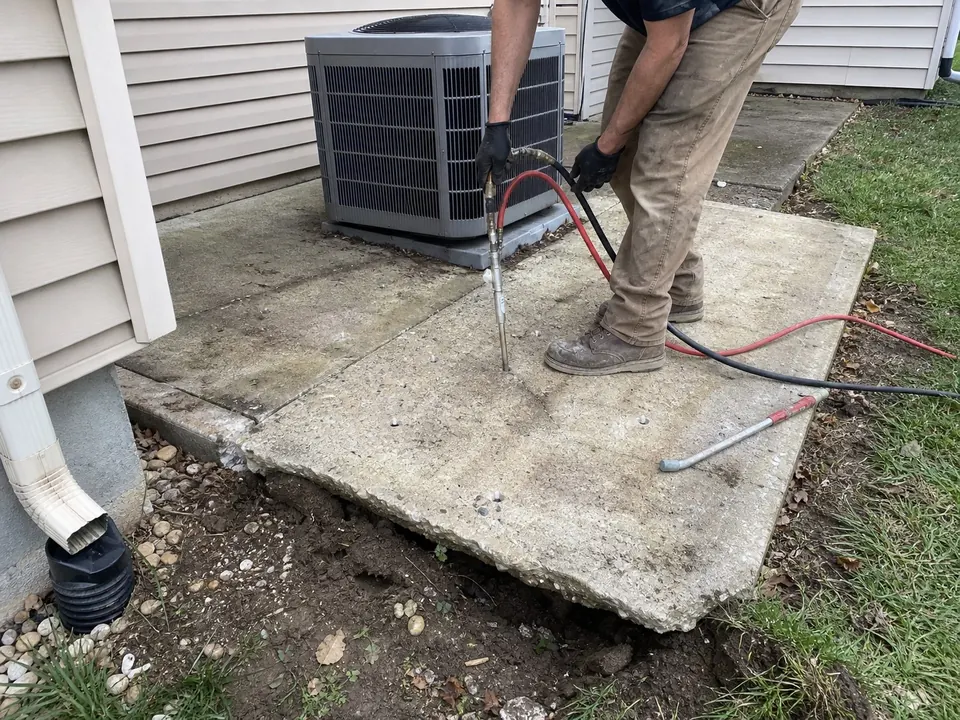
On the day of the repair we drill small access holes at planned points across the settled slab.
04
Lift in stages
Expanding polyurethane fills the voids and raises the concrete gradually while we watch the transitions.
05
Patch & clean up
Ports are patched, the area is cleaned, and the surface can usually be used again soon after.
Services in Garden City
Concrete lifting services available in Garden City, MO.
Metro Wide lifts and stabilizes most types of flatwork. Choose a service to learn how the repair works.
No. Garden City falls within our general 75-mile service radius around Kansas City. Scheduling depends on the address and the scope of the project, so we may group trips in the area when we can. The best first step is to text photos and your address. We can often quote remotely and confirm leveling is a good fit before making the drive.
Can you level only part of a long rural driveway?
Yes. We lift the sections that have settled and leave the rest alone. That is common on rural drives where one area sits over a low spot, a culvert, or softer ground. Send a photo of the full driveway plus close-ups of the low sections with a tape measure showing the drop, and we can tell you what is involved.
What causes the concrete to sink in the first place out here?
Mostly clay soil and water. Clay swells when wet and shrinks when dry, which leaves gaps under slabs over time. On rural properties, roof runoff and drainage often flow along slab edges without gutters or downspout extensions to redirect them. Lifting fills the voids, and we will point out any drainage changes that could help.
How big are the holes you drill?
Polyfoam lifting uses small access ports, much smaller than the holes used for traditional mudjacking. The number and placement depend on the slab. After the lift, the ports are patched.
How much does concrete leveling cost in Garden City?
Pricing depends on the size of the slab, how far it has settled, how much void space is underneath, access, and how many areas need work, so we do not publish a flat price. Text photos, rough measurements, and your Garden City address and we can usually provide a remote quote. Leveling is often far less disruptive than tearing out and replacing a slab that is still usable.
How soon can I use my driveway or walkway after leveling?
Polyurethane foam cures quickly, so foot traffic and normal use can usually resume much sooner than with newly poured concrete. The exact timing depends on the repair, and we give you specific instructions when the work is finished.
Garden City Estimate
Find out if your Garden City concrete can be saved.
Text a wide photo, a close-up of the uneven area, a tape measure showing the drop, and your address. We will review it and follow up with a quote.
We accept Visa, Mastercard, American Express, Discover, Venmo, cash, and checks. Ask about payment details when scheduling your project.
Kansas City Metro Coverage
Explore our general service area.
Zoom, drag, or select a marker to explore communities within Metro Wide’s 75-mile Kansas City service radius. Scheduling varies by address and project type.
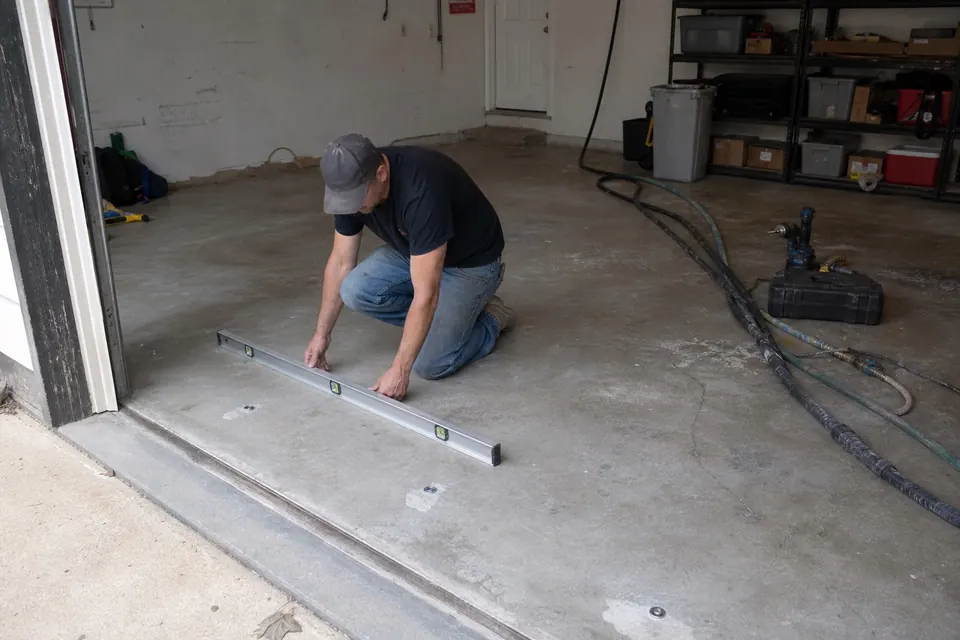 Garage floor leveling
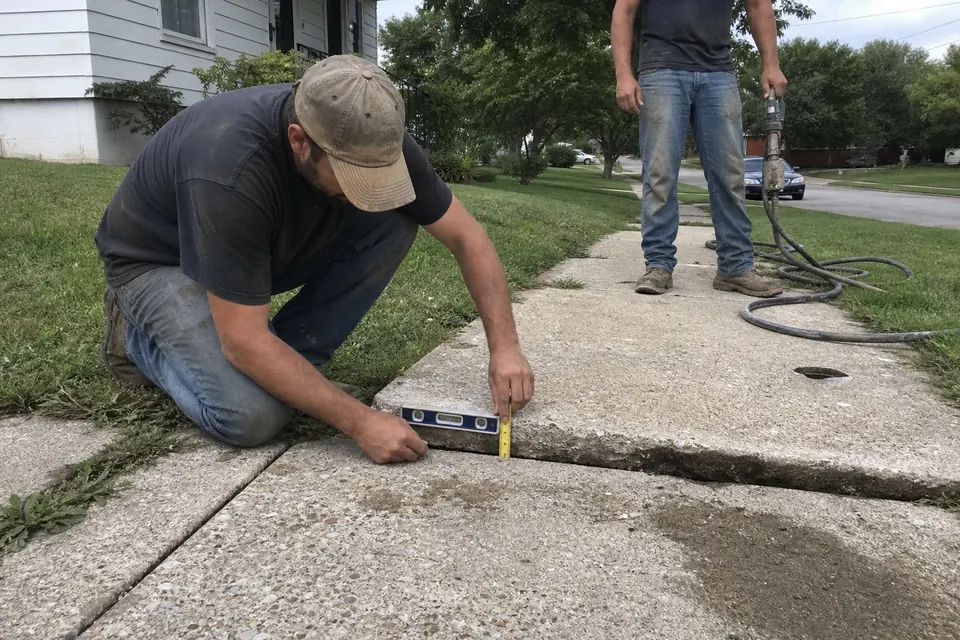
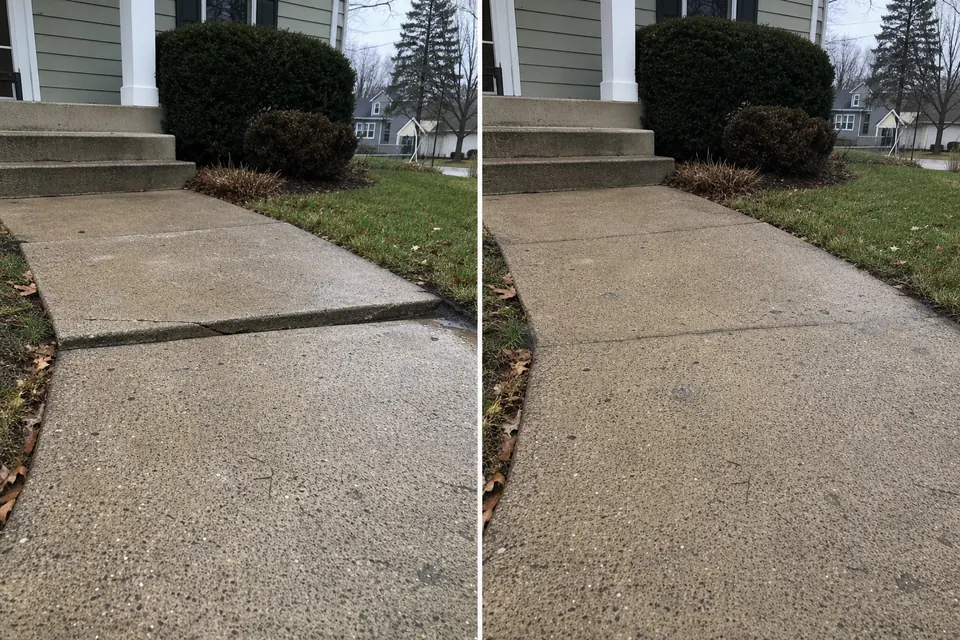 Sidewalk & walkway leveling
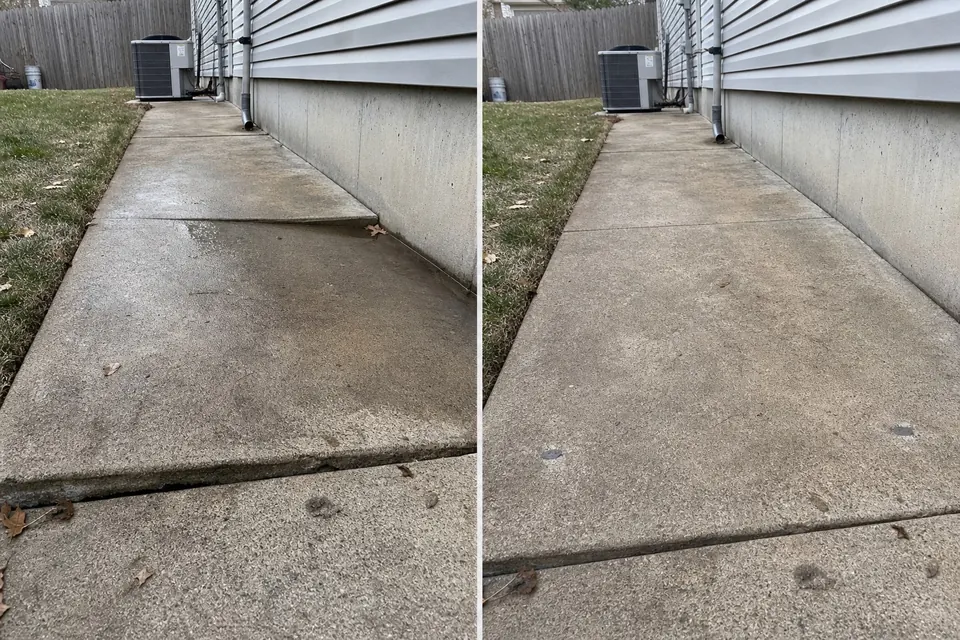 Porch & stoop leveling
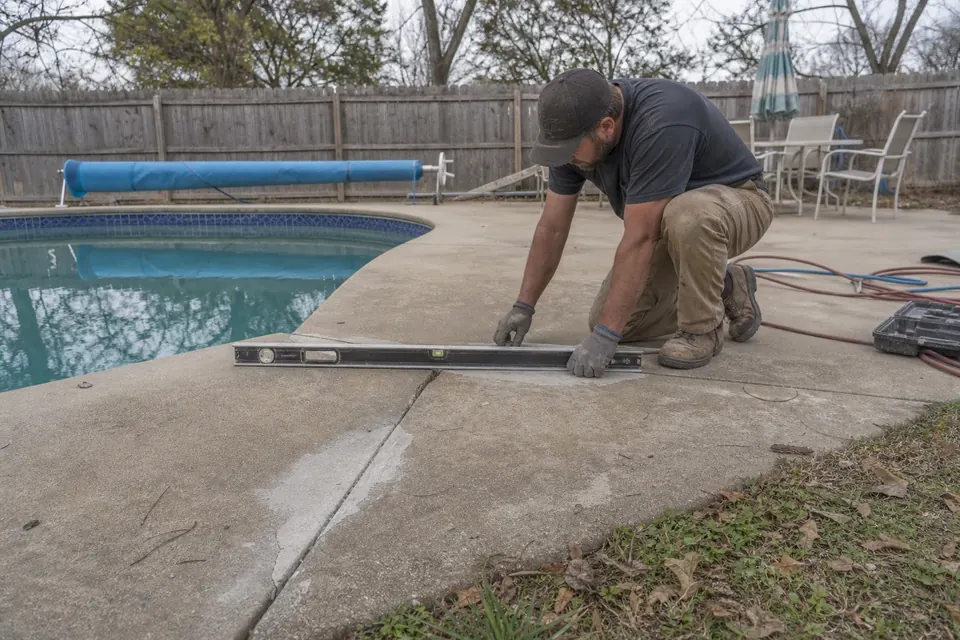 Pool deck leveling
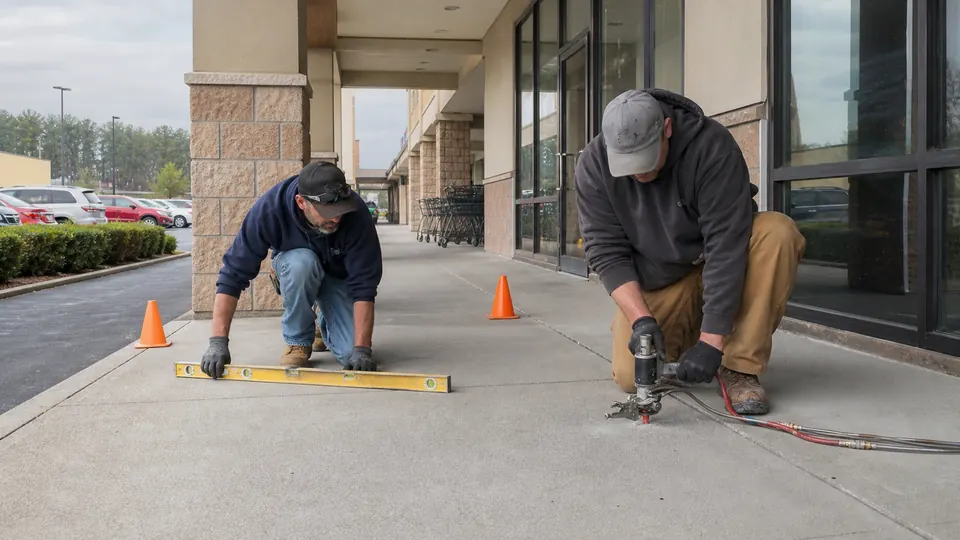 Commercial concrete leveling
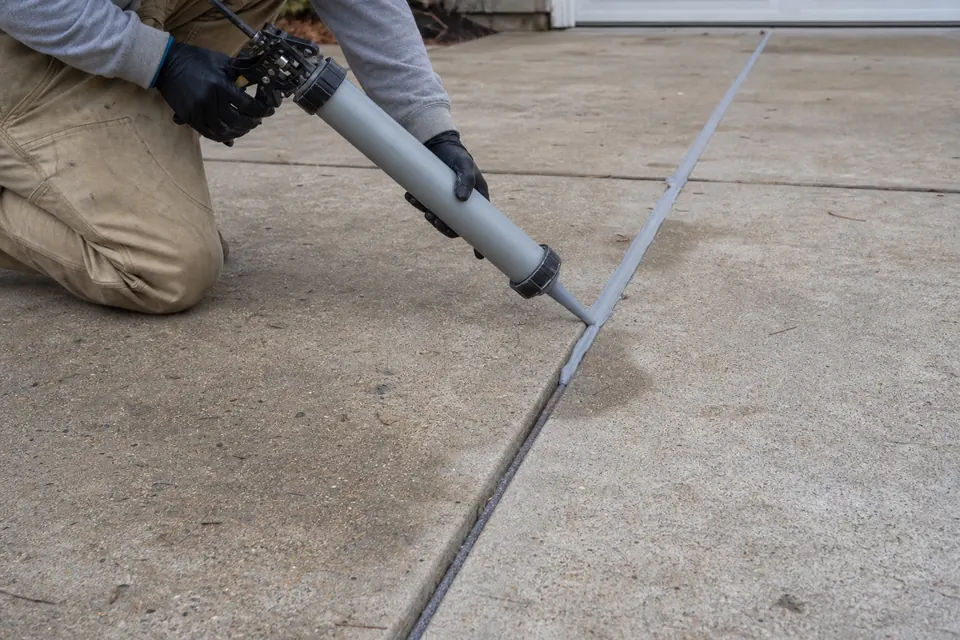 Crack & joint sealing