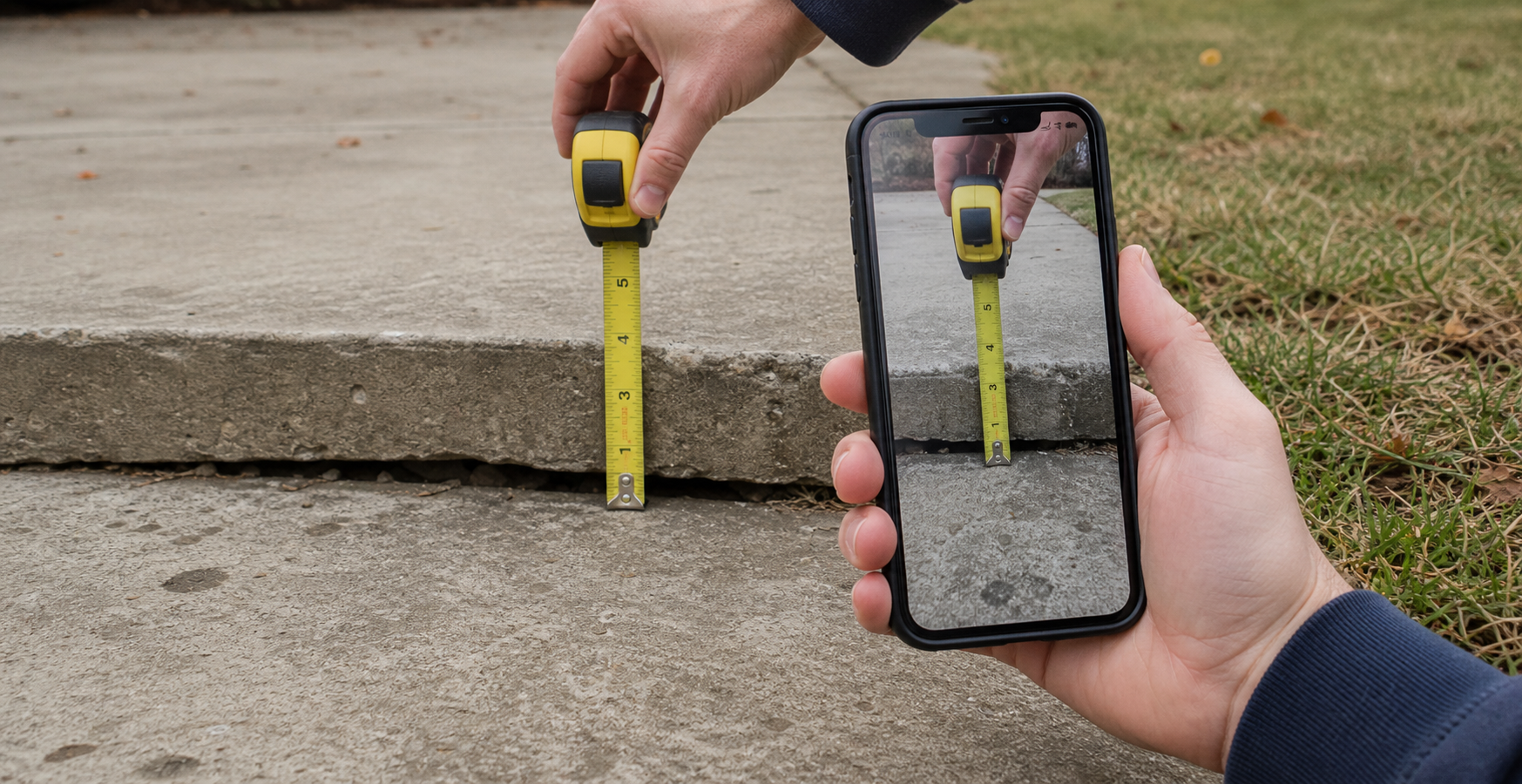
From century-old houses near the University of Kansas to newer subdivisions on the west side, Lawrence has a lot of concrete that has settled. Metro Wide lifts sunken driveways, walks, stoops and patios with polyurethane foam, and we can quote many jobs from texted photos.
Lawrence is the Douglas County seat and home to the University of Kansas, which sits atop Mount Oread above downtown and Massachusetts Street. Neighborhoods like Old West Lawrence, Oread and East Lawrence have homes dating to the 1800s and early 1900s, while areas west of Iowa Street and out toward Clinton Lake were built in later decades and continue to grow. North Lawrence sits across the Kansas River on low, flat ground.
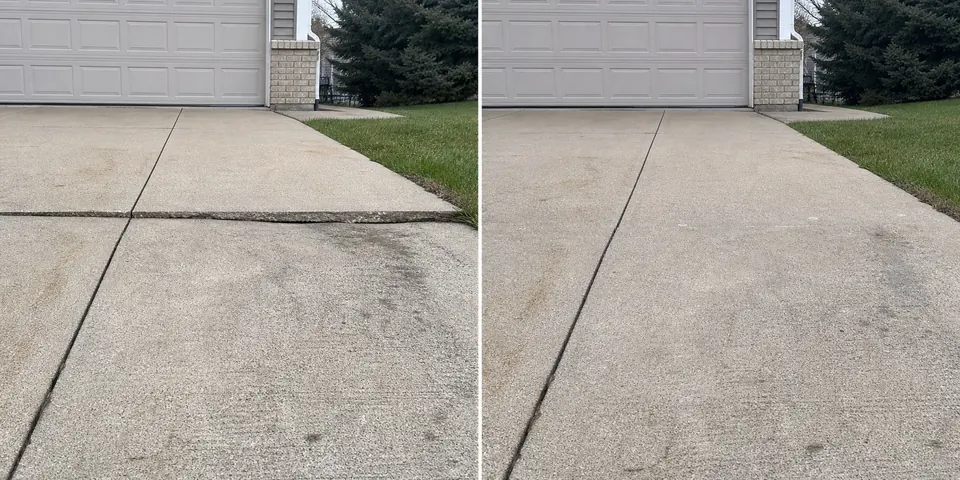
Lawrence also has a large number of rental houses, duplexes and apartment buildings serving students and university staff. For landlords and property managers, uneven walks and stoops are a safety and liability concern, and the summer turnover between leases can be a convenient time to address them. Homeowners deal with the familiar problems: driveway panels dropped at the garage, walks with lips at the joints and patios tilting toward the house.
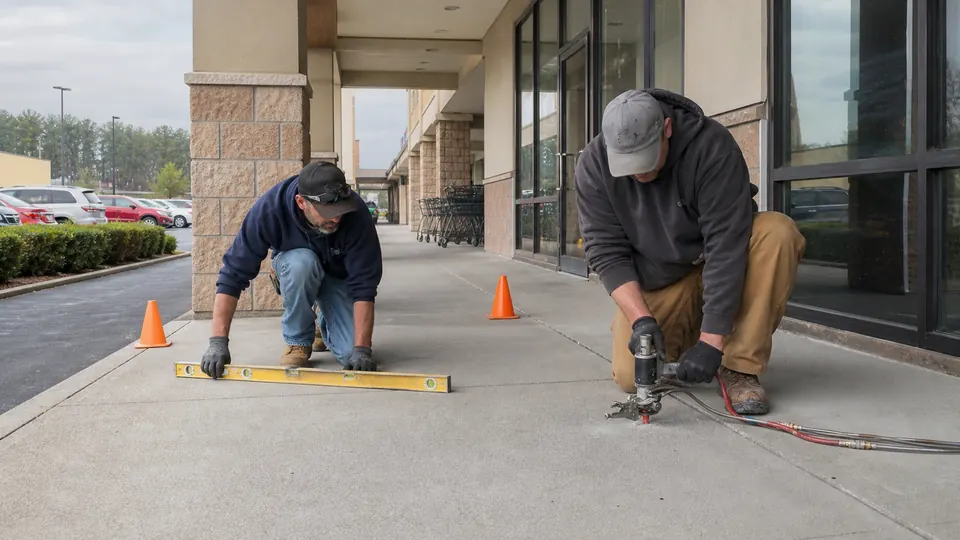
Polyurethane foam lifting raises intact slabs through small ports with no tear-out, a practical choice for both owner-occupied homes and rental properties. Residential lifts carry our 2-year warranty, and crack and joint sealing is available separately.
Lawrence at a glance
Location: Lawrence, KS, Douglas County
Distance: about 36 miles west of downtown Kansas City
Method: polyurethane foam lifting through small ports
Estimates: free, often by text from your photos
Warranty: 2 years on residential lifting
Properties: residential and commercial
Lawrence sits roughly 36 miles west of downtown Kansas City, well inside Metro Wide’s 75-mile coverage radius. Scheduling depends on the address and the size of the project, and a remote quote from your photos lets us plan the trip before we arrive.
Local Conditions
Why concrete settles in Lawrence.
Lawrence's geography is unusually varied. North Lawrence and other areas near the Kansas and Wakarusa Rivers sit on alluvial soils of silt, sand and clay laid down by floods over thousands of years. Those soils can be soft and hold groundwater close to the surface. Up the hill, Mount Oread and the surrounding uplands have clay and weathered rock soils, and steep streets mean many homes are built on cut-and-fill lots.
Age plays a big role in central Lawrence. Homes near downtown and the university have concrete that has been patched, replaced in sections and dug through for sewer and water lines over the decades. Old trees line many streets and draw moisture from the soil each summer. On the newer west side, settling more often comes from fill on graded lots and around deep foundations.
Across town, freeze-thaw cycles, roof runoff and the shrink-swell behavior of clay all work together. When we lift a slab, we will point out the drainage issues we see so the repair has a better chance of lasting.
Signs your slab has lost support
A lip or step-up at a driveway, sidewalk, or garage joint
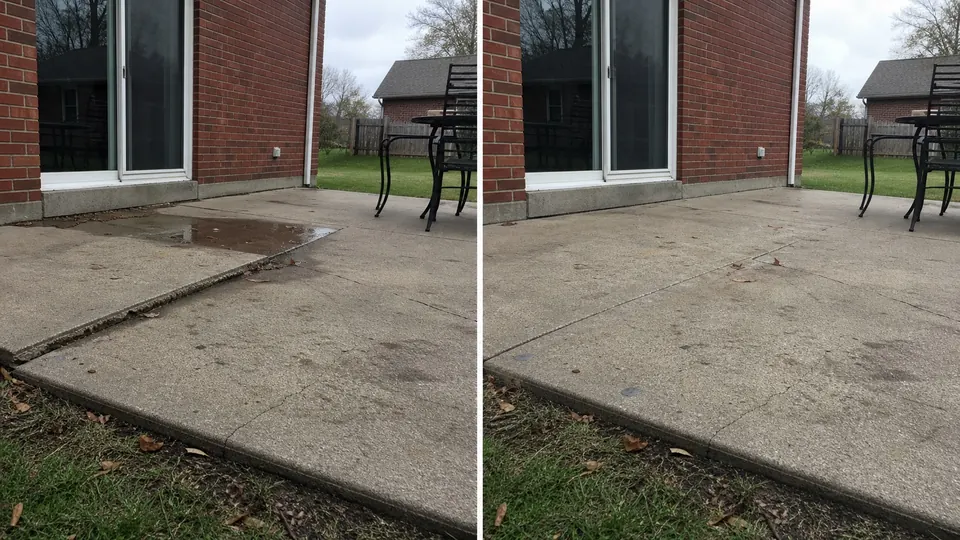
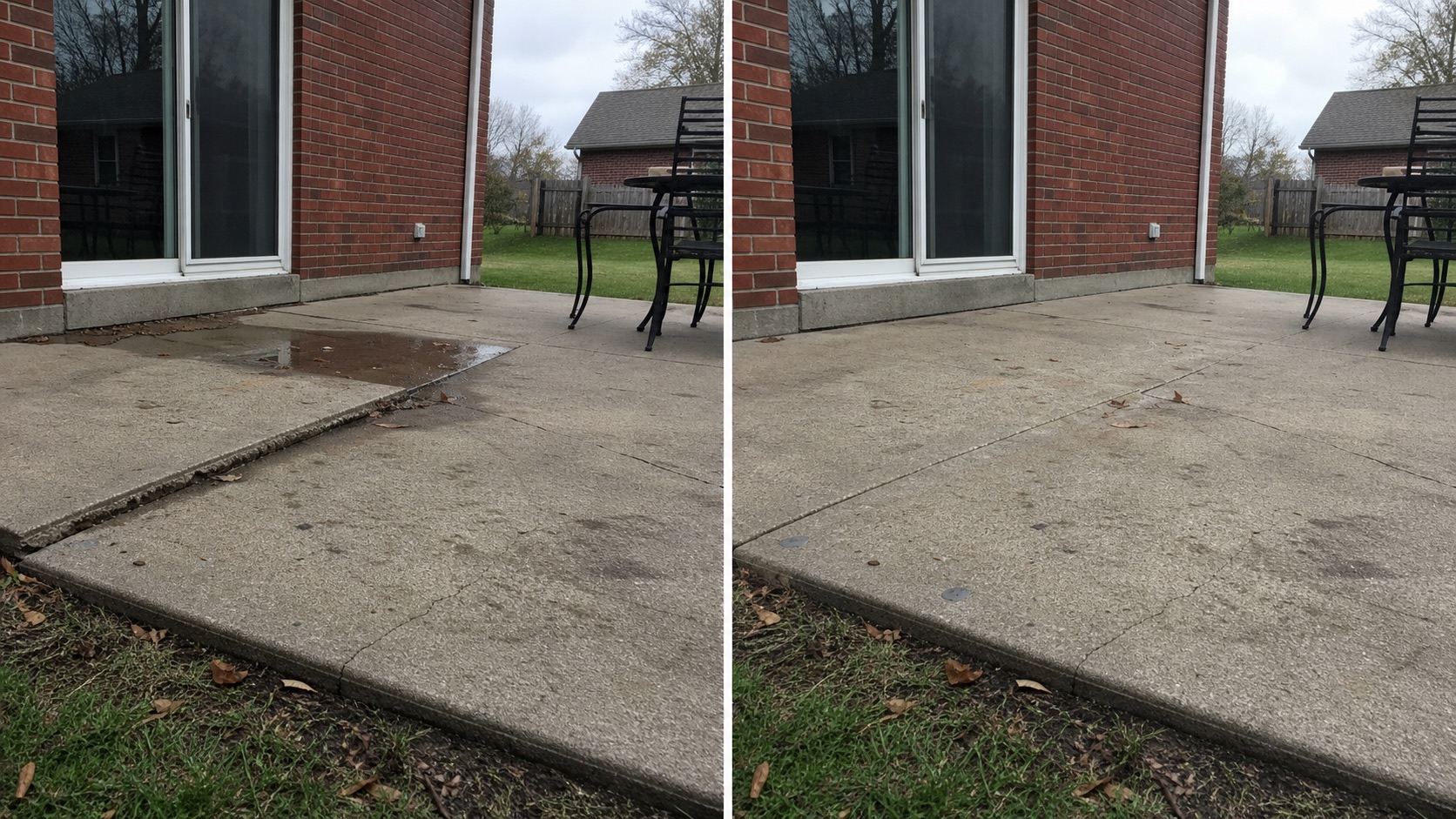
A patio or walk that tips toward the house
Gaps opening between steps, stoops, and the foundation
Water pooling on a slab or flowing toward the home
Hollow sounds or visible washout along a slab edge
Common Lawrence Projects
The concrete we lift most often in Lawrence.
Every slab is different, so we start with what is happening at your property. These are the repairs Lawrence property owners ask us about most.
Student rental entries
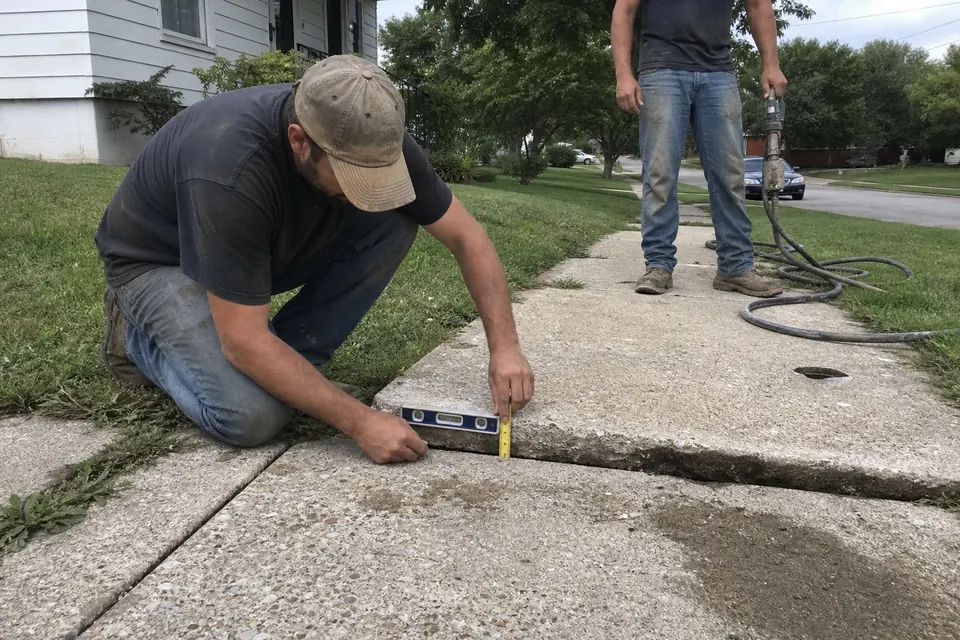
Houses and duplexes near campus often have stoops and walks that have settled after many years of heavy use. Lifting the low sections removes trip edges at entries tenants use every day, without closing the walk while new concrete cures.
Driveways on hillside streets
Steep streets around Mount Oread mean many driveways sit on cut-and-fill ground. When the low side drops, lifting it back into line reduces the edges that catch tires and shovels and makes the drive easier to manage in winter.
Patios in newer west-side homes
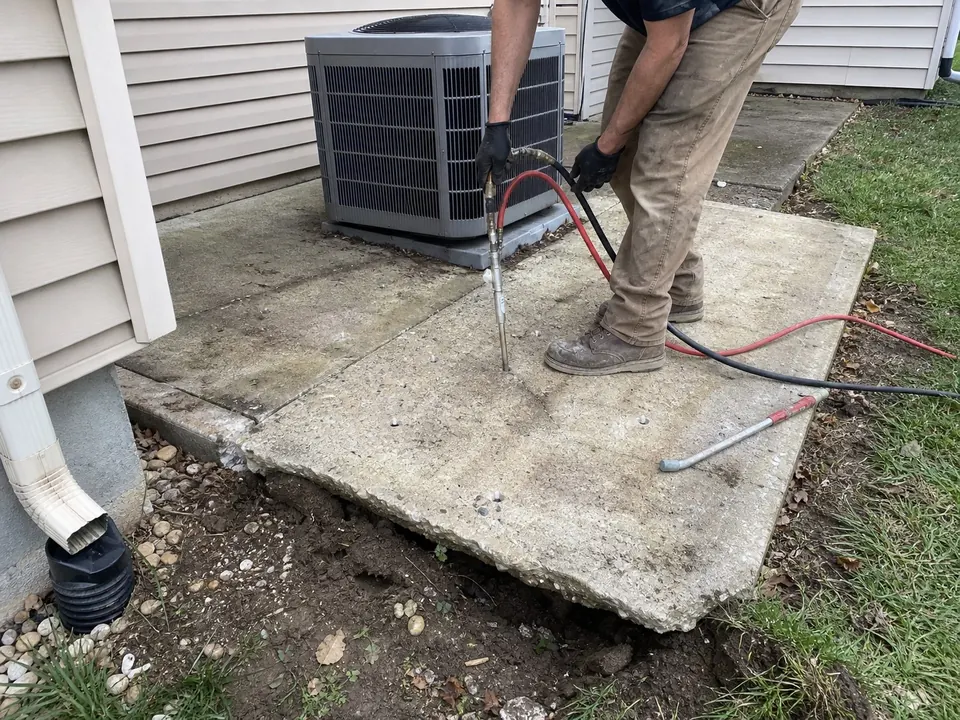
Patios poured on backfill behind newer homes in west Lawrence often sink toward the house. Raising the low side restores slope toward the yard, and away from the foundation, where the slab, threshold and surrounding grades allow it.
Slabs on North Lawrence river soils
Homes and businesses on the flat ground north of the river sit on softer alluvial soils. Where slabs are intact, foam can fill the voids and lift them, and we will talk with you about drainage that helps them stay put.
Our Lawrence Leveling Process
How a polyfoam lift works, step by step.
01
Send photos
Text a wide shot, close-ups of the low joints, a tape measure showing the drop, and the address.
02
Review & quote
We look at the settlement, slab condition, and drainage, and follow up with a quote or questions.
03
Drill small ports
On the day of the repair we drill small access holes at planned points across the settled slab.
04
Lift in stages
Expanding polyurethane fills the voids and raises the concrete gradually while we watch the transitions.
05
Patch & clean up
Ports are patched, the area is cleaned, and the surface can usually be used again soon after.
Services in Lawrence
Concrete lifting services available in Lawrence, KS.
Metro Wide lifts and stabilizes most types of flatwork. Choose a service to learn how the repair works.
Yes. Lawrence is within our general service area, which covers about 75 miles around Kansas City. Scheduling depends on your address and the size of the project. The easiest first step is to text photos of the concrete with your address, so we can give you a remote quote before planning a trip and let you know if anything needs a closer look.
My house is in North Lawrence. Is settling worse near the river?
Soils near the Kansas River are mostly deposits of silt, sand and clay that can be softer and wetter than upland soils, so slabs there can be more prone to settling and to soil washing out from underneath. That doesn't rule out lifting. If the concrete is intact, foam can fill the voids and raise it. Managing roof water and grading is especially important on this kind of ground.
Can you lift the concrete steps on an old Lawrence house?
It depends on how the steps are built. Solid concrete steps and landings can often be lifted as a unit, while hollow steps or steps built from brick or stone usually need a different repair. Photos from the side showing how the steps meet the house and the walk help us tell the difference. We will let you know honestly whether foam is a good fit.
Is polyurethane foam better than mudjacking?
Both methods lift concrete by filling the space underneath it. Polyurethane uses smaller holes, weighs far less than a cement slurry, cures quickly, and resists washing out. See our polyurethane vs. mudjacking comparison for a full breakdown.
Do you offer a warranty?
Yes. Residential concrete lifting from Metro Wide is backed by a 2-year warranty. We will explain what is covered for your project when we provide the quote.
When is replacement a better choice than leveling?
If the concrete is badly broken, crumbling, severely spalled, or cannot move without damaging a fixed structure, replacement may be the better investment. We tell you when a slab is not a good lifting candidate rather than recommending a repair that will not hold up. Our leveling vs. replacement guide covers the trade-offs.
Lawrence Estimate
Find out if your Lawrence concrete can be saved.
Text a wide photo, a close-up of the uneven area, a tape measure showing the drop, and your address. We will review it and follow up with a quote.
We accept Visa, Mastercard, American Express, Discover, Venmo, cash, and checks. Ask about payment details when scheduling your project.
Kansas City Metro Coverage
Explore our general service area.
Zoom, drag, or select a marker to explore communities within Metro Wide’s 75-mile Kansas City service radius. Scheduling varies by address and project type.
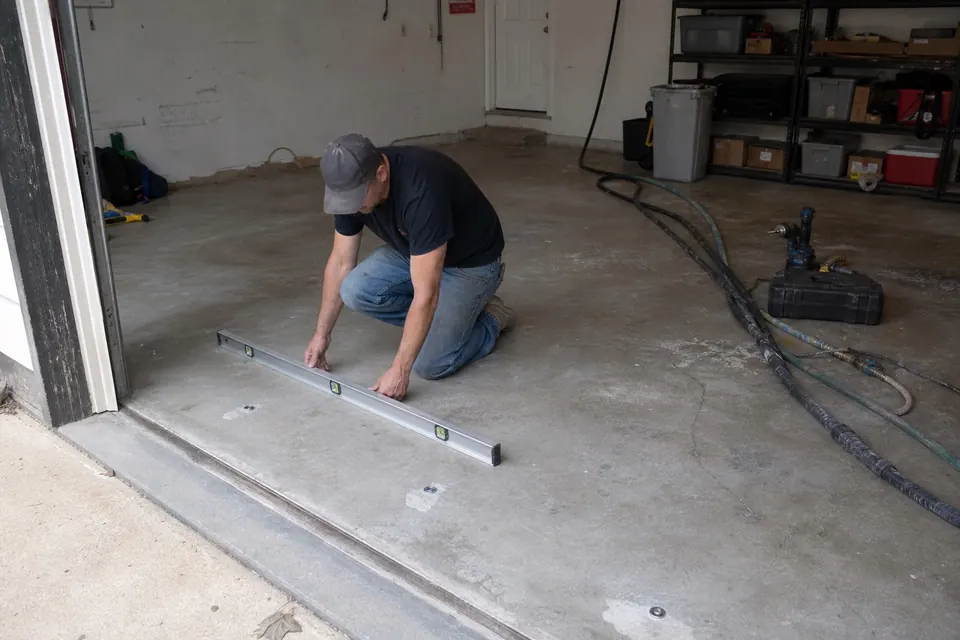 Garage floor leveling
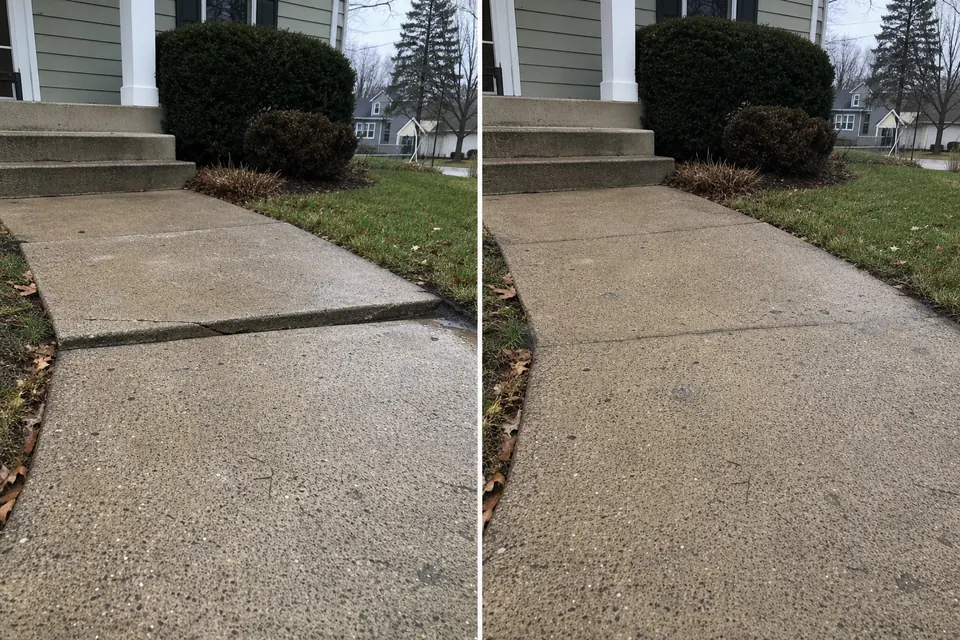 Sidewalk & walkway leveling
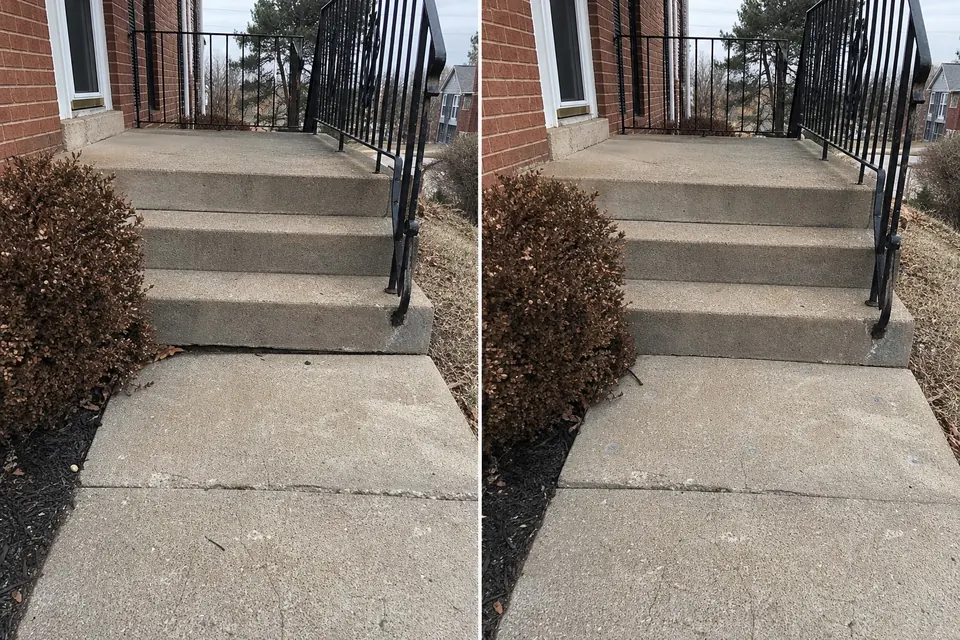 Steps leveling
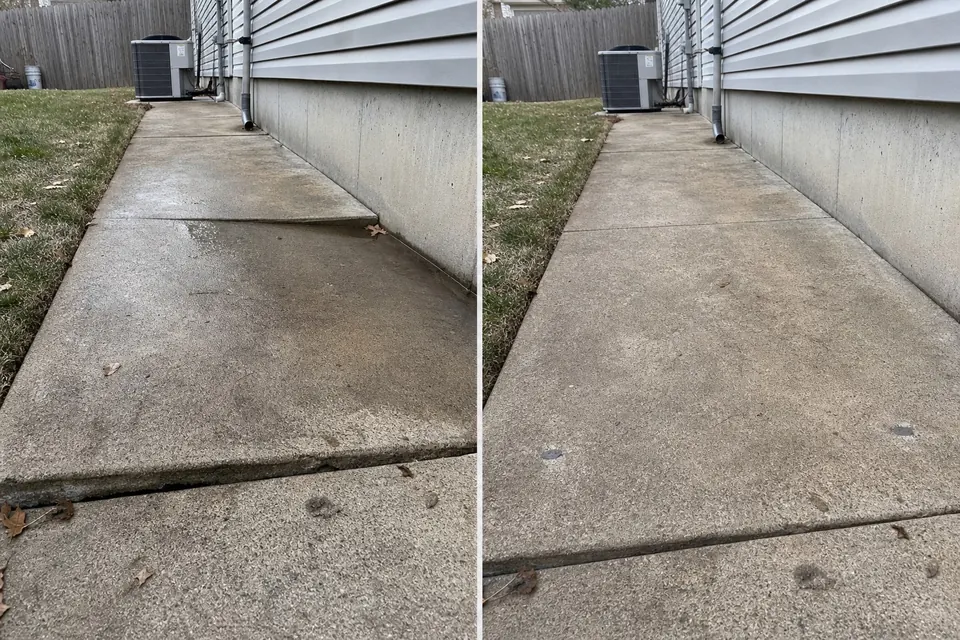 Porch & stoop leveling
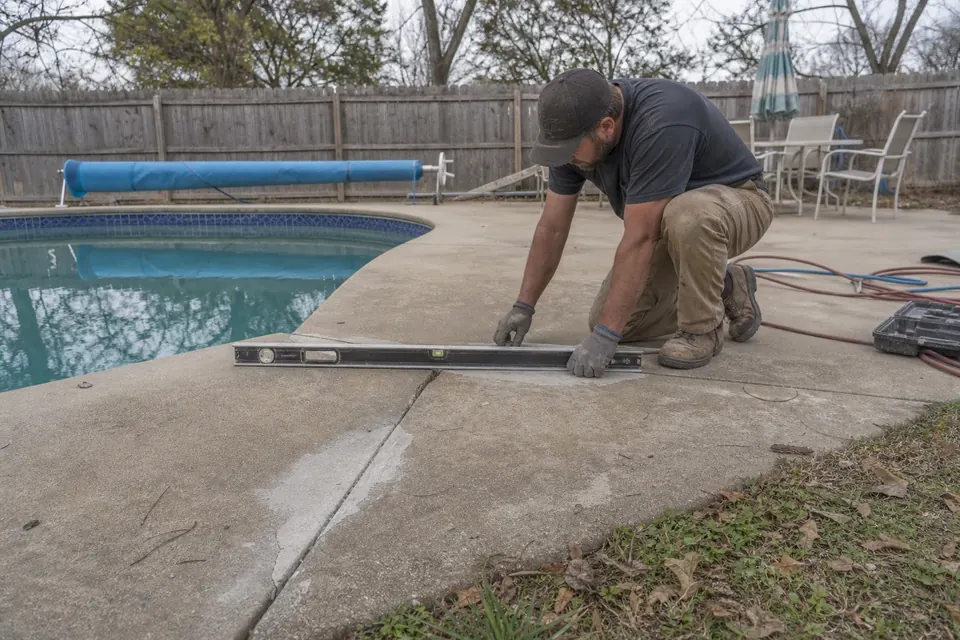 Pool deck leveling
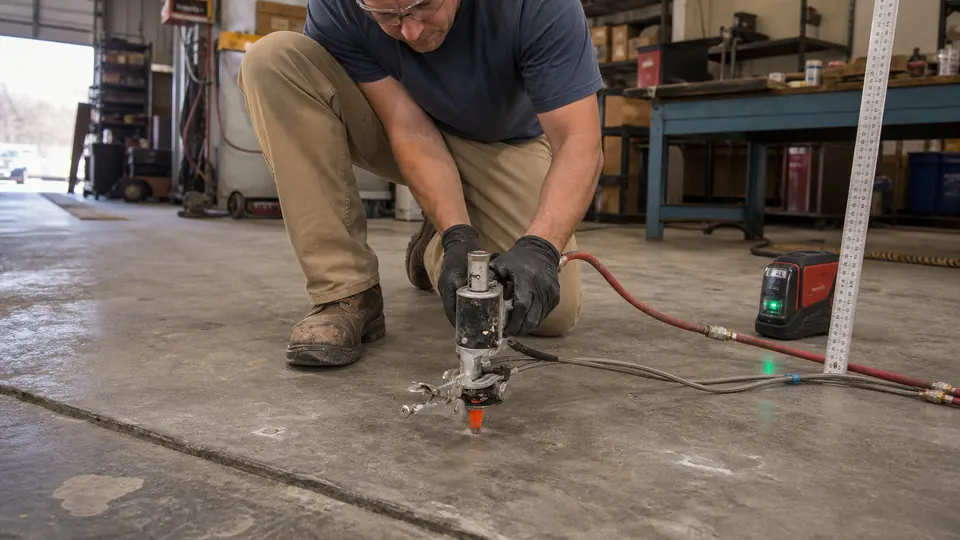 Concrete slab leveling
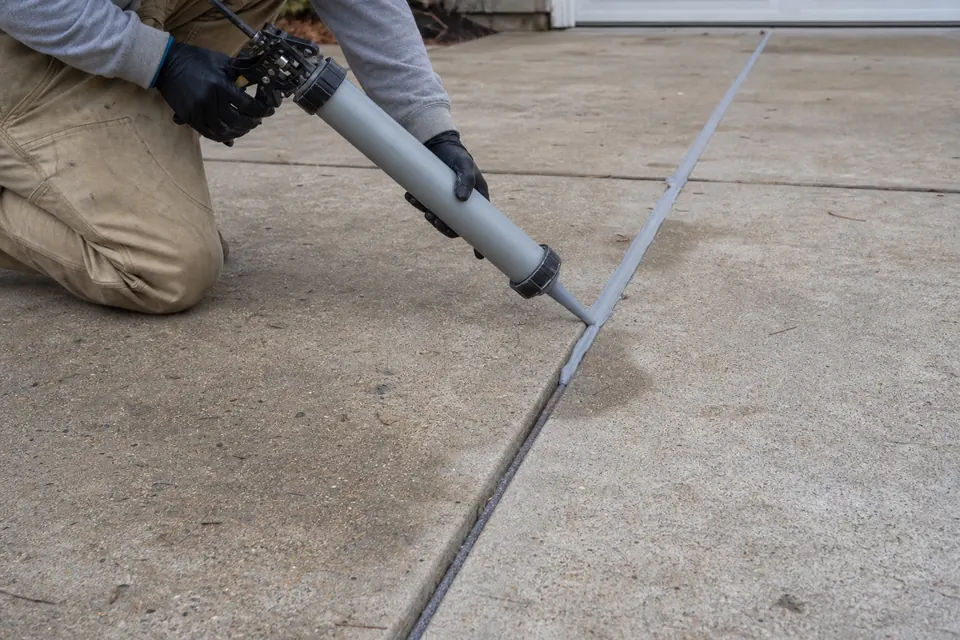 Crack & joint sealing