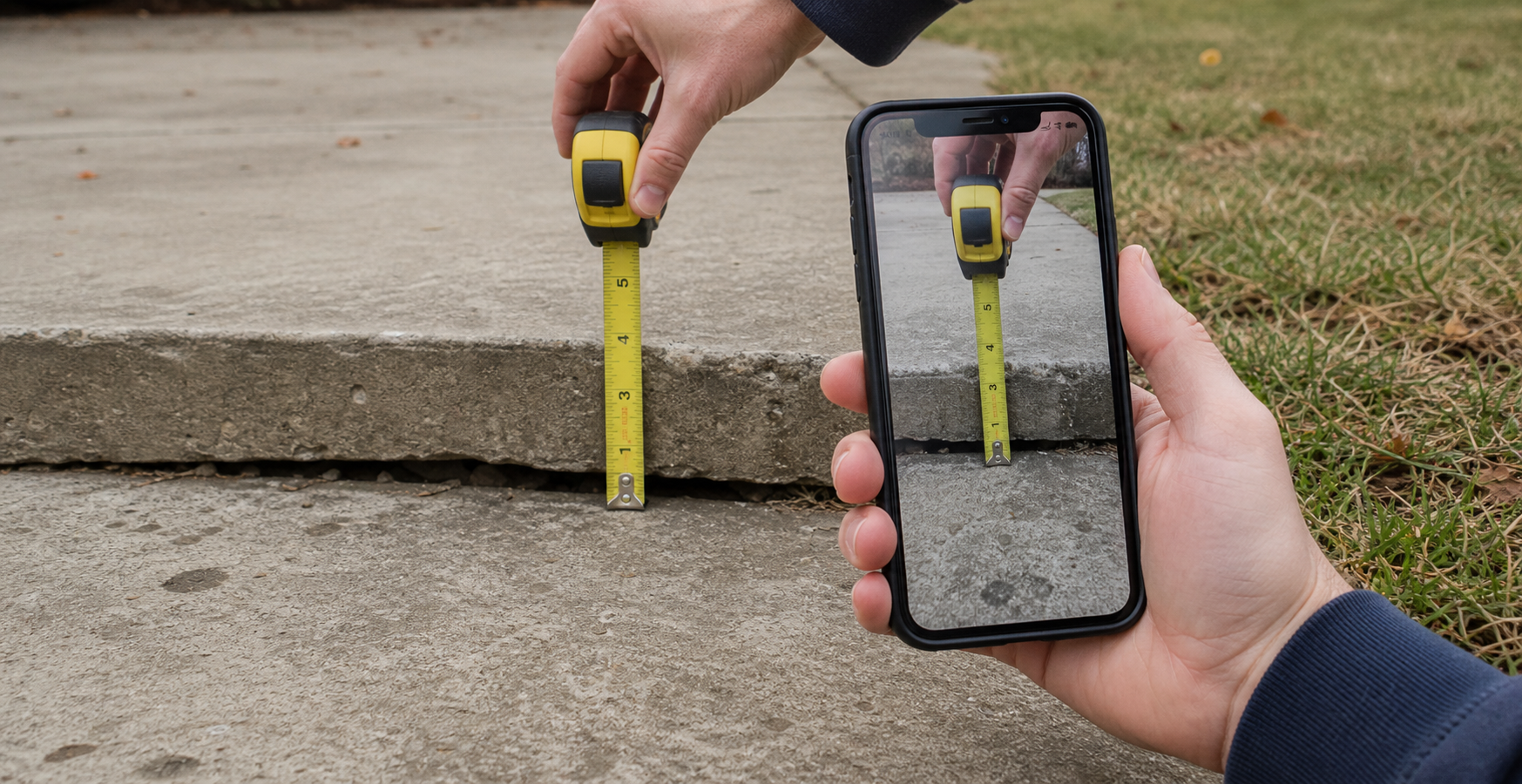
Many Grandview homes date to the 1950s and 1960s, and decades of freeze–thaw and runoff have taken a toll on their concrete. Metro Wide lifts sunken driveways, walks, steps, and patios with polyurethane foam, so you can fix the problem without starting over.
Grandview, best known as Harry Truman’s hometown, grew into a suburb in the years after World War II. Much of its housing went up in the 1950s and 1960s, including ranch homes and split-levels on gently rolling lots. Newer pockets have been added since, but a large share of the concrete around town is several decades old.
That age shows up in predictable ways. Homeowners tell us about a driveway that now has a step-up at the garage, a walk where one panel sits an inch or more below the next, or a patio that has settled toward the back door and sends rainwater against the foundation. Rental owners in Grandview also call about walks and steps that have become trip hazards for tenants.
Polyurethane foam lifting raises those slabs through small ports, fills the voids that formed underneath, and cures quickly. There is no breaking out concrete, no haul-off, and no long wait for new concrete to cure. We also work on commercial properties near Main Street, Truman Corners, and the I-49 corridor.
Grandview at a glance
Location: Grandview, MO, Jackson County
Distance: about 15 miles south of downtown Kansas City
Method: polyurethane foam lifting through small ports
Estimates: free, often by text from your photos
Warranty: 2 years on residential lifting
Properties: residential and commercial
Grandview is about 15 miles south of downtown Kansas City, close to the center of our service area, so it is a regular part of our schedule. Texting photos first is still the fastest way to get a quote.
Local Conditions
Why concrete settles in Grandview.
The soils around Grandview are largely clay weathered from the area’s shale and limestone bedrock, with silty material on top in many places. Clay is the main driver of seasonal movement here. It swells after heavy rain and shrinks in long dry stretches, and every cycle leaves a little less support under the edges of a slab.
The landscape is gently rolling, with small creeks draining across town. Lots that slope toward those drainages, or toward the street, send runoff along driveways and walks. Over time that water carves small channels under the concrete and carries fine soil away. Freeze–thaw cycles each winter widen whatever gap the water starts.
For homes built in the postwar boom, construction practices play a part too. Slabs were often poured on a thin base over native soil or over backfill near the foundation that kept compressing for years. Sixty-plus years later, the support under a driveway or walk can be very uneven. Lifting fills those voids and brings the slab back into line, and we point out drainage fixes that help it stay there.
Signs your slab has lost support
A lip or step-up at a driveway, sidewalk, or garage joint
A patio or walk that tips toward the house
Gaps opening between steps, stoops, and the foundation
Water pooling on a slab or flowing toward the home
Hollow sounds or visible washout along a slab edge
Common Grandview Projects
The concrete we lift most often in Grandview.
Every slab is different, so we start with what is happening at your property. These are the repairs Grandview property owners ask us about most.
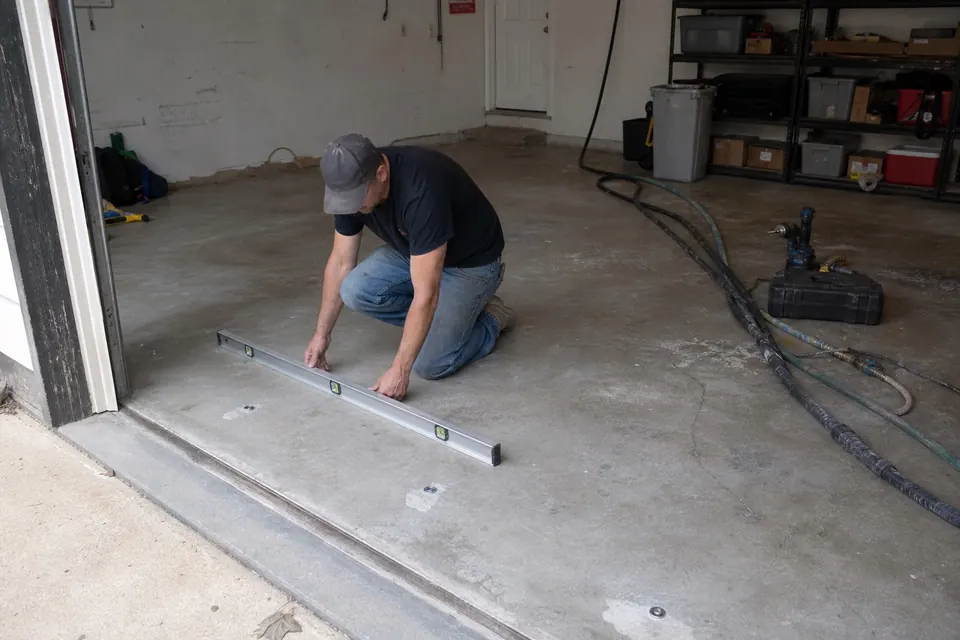
Garage step-ups on postwar homes
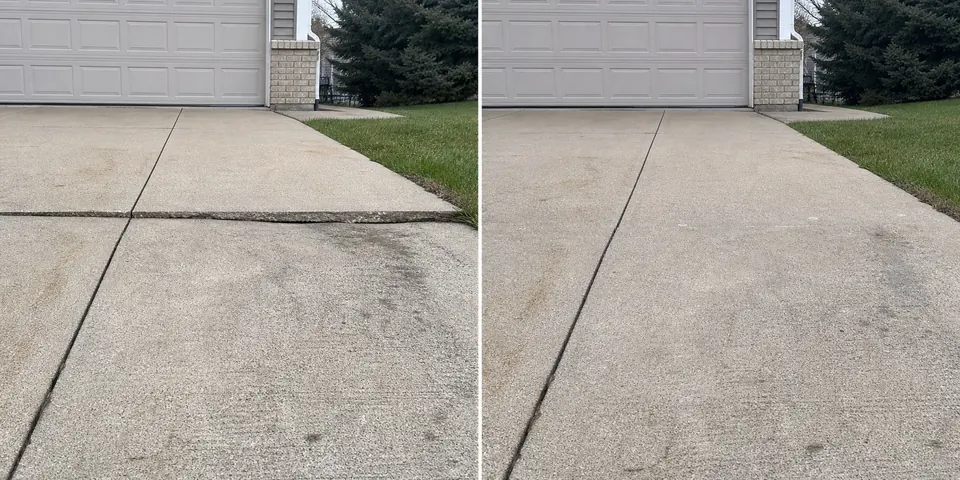
On many older homes, the driveway has sunk at the garage and left a step-up that scrapes bumpers and lets water run toward the door. Lifting the low panel brings it back in line with the garage slab and helps restore drainage away from the house.
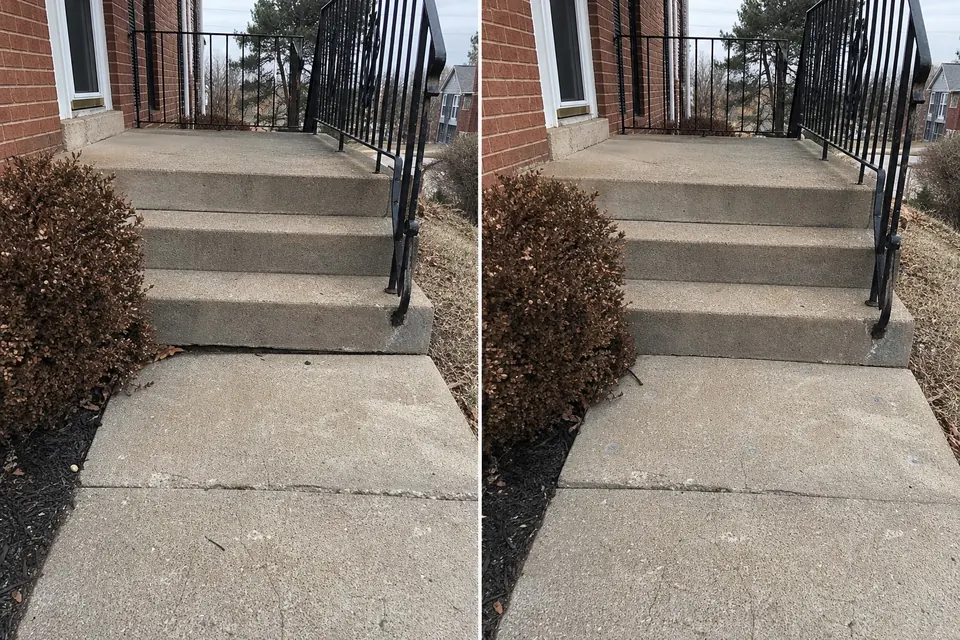
Rental property walks and steps
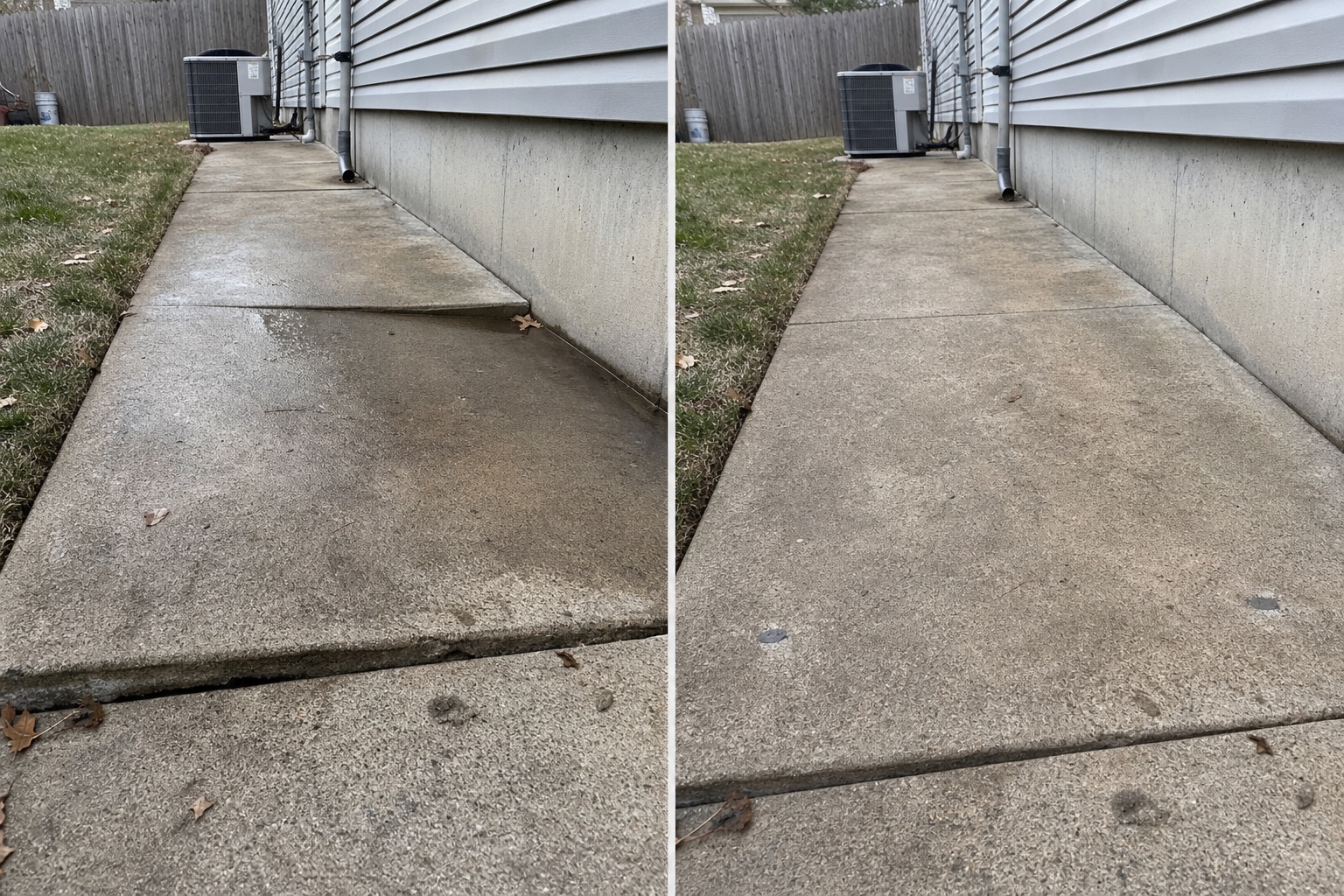
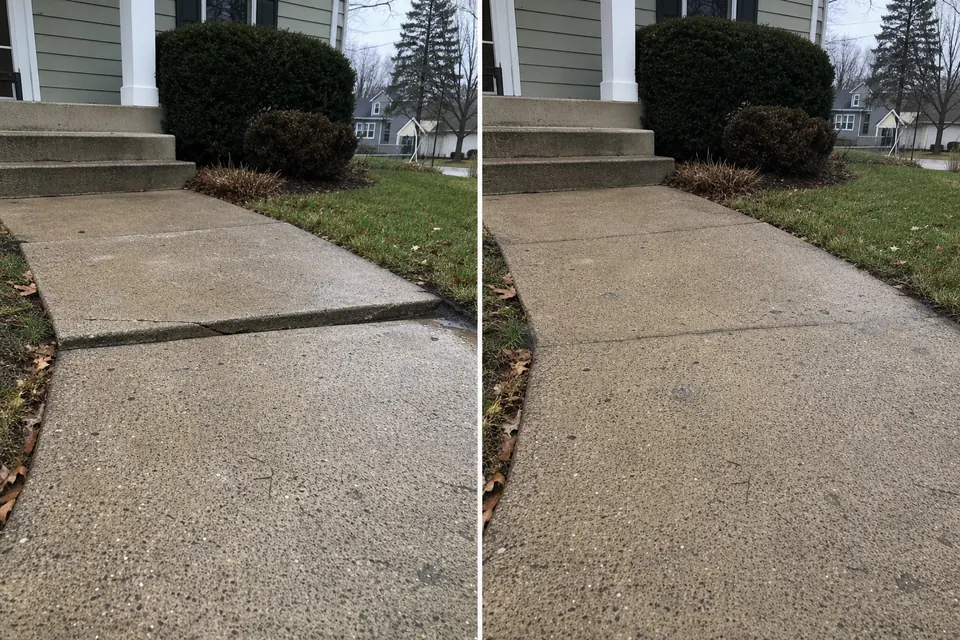
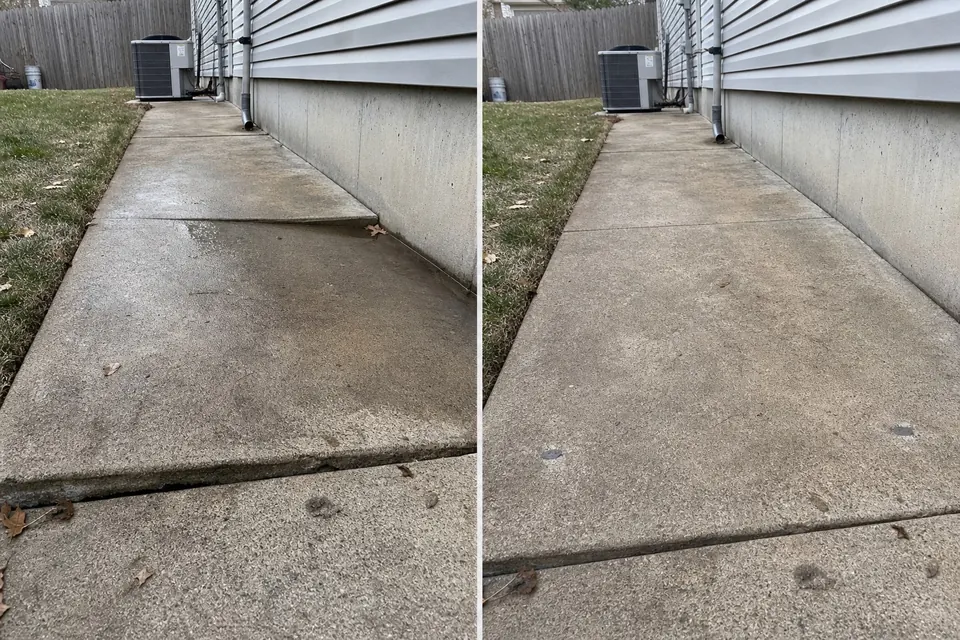
Landlords use foam leveling to correct walks, steps, and stoops that have settled into trip hazards for tenants. Raising the dropped panels is usually faster and less disruptive than tearing them out and repouring, and the property stays usable during the work.
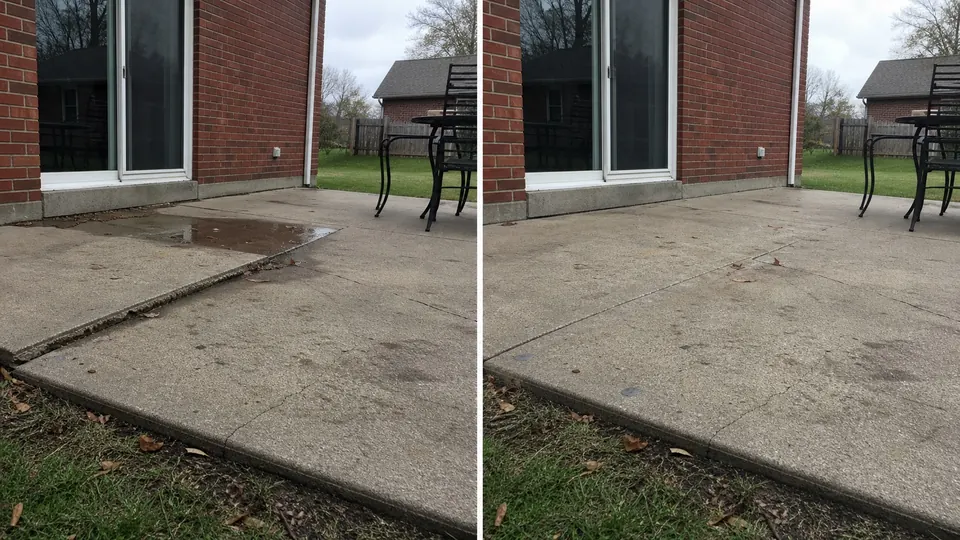
Back patios that drain toward the house
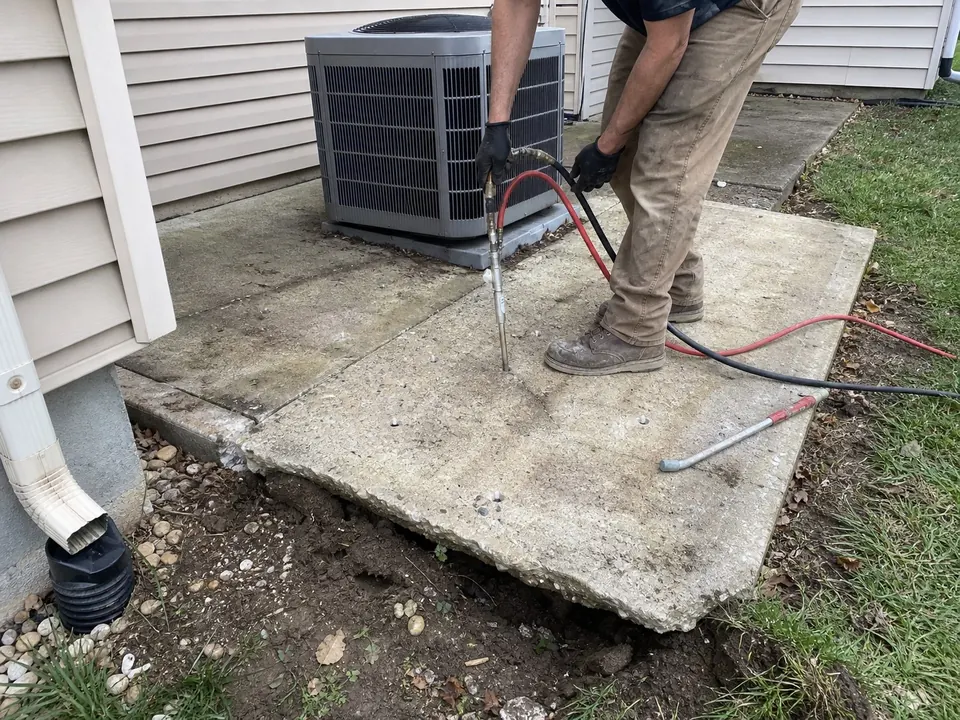
Patios behind ranch homes often settle toward the foundation as soil washes out from under the edge closest to the house. We lift the low side to restore a slope that sends water back toward the yard and away from basement walls and window wells.
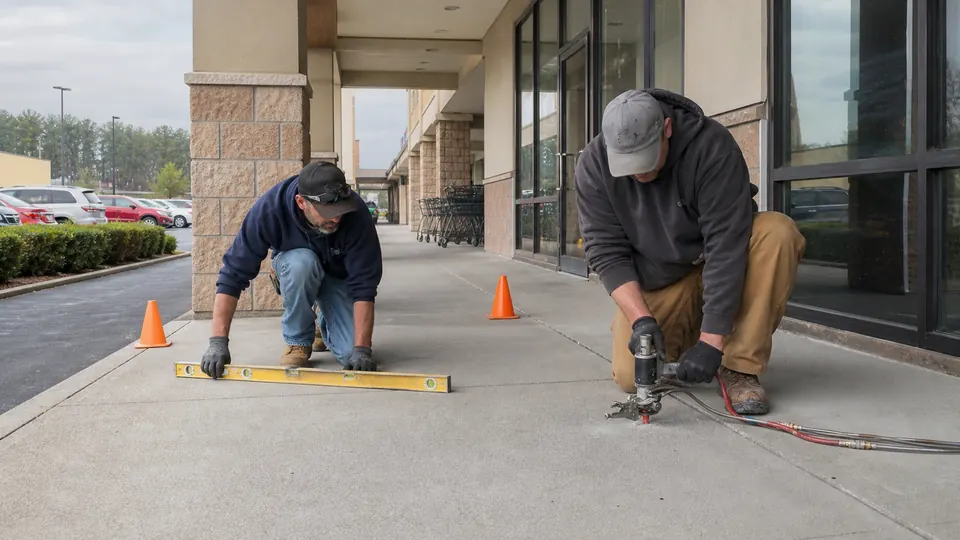
Retail and commercial sidewalks
Stores, restaurants, and offices near Truman Corners and along the main corridors use leveling to fix sunken sidewalks, entries, and parking slabs. It reduces trip hazards for customers and staff with limited downtime and no large demolition or haul-off.
Our Grandview Leveling Process
What happens on the day of your repair.
01
Send photos
Text a wide shot, close-ups of the low joints, a tape measure showing the drop, and the address.
02
Review & quote
We look at the settlement, slab condition, and drainage, and follow up with a quote or questions.
03
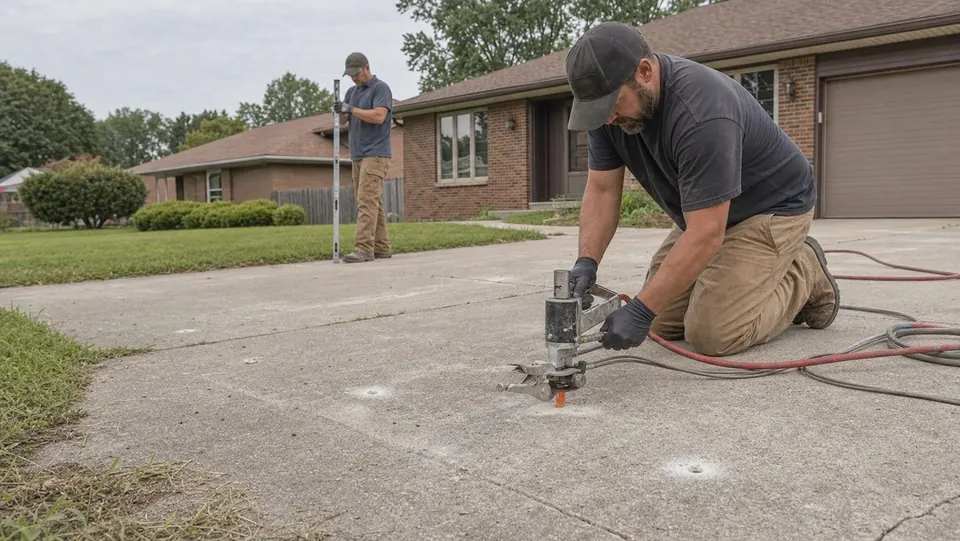
Drill small ports
On the day of the repair we drill small access holes at planned points across the settled slab.
04
Lift in stages
Expanding polyurethane fills the voids and raises the concrete gradually while we watch the transitions.
05
Patch & clean up
Ports are patched, the area is cleaned, and the surface can usually be used again soon after.
Services in Grandview
Concrete lifting services available in Grandview, MO.
Metro Wide lifts and stabilizes most types of flatwork. Choose a service to learn how the repair works.
My Grandview home is from the 1950s. Is the concrete too old to lift?
Age by itself is not the deciding factor. Many older slabs are dense and lift well. What matters is condition: large solid sections are good candidates, while concrete that is crumbling, broken into small pieces, or badly scaled may be better replaced. Text photos and we will tell you honestly which category your slab falls into.
Can you level the walks at a rental house I own?
Yes. Rental owners call us about sunken walks, steps, and driveways that have become trip hazards. Foam lifting raises the low panels so the joints line up, usually without the demolition and longer closure of a replacement. Send photos of each area, a tape measure showing the drop, and the property address, and we can usually quote it remotely.
Does leveling fix drainage problems around my foundation?
It can help when the problem is a patio, walk, or driveway that has settled toward the house. Raising the low side restores slope away from the foundation. Leveling does not replace gutters, downspout extensions, or yard grading, though. We will point out any drainage issues we see that are likely contributing to the settling.
When is replacement a better choice than leveling?
If the concrete is badly broken, crumbling, severely spalled, or cannot move without damaging a fixed structure, replacement may be the better investment. We tell you when a slab is not a good lifting candidate rather than recommending a repair that will not hold up. Our leveling vs. replacement guide covers the trade-offs.
Can leveling fix water running toward my foundation?
Sometimes. Raising a patio, walk, or driveway panel that settled toward the house can restore some pitch away from the foundation. Drainage also depends on gutters, downspouts, and surrounding grades, so we point out anything that is likely to undo the repair.
How big are the holes you drill?
Polyfoam lifting uses small access ports, much smaller than the holes used for traditional mudjacking. The number and placement depend on the slab. After the lift, the ports are patched.
Grandview Estimate
Find out if your Grandview concrete can be saved.
Text a wide photo, a close-up of the uneven area, a tape measure showing the drop, and your address. We will review it and follow up with a quote.
We accept Visa, Mastercard, American Express, Discover, Venmo, cash, and checks. Ask about payment details when scheduling your project.
Kansas City Metro Coverage
Explore our general service area.
Zoom, drag, or select a marker to explore communities within Metro Wide’s 75-mile Kansas City service radius. Scheduling varies by address and project type.
 Driveway leveling
 Sidewalk & walkway leveling
 Porch & stoop leveling
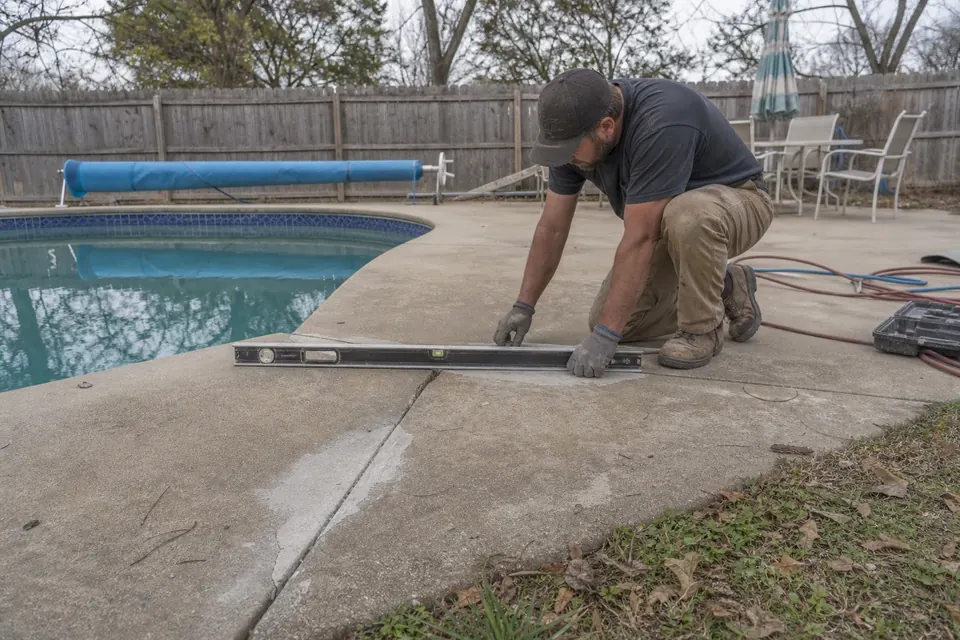 Pool deck leveling
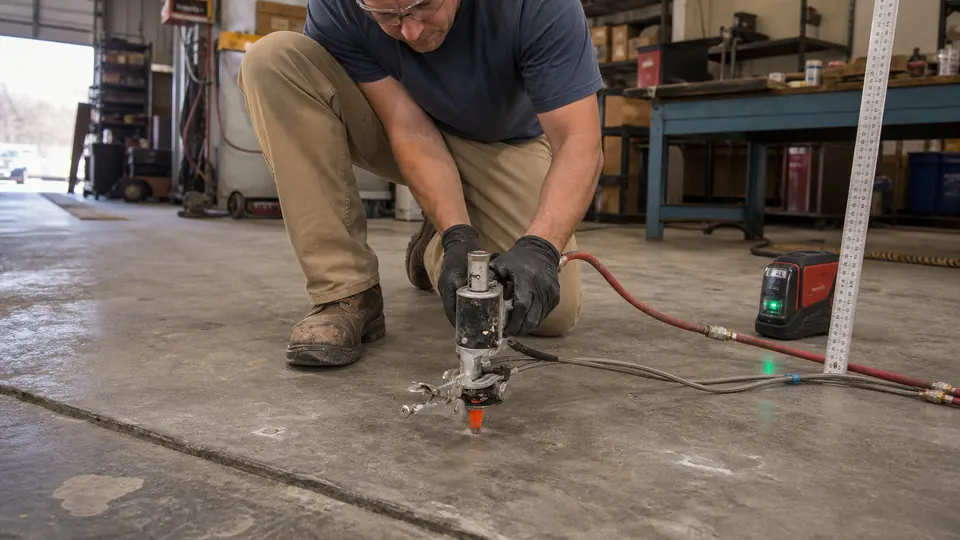 Concrete slab leveling
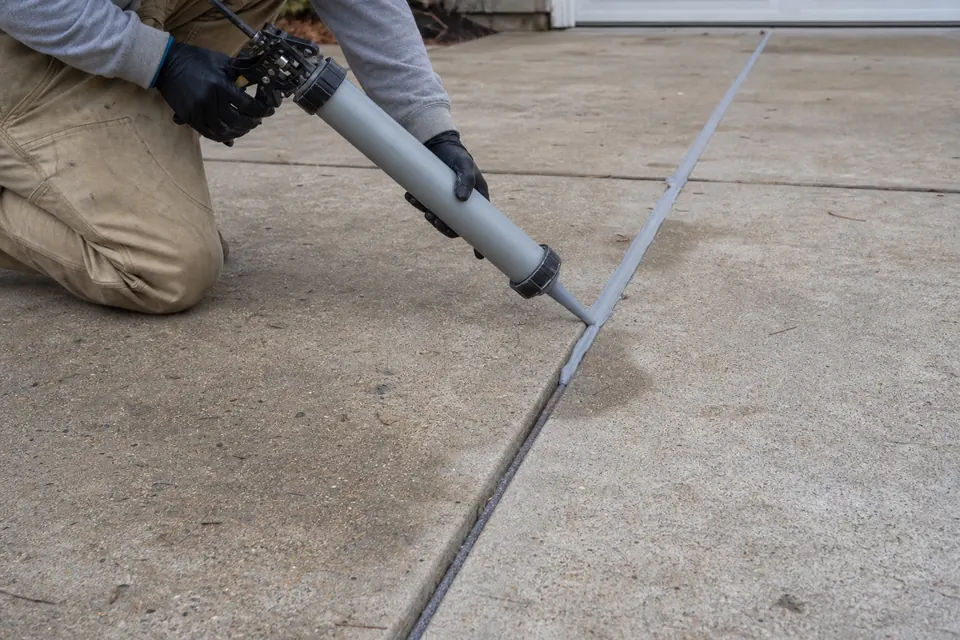 Crack & joint sealing