Whether it is a driveway in an established Lenexa neighborhood or a sidewalk outside an office along I-35, settled concrete creates trip edges and drainage problems. Metro Wide lifts it back into place with polyurethane foam, working through small ports instead of tearing it out.
Lenexa is part residential suburb and part business center. Old Town Lenexa along Santa Fe Trail Drive has some of the city's oldest homes, neighborhoods built from the 1960s through the 1980s fill in much of the middle, and newer subdivisions continue west toward K-7. Along I-35 and I-435, large areas are given over to warehouses, distribution centers, offices and light industrial buildings, and Lenexa City Center has added a newer mixed-use core.
That means we see a broad range of concrete here. Homeowners call about driveways that have dropped at the garage, front walks with uneven joints, and patios that have settled toward the house. Property managers and business owners call about sidewalks, entry pads and slabs around buildings where an uneven joint is a liability for employees and visitors.
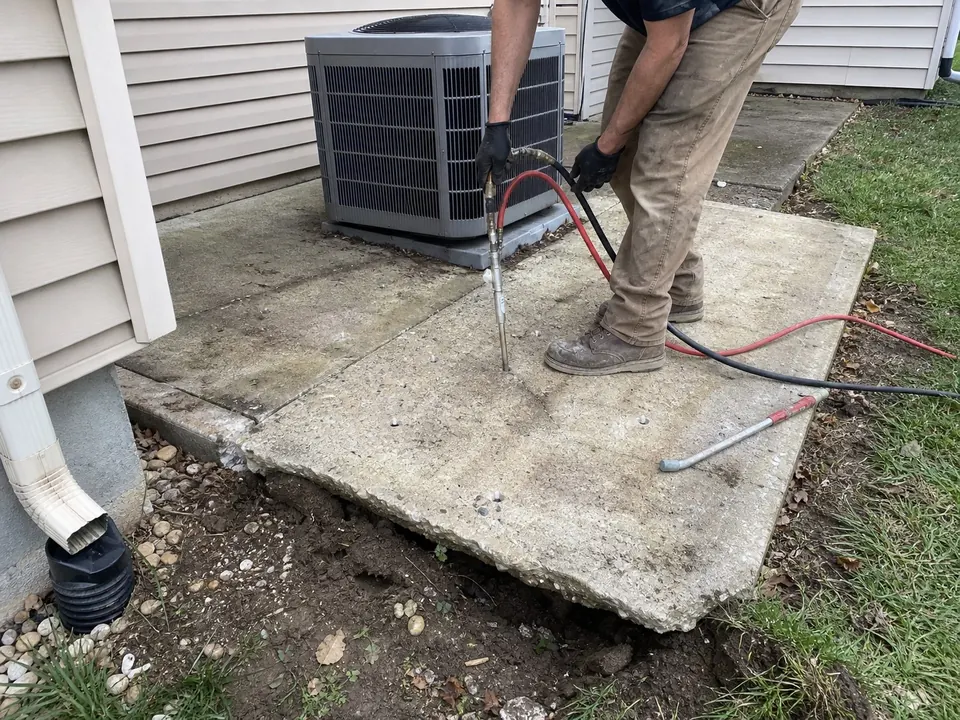
Polyurethane foam leveling handles both. The foam is injected beneath the slab through small ports, expands to fill voids, and raises the concrete. Because the material is lightweight compared with a soil-and-cement slurry, it adds very little load to the soil that settled in the first place.
Lenexa at a glance
Location: Lenexa, KS, Johnson County
Distance: about 13 miles southwest of downtown Kansas City
Method: polyurethane foam lifting through small ports
Estimates: free, often by text from your photos
Warranty: 2 years on residential lifting
Properties: residential and commercial
Lenexa is about 13 miles southwest of downtown Kansas City, close to the center of our service area, so it is a regular part of our schedule. Texting photos first is still the fastest way to get a quote.
Local Conditions
Why concrete settles in Lenexa.
Lenexa's terrain rolls gently down toward Mill Creek, which runs north through the city toward the Kansas River, and toward several smaller tributaries. Much of the ground is upland clay soil that expands when saturated and contracts during dry spells. Over years of wet springs and hot summers, that movement leaves gaps between the soil and the underside of a slab, and the concrete eventually drops into them.
Construction is the other big factor. Lenexa has grown steadily for decades, and every new subdivision and business park involves cut-and-fill grading. Fill placed under driveways, around foundations and beside commercial buildings can consolidate for years after the concrete is poured. On commercial sites, truck and equipment traffic running along the edges of slabs can speed that process up.
Water is usually what turns a small void into a big one. Roof drains, parking lot runoff and irrigation that soak the soil along the edge of a slab carry fine particles away. When we lift concrete at a home or business, we look for those water sources and mention any that are likely to cause trouble again.
Signs your slab has lost support
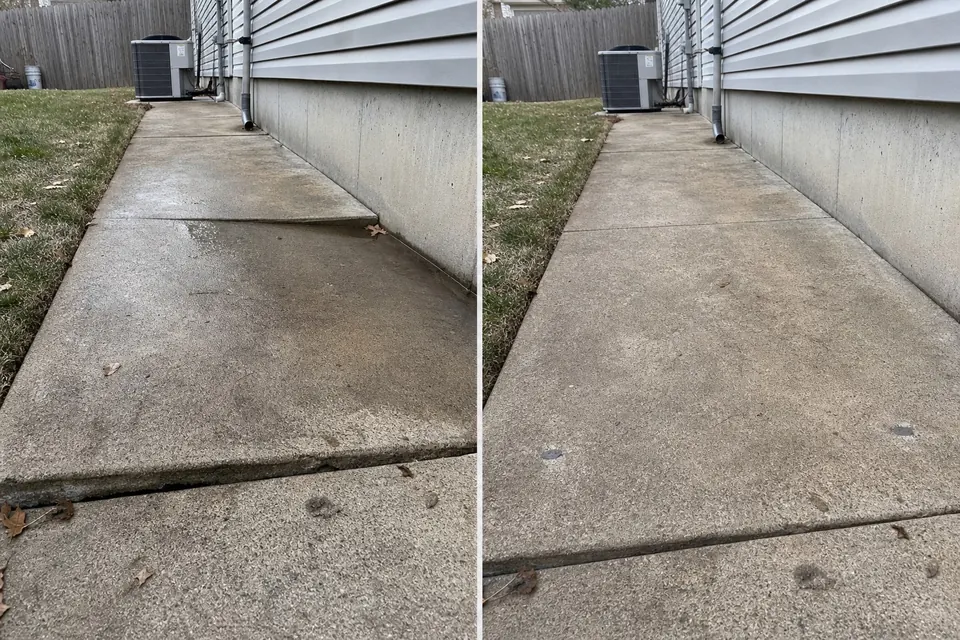
A lip or step-up at a driveway, sidewalk, or garage joint
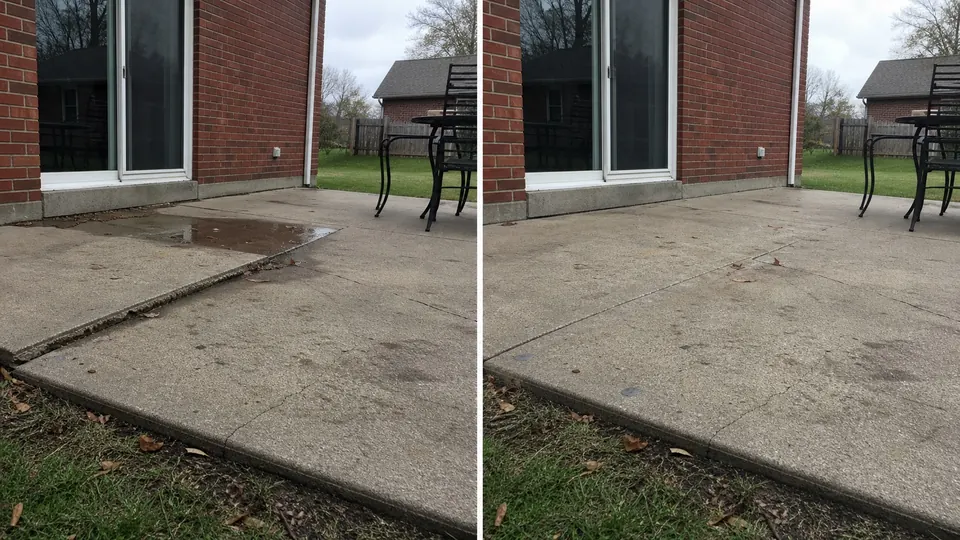
A patio or walk that tips toward the house
Gaps opening between steps, stoops, and the foundation
Water pooling on a slab or flowing toward the home
Hollow sounds or visible washout along a slab edge
Common Lenexa Projects
The concrete we lift most often in Lenexa.
Every slab is different, so we start with what is happening at your property. These are the repairs Lenexa property owners ask us about most.
Warehouse and office sidewalks
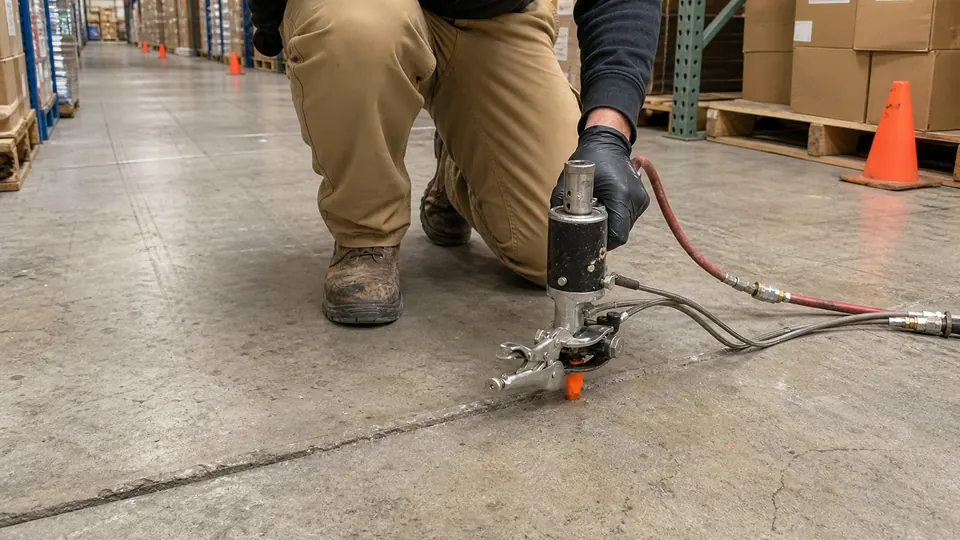
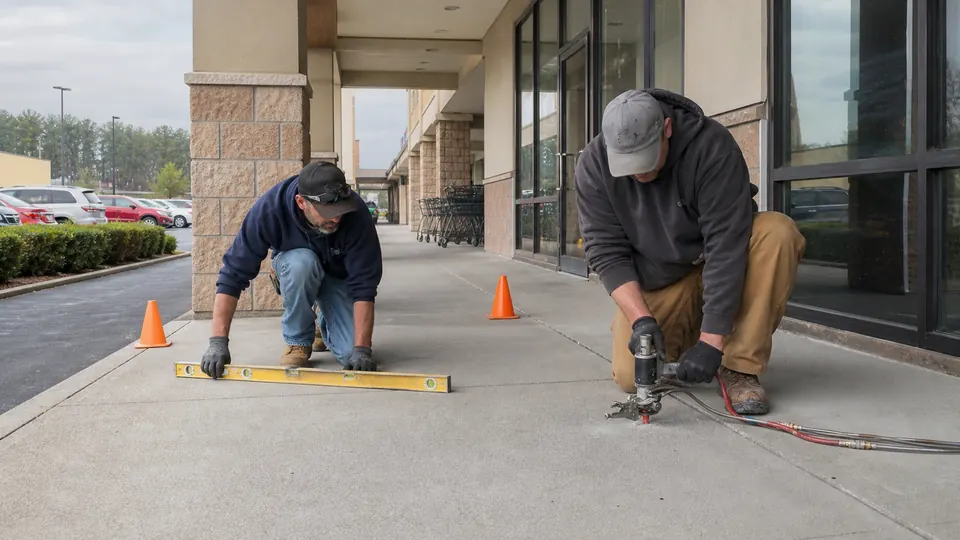
Business parks along I-35 and I-435 have long runs of sidewalk and entry pads around buildings. Settled joints create trip edges right where employees and visitors walk. Lifting the low panels corrects many of these with less disruption to operations than removal and repour.
Driveways in established neighborhoods
In Lenexa neighborhoods built from the 1960s through the 1980s, driveways often have one or two panels that have dropped at the garage or near the street. Raising those panels back into line removes the bump and can improve how water drains off the drive.
Garage floors
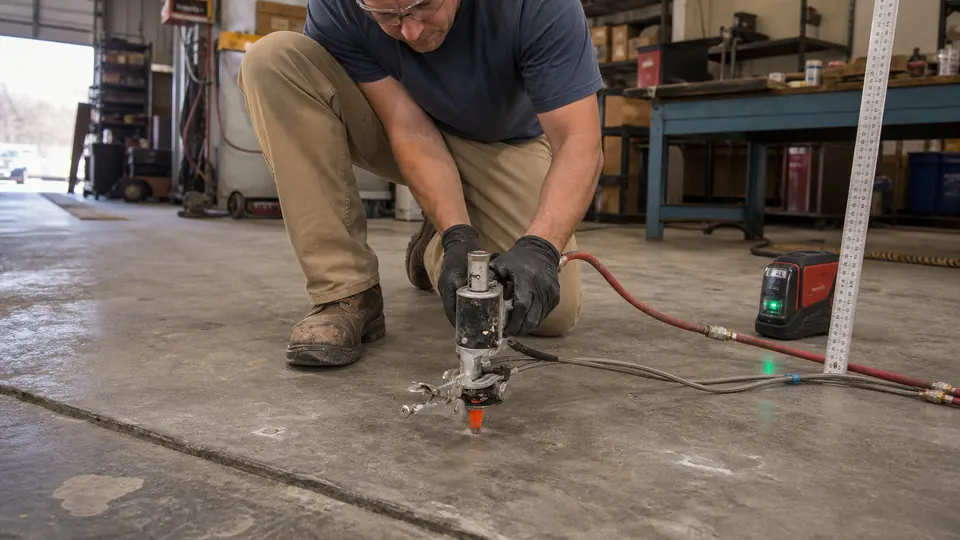
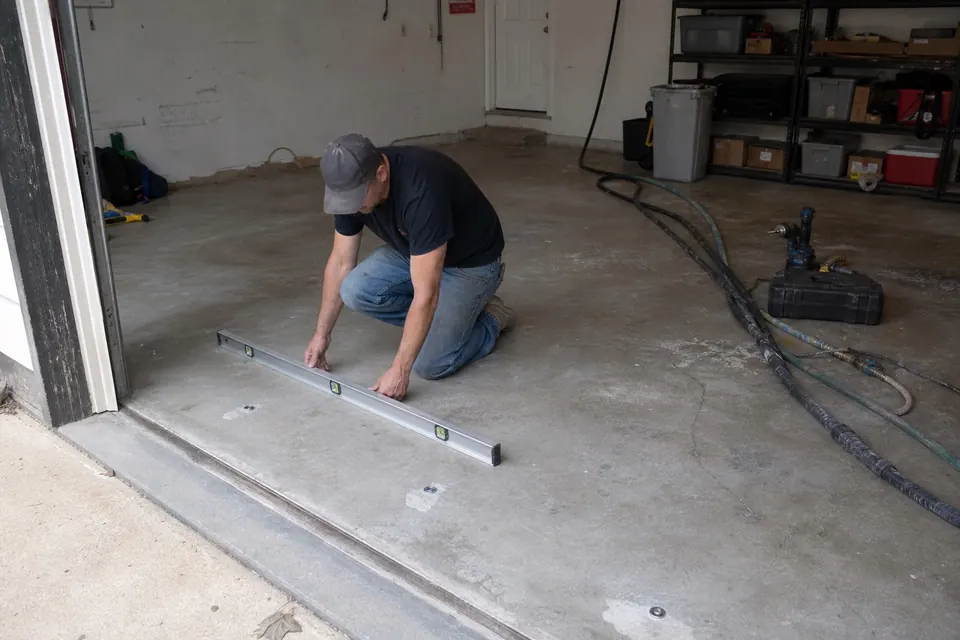
A garage slab that has sunk at a control joint or along the door opening can trap water and make it harder to roll equipment in and out. Foam can lift the low section through small ports drilled in the floor once the vehicles are moved out.
Apartment and townhome walks
Multifamily communities have many connected walks, stoops and patios, and a settled section in a shared path affects every resident who uses it. Leveling those sections helps reduce trip hazards and keeps water from running toward the buildings.
Our Lenexa Leveling Process
What happens on the day of your repair.
01
Send photos
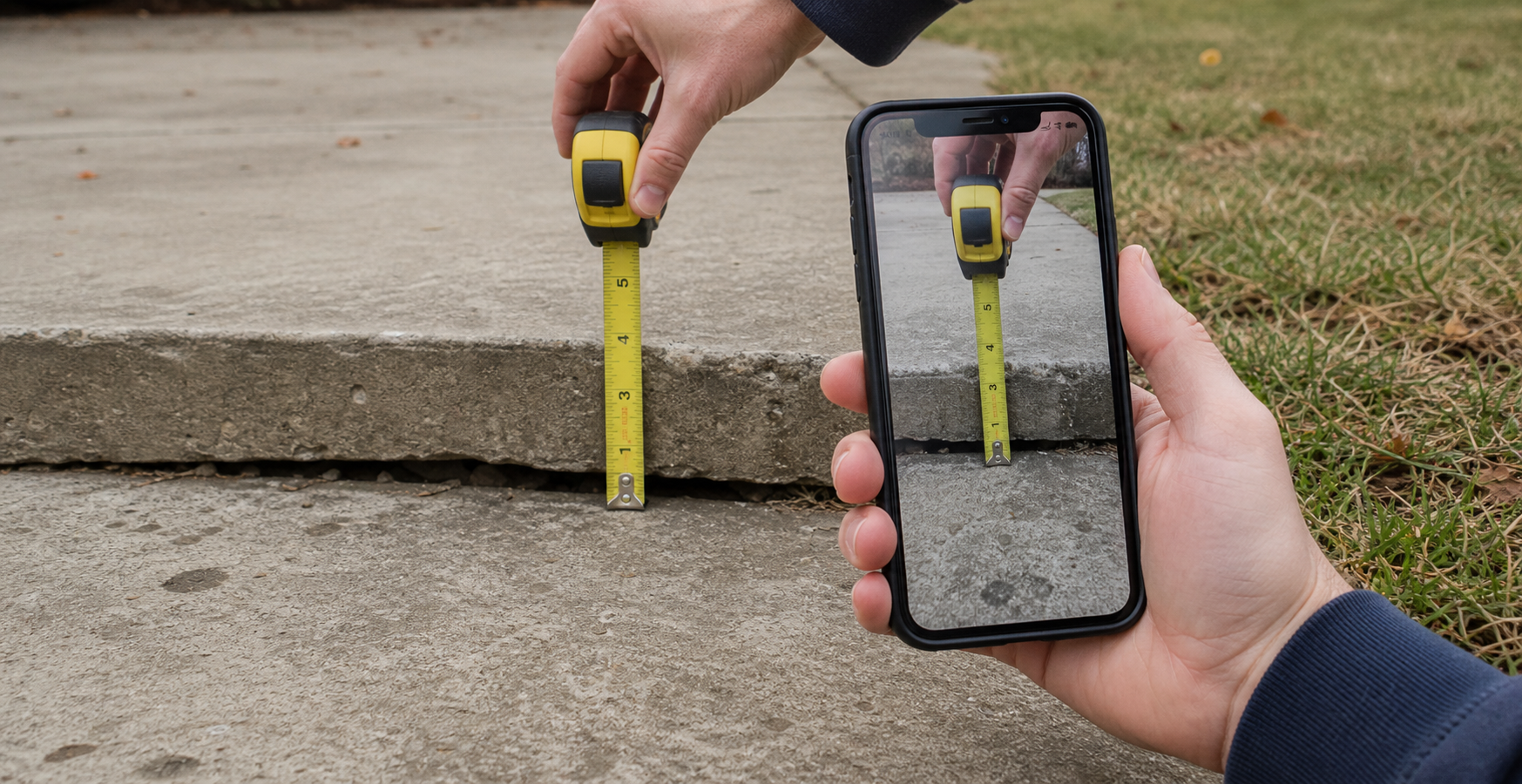
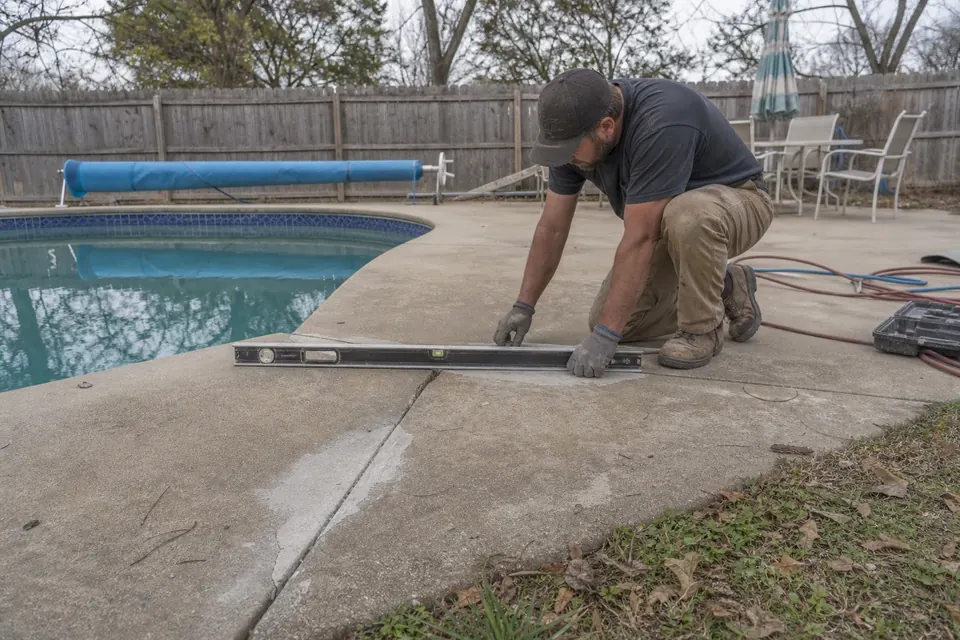
Text a wide shot, close-ups of the low joints, a tape measure showing the drop, and the address.
02
Review & quote
We look at the settlement, slab condition, and drainage, and follow up with a quote or questions.
03
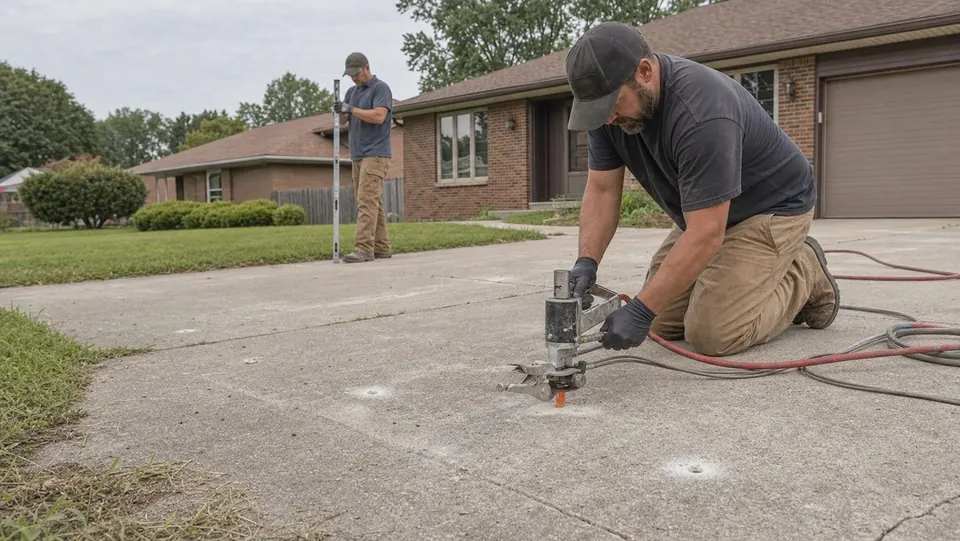
Drill small ports
On the day of the repair we drill small access holes at planned points across the settled slab.
04
Lift in stages
Expanding polyurethane fills the voids and raises the concrete gradually while we watch the transitions.
05
Patch & clean up
Ports are patched, the area is cleaned, and the surface can usually be used again soon after.
Services in Lenexa
Concrete lifting services available in Lenexa, KS.
Metro Wide lifts and stabilizes most types of flatwork. Choose a service to learn how the repair works.
Do you level concrete at commercial properties in Lenexa?
Yes. We work on sidewalks, entries, patios and other slabs at offices, warehouses, retail sites and apartment communities, as well as homes. Commercial jobs vary a lot in size and access, so we start with photos and details of the area, then talk through scheduling that works around your business hours as much as practical.
What is the difference between mudjacking and polyurethane foam leveling?
Both lift concrete by filling the space underneath it. Mudjacking pumps a heavy slurry of soil and cement through larger holes. Polyurethane foam is injected through smaller ports, weighs much less, and does not wash out the way a slurry can. We use foam because the smaller holes are less noticeable and the light material adds little extra weight to soil that has already settled once.
Will the injection ports be noticeable after the work?
The ports are small, and after the lift we fill them with a cement-based patch. You will be able to see them if you look, and the patch color won't exactly match weathered concrete, but they are far less noticeable than the larger holes left by older mudjacking methods or the seams around a partially replaced section.
How soon can I use my driveway or walkway after leveling?
Polyurethane foam cures quickly, so foot traffic and normal use can usually resume much sooner than with newly poured concrete. The exact timing depends on the repair, and we give you specific instructions when the work is finished.
Will concrete leveling get rid of the cracks?
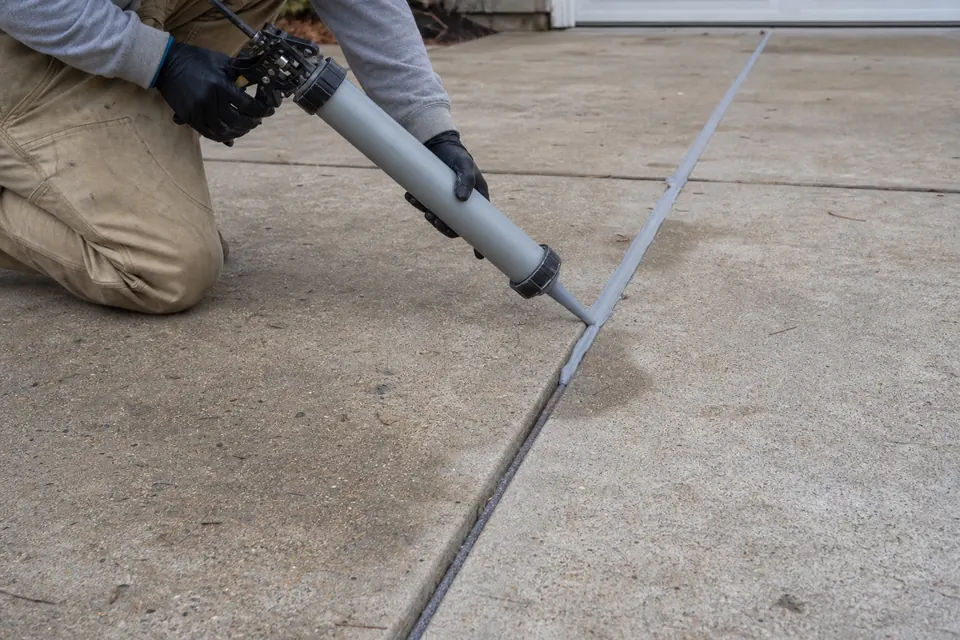
No. Lifting changes the position and support of the slab, but existing cracks stay visible. Raising the sections on either side can bring a crack back into alignment, and crack and joint sealing is available as a separate step to help keep water out.
Is polyurethane foam better than mudjacking?
Both methods lift concrete by filling the space underneath it. Polyurethane uses smaller holes, weighs far less than a cement slurry, cures quickly, and resists washing out. See our polyurethane vs. mudjacking comparison for a full breakdown.
Lenexa Estimate
Find out if your Lenexa concrete can be saved.
Text a wide photo, a close-up of the uneven area, a tape measure showing the drop, and your address. We will review it and follow up with a quote.
We accept Visa, Mastercard, American Express, Discover, Venmo, cash, and checks. Ask about payment details when scheduling your project.
Kansas City Metro Coverage
Explore our general service area.
Zoom, drag, or select a marker to explore communities within Metro Wide’s 75-mile Kansas City service radius. Scheduling varies by address and project type.
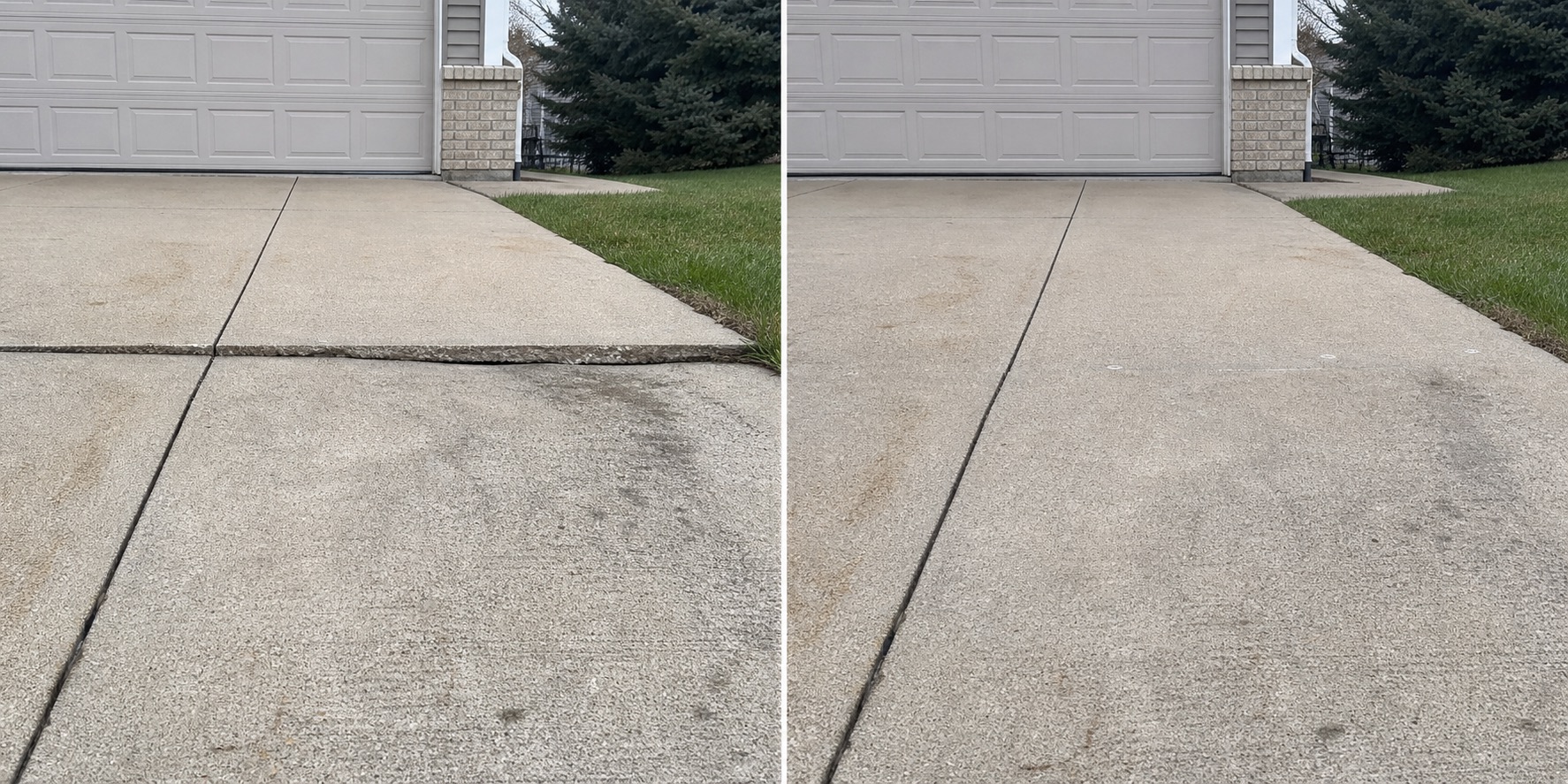
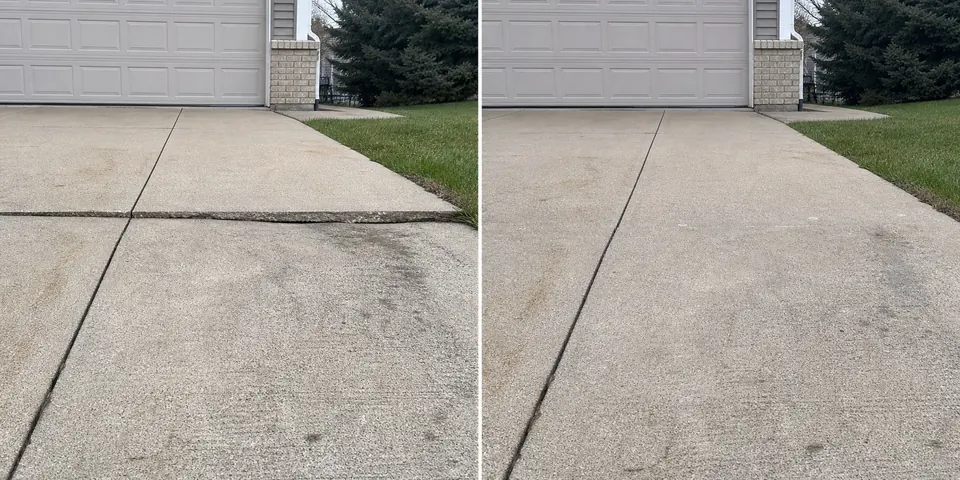 Driveway leveling
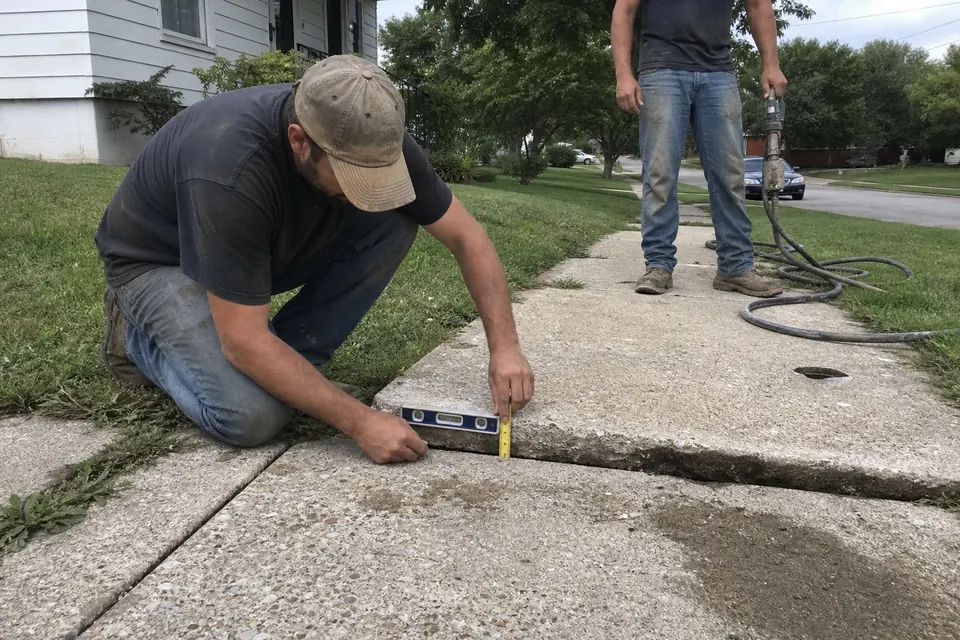
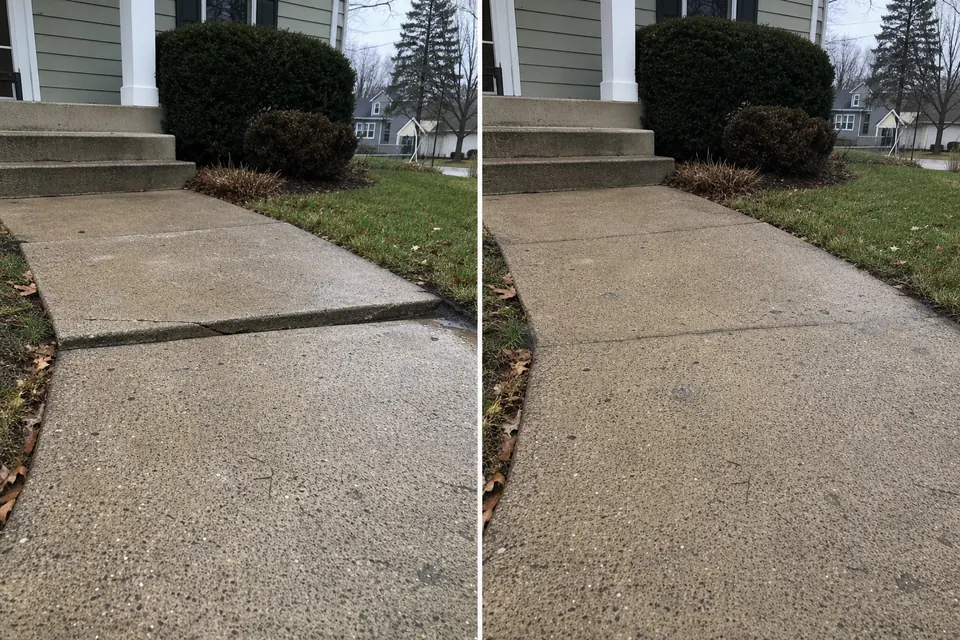 Sidewalk & walkway leveling
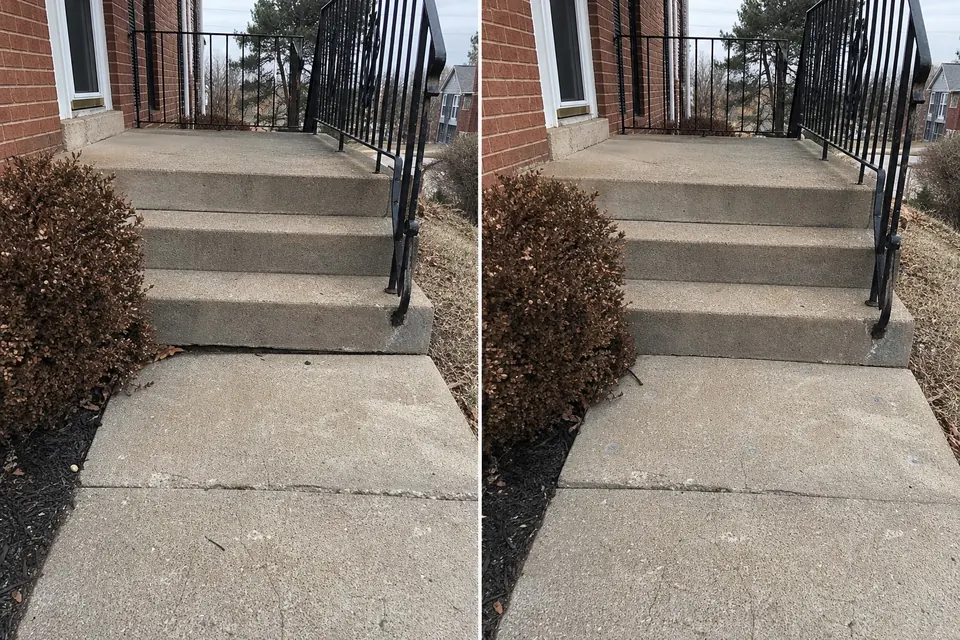 Steps leveling
 Porch & stoop leveling
 Patio leveling
 Pool deck leveling
 Void filling
 Crack & joint sealing