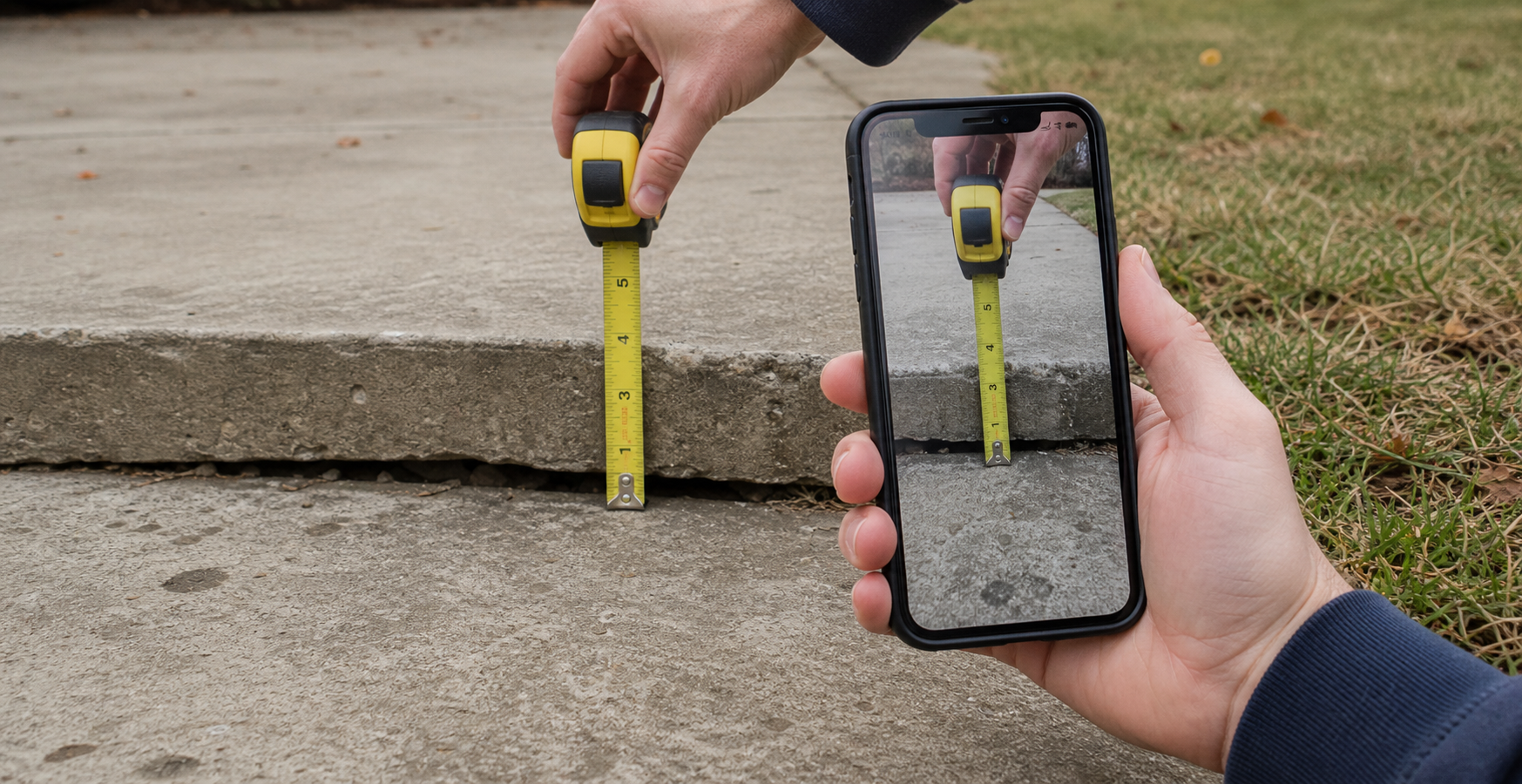
Independence has homes from almost every era, from Victorian houses near the Square to postwar ranches and newer subdivisions toward the Little Blue River. Metro Wide raises sunken driveways, walks, porches, and patios with polyurethane foam instead of tearing them out.
Few cities in the metro have housing as varied as Independence. Close to the historic Square and the Truman neighborhood, many homes were built before 1920, and their walks, porch slabs, and steps have shifted on hilly lots for a long time. Moving outward, Englewood, Fairmount, and the neighborhoods off 23rd Street and Noland Road are filled with mid-century homes whose driveways and patios are now 60 or 70 years old. Toward the eastern edge of the city, newer subdivisions near the Little Blue Parkway bring a different set of problems tied to recently graded lots.
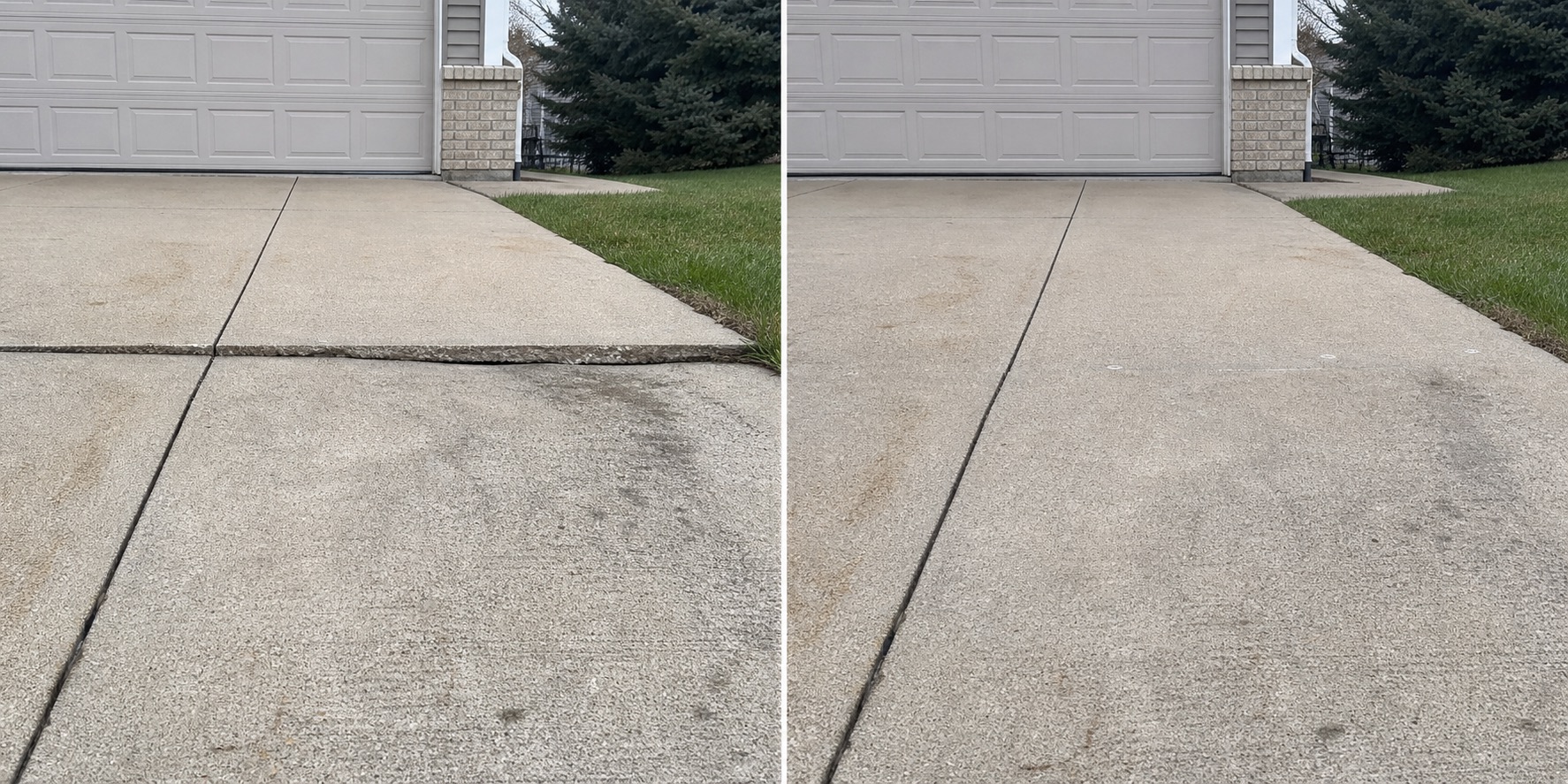
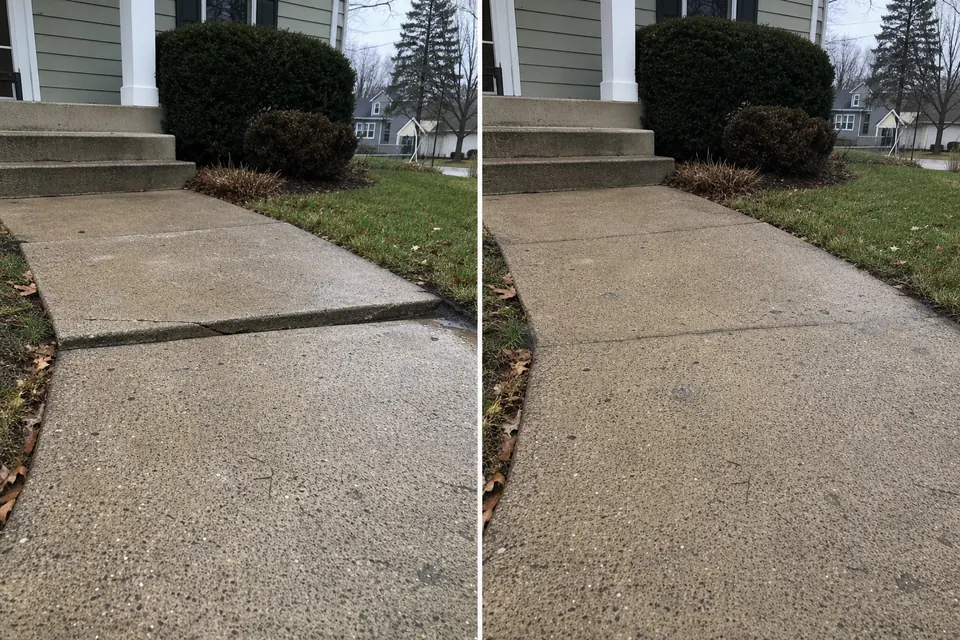
That range means we see a little of everything here. A common request is a driveway that has dropped where it meets the garage or the street, leaving a lip that scrapes cars. Another is a front walk that has settled in the middle so water sits on it and freezes. Back patios that have tilted toward the house are a concern because they send rain right where you do not want it.
Polyurethane foam lifting raises these slabs through small drilled ports and fills the voids beneath them, so the concrete you have stays in place.
Independence at a glance
Location: Independence, MO, Jackson County
Distance: about 9 miles east of downtown Kansas City
Method: polyurethane foam lifting through small ports
Estimates: free, often by text from your photos
Warranty: 2 years on residential lifting
Properties: residential and commercial
Independence is about 9 miles east of downtown Kansas City, close to the center of our service area, so it is a regular part of our schedule. Texting photos first is still the fastest way to get a quote.
Local Conditions
Why concrete settles in Independence.
The city sits on rolling ground between the Missouri River to the north and the Little Blue River to the east. The upland soils are largely silty clay, much of it derived from loess, and they react strongly to moisture. A wet spring can soften the soil under a slab, while a dry stretch in late summer pulls it away from the underside of the concrete.
Slope is a factor on many Independence streets. Driveways that climb or drop toward the street are exposed to runoff that travels along their edges and underneath. Over time that water carries fine soil away, and the slab begins to rock or sag at the joints. Freeze–thaw cycles in winter widen any gap that forms.
In the older parts of town, the material under walks and driveways was often thin or never well compacted to begin with. In the newer eastern subdivisions, fill placed during grading is still settling around foundations and under garage approaches. In both cases, foam lifting can restore support as long as the slab itself is still in solid condition.
Signs your slab has lost support
A lip or step-up at a driveway, sidewalk, or garage joint
A patio or walk that tips toward the house
Gaps opening between steps, stoops, and the foundation
Water pooling on a slab or flowing toward the home
Hollow sounds or visible washout along a slab edge
Common Independence Projects
The concrete we lift most often in Independence.
Every slab is different, so we start with what is happening at your property. These are the repairs Independence property owners ask us about most.
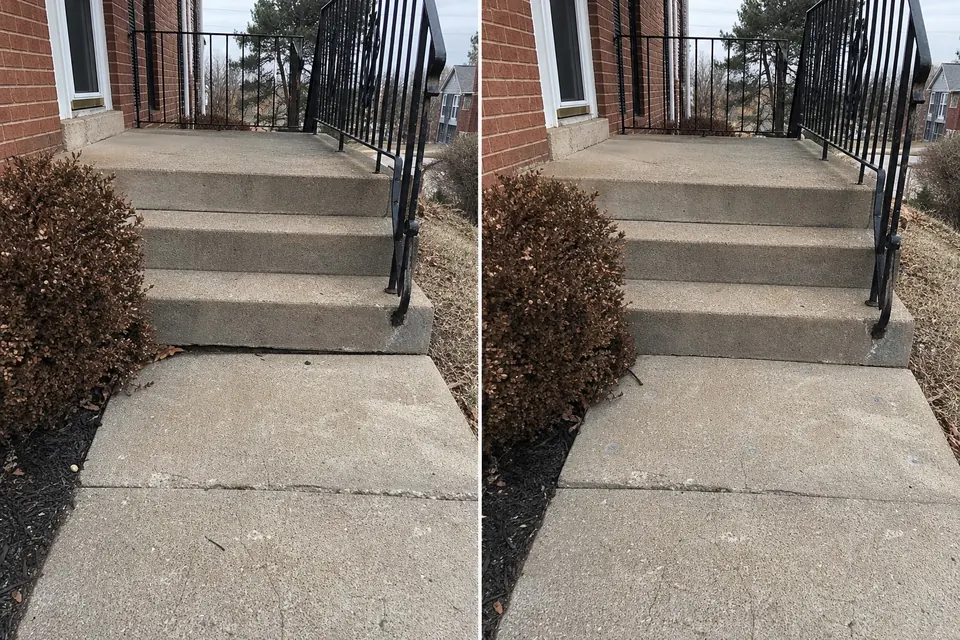
Porch slabs and front steps
Older homes near the Square often have porch floors and concrete steps that have tipped toward the yard or separated from the house. If the concrete is still solid, we can usually raise it to close the gap at the foundation and make the step-up from the walk more even.
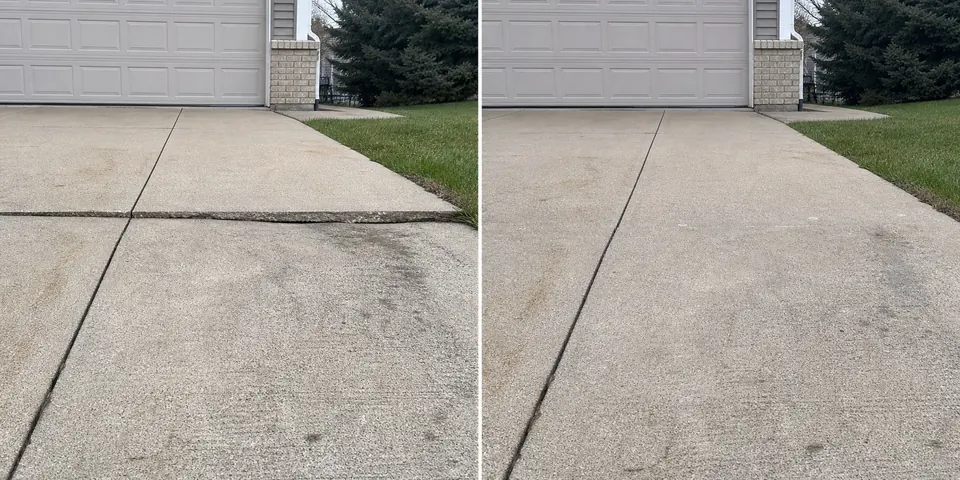
Sloped driveways
Driveways on hilly lots tend to sink at the bottom joint near the street or at the top where they meet the garage. Lifting the low panels removes the lip, restores a smoother transition for cars and snow shovels, and lets water follow the slope it was built with.
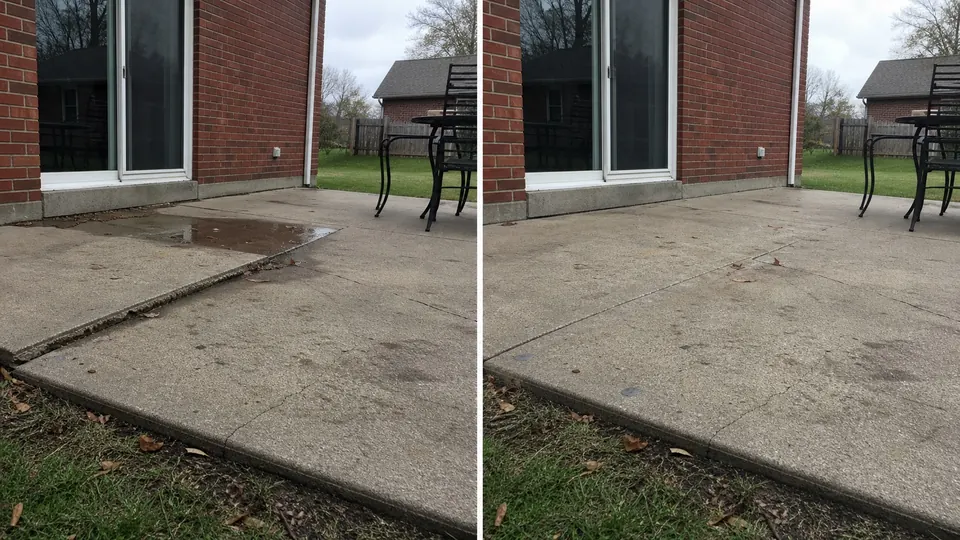
Patios on mid-century homes
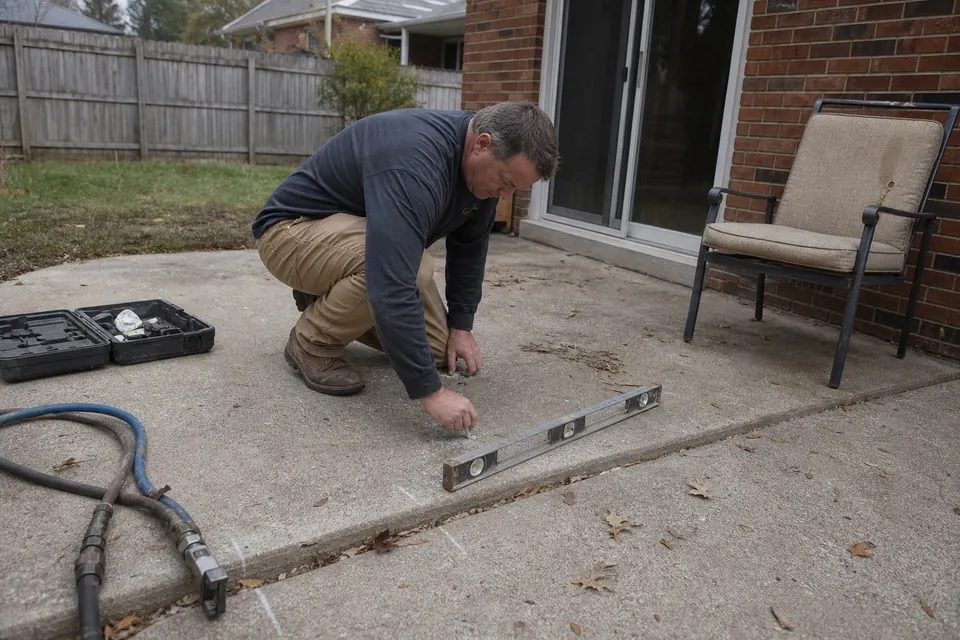
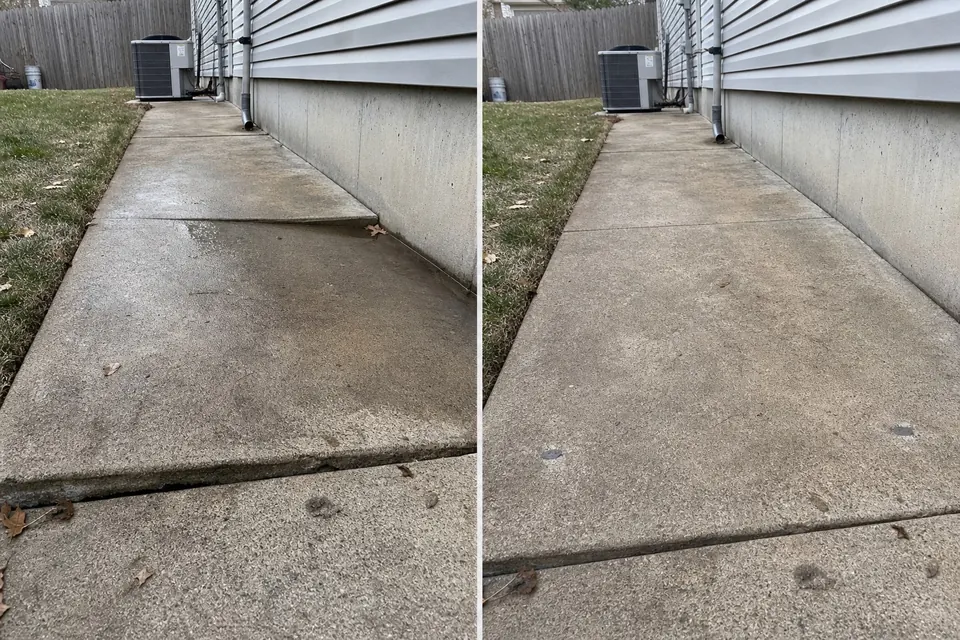
Back patios behind ranch homes built in the 1950s and 1960s frequently settle toward the foundation after decades of runoff from the roof. Raising the low edge helps send water back out into the yard and away from basement walls.
Church, retail, and apartment walks
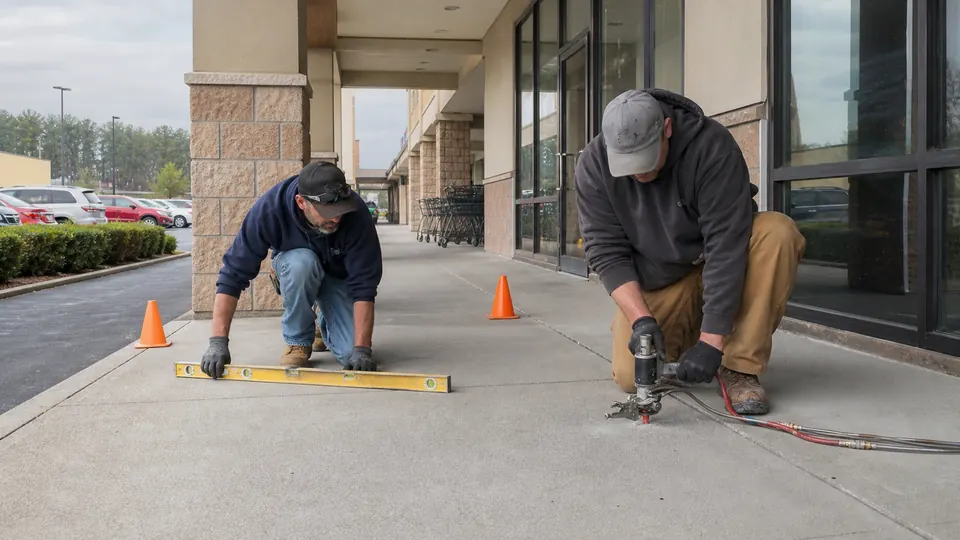
Churches, small businesses, and apartment communities use foam leveling to fix uneven entry walks, ramps, and sidewalk joints that create trip hazards. The work is done through small ports, so the area does not need to be closed for days for a full tear-out and repour.
Our Independence Leveling Process
A controlled lift with a small footprint.
01
Send photos
Text a wide shot, close-ups of the low joints, a tape measure showing the drop, and the address.
02
Review & quote
We look at the settlement, slab condition, and drainage, and follow up with a quote or questions.
03
Drill small ports
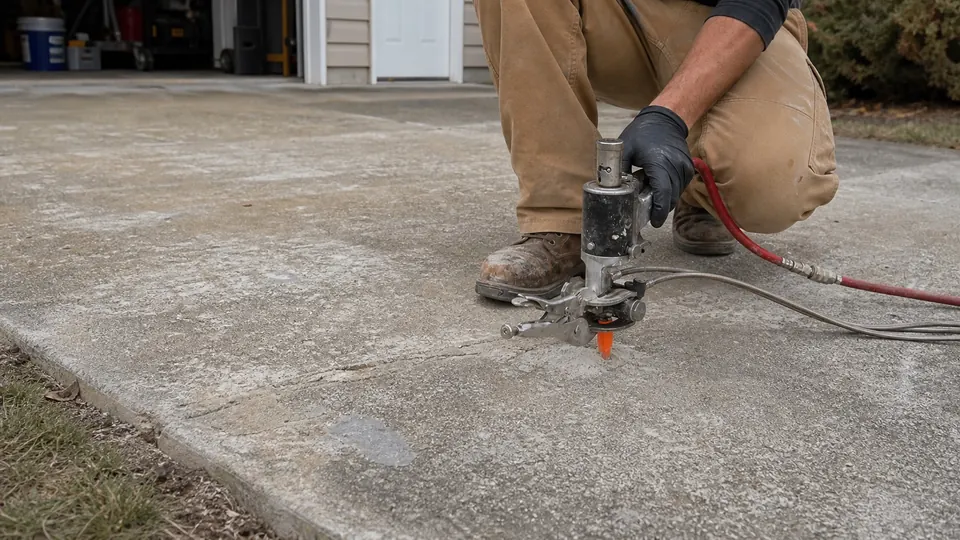
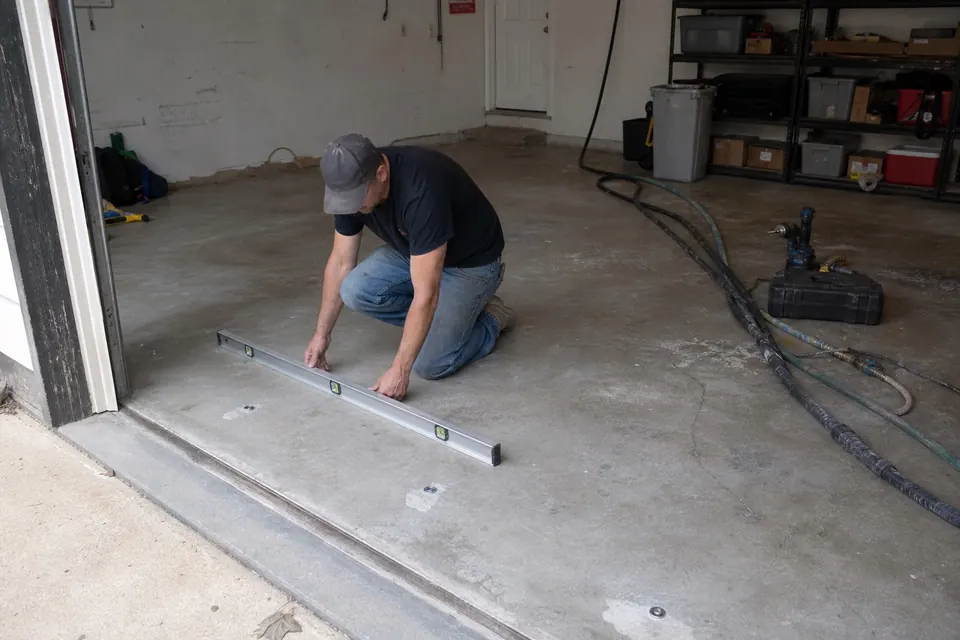
On the day of the repair we drill small access holes at planned points across the settled slab.
04
Lift in stages
Expanding polyurethane fills the voids and raises the concrete gradually while we watch the transitions.
05
Patch & clean up
Ports are patched, the area is cleaned, and the surface can usually be used again soon after.
Services in Independence
Concrete lifting services available in Independence, MO.
Metro Wide lifts and stabilizes most types of flatwork. Choose a service to learn how the repair works.
Can you lift concrete at a historic home near the Independence Square?
In many cases, yes. Leveling keeps the original slab in place, which some owners of older homes prefer over replacement. We drill small ports, raise the concrete, and patch the holes. If your property is in a historic district with rules for exterior work, check with the city first; we can provide a written description of the work for that review.
My driveway is on a steep slope. Can it still be leveled?
Usually. We are not trying to make a sloped driveway flat; we are raising panels that have dropped below their neighbors so the joints line up and the surface drains the way it was built to. Steep driveways do tend to lose soil along their edges, so we will point out any runoff issues that could cause the settling to return.
How do I get a quote for concrete leveling in Independence?
Text us a wide photo of the whole slab, close-ups of the sunken joints, a tape measure showing how far each panel has dropped, and your address. We review the photos and reply with a quote or a few follow-up questions. Many jobs can be priced this way without an initial onsite visit.
How big are the holes you drill?
Polyfoam lifting uses small access ports, much smaller than the holes used for traditional mudjacking. The number and placement depend on the slab. After the lift, the ports are patched.
How much does concrete leveling cost in Independence?
Pricing depends on the size of the slab, how far it has settled, how much void space is underneath, access, and how many areas need work, so we do not publish a flat price. Text photos, rough measurements, and your Independence address and we can usually provide a remote quote. Leveling is often far less disruptive than tearing out and replacing a slab that is still usable.
How soon can I use my driveway or walkway after leveling?
Polyurethane foam cures quickly, so foot traffic and normal use can usually resume much sooner than with newly poured concrete. The exact timing depends on the repair, and we give you specific instructions when the work is finished.
Independence Estimate
Find out if your Independence concrete can be saved.
Text a wide photo, a close-up of the uneven area, a tape measure showing the drop, and your address. We will review it and follow up with a quote.
We accept Visa, Mastercard, American Express, Discover, Venmo, cash, and checks. Ask about payment details when scheduling your project.
Kansas City Metro Coverage
Explore our general service area.
Zoom, drag, or select a marker to explore communities within Metro Wide’s 75-mile Kansas City service radius. Scheduling varies by address and project type.
 Garage floor leveling
 Sidewalk & walkway leveling
 Porch & stoop leveling
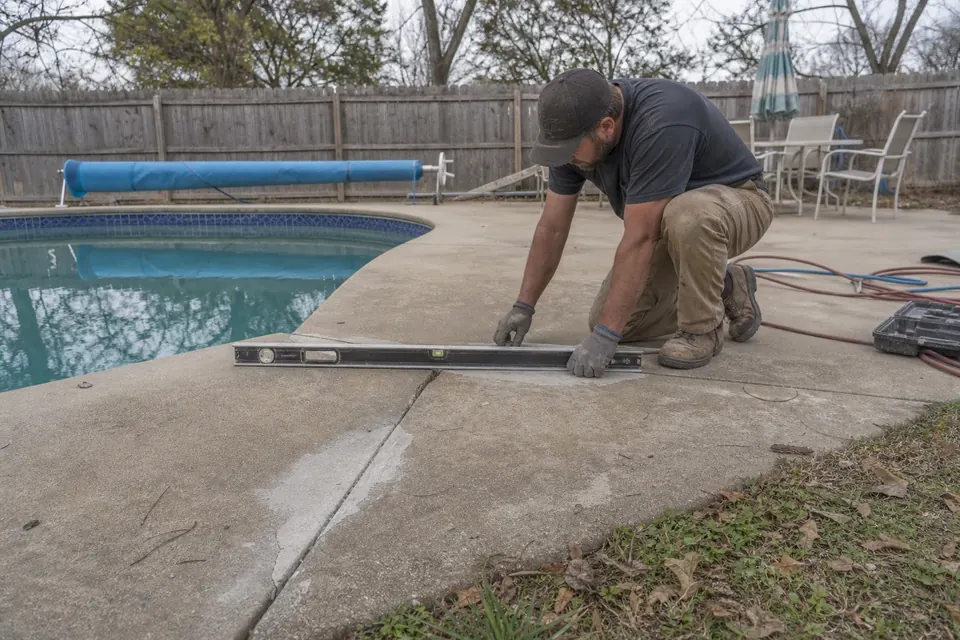 Pool deck leveling
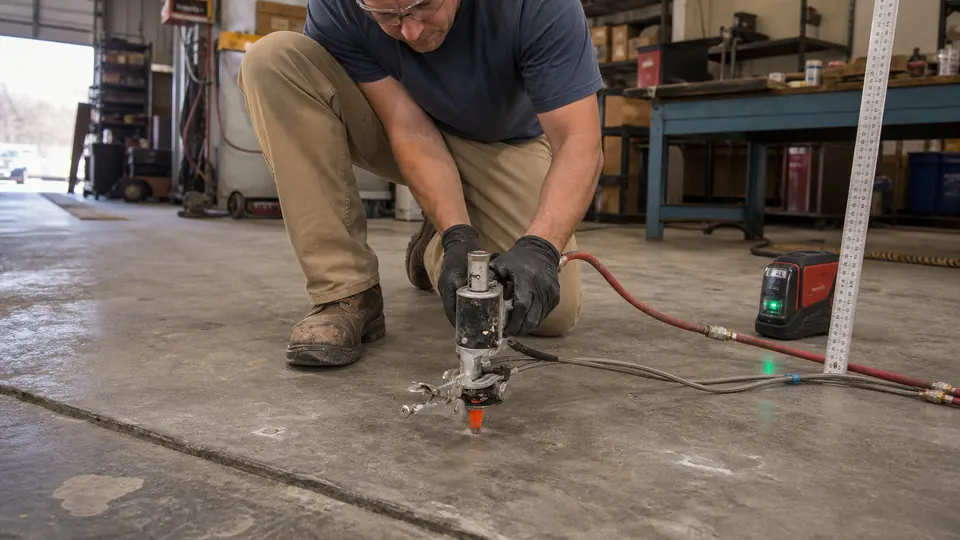 Concrete slab leveling
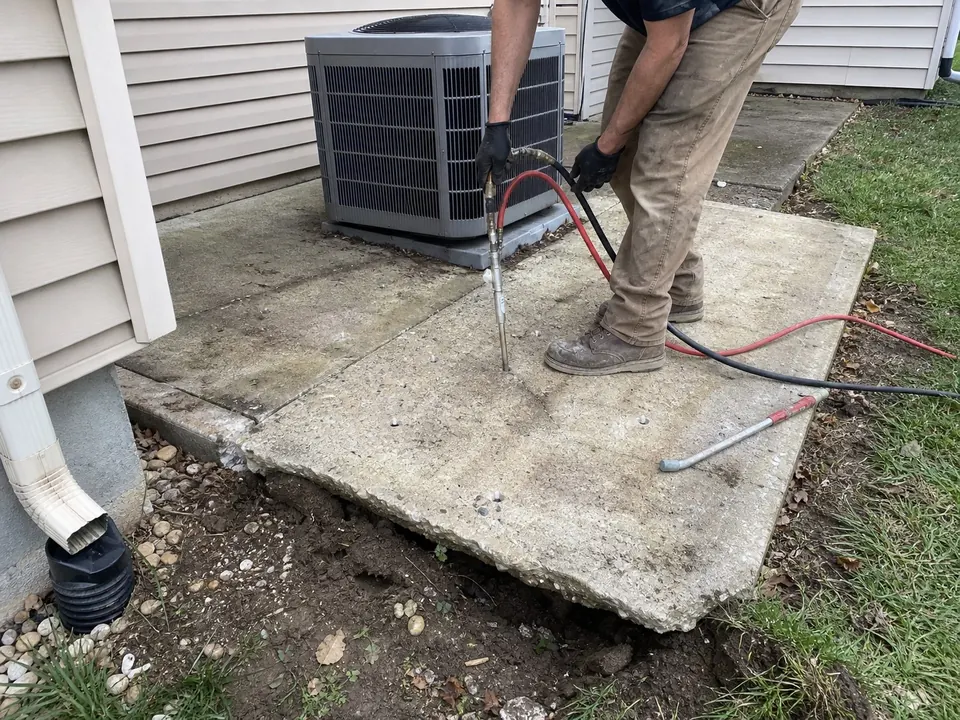 Void filling
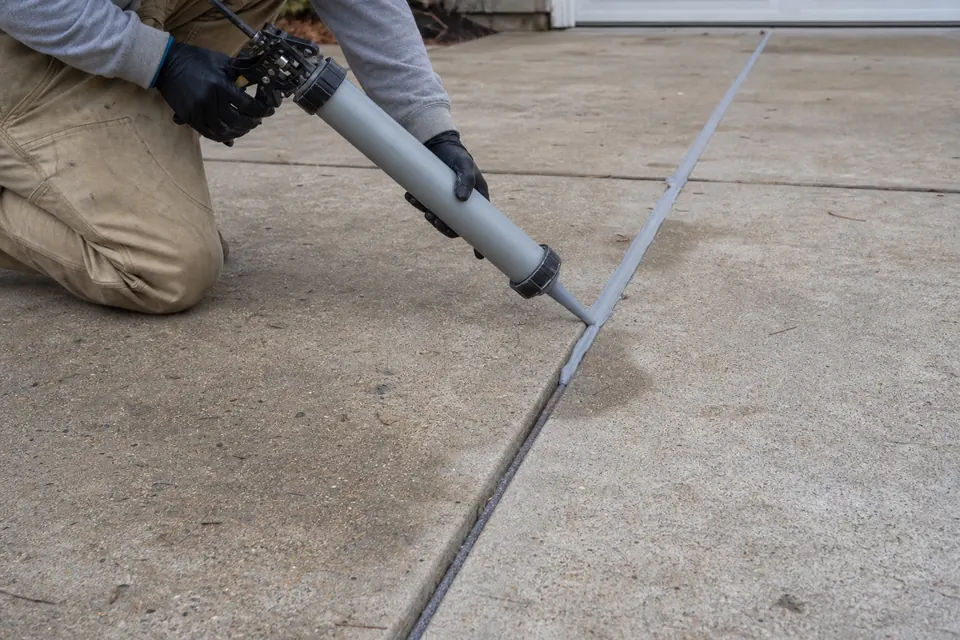 Crack & joint sealing