From older homes near the downtown square and William Jewell College to newer subdivisions around the Highway 152 and 291 corridors, Metro Wide helps Liberty homeowners lift settled driveways, walks, steps, and patios with polyurethane foam.
Liberty is the Clay County seat and one of the older towns in the Northland. Its historic square and the blocks around William Jewell College hold homes built more than a century ago, many on hilly lots with narrow walks and concrete steps that have been settling for decades. Away from the center, the town has filled in with mid-century neighborhoods and, more recently, newer subdivisions on the north and east sides.
Because of that mix, homeowners here call us about very different problems. Owners of older homes often ask about steps and walks that tip toward or away from the house. In newer neighborhoods, the request is usually a garage apron or a front walk that has dropped while the rest of the driveway held. Patios that now drain toward the foundation are common in both.
Polyurethane foam lifting raises those slabs through small ports. The foam fills the voids, lifts the concrete, and cures quickly, so you are not waiting on new concrete to cure or living with a torn-up yard. We also take commercial and institutional work, including sidewalks and entry areas.
Liberty at a glance
Location: Liberty, MO, Clay County
Distance: about 13 miles northeast of downtown Kansas City
Method: polyurethane foam lifting through small ports
Estimates: free, often by text from your photos
Warranty: 2 years on residential lifting
Properties: residential and commercial
Liberty is about 13 miles northeast of downtown Kansas City, close to the center of our service area, so it is a regular part of our schedule. Texting photos first is still the fastest way to get a quote.
Local Conditions
Why concrete settles in Liberty.
Liberty sits north of the Missouri River in glaciated country. The soils here are typically loess, a fine wind-blown silt, laid over older glacial till and clay. Loess drains and erodes easily, and when water finds its way under a slab, it can carry that silt away surprisingly fast. The clay beneath it, meanwhile, shrinks and swells with the seasons, so the support under a driveway is rarely the same in August as it was in April.
The terrain is rolling, with steeper ground toward the river bluffs and creek valleys running through and around town. Homes built on slopes deal with runoff moving along driveways and down walks, and older lots were often graded with whatever soil was at hand rather than a compacted base.
Freeze–thaw cycles each winter push water into gaps and widen them. In newer subdivisions, fill placed around foundations and under driveway approaches continues to settle for years after the house is finished. Foam lifting addresses the empty space under the slab, and we will flag downspouts, sump lines, or grading that keep sending water under the concrete.
Signs your slab has lost support
A lip or step-up at a driveway, sidewalk, or garage joint
A patio or walk that tips toward the house
Gaps opening between steps, stoops, and the foundation
Water pooling on a slab or flowing toward the home
Hollow sounds or visible washout along a slab edge
Common Liberty Projects
The concrete we lift most often in Liberty.
Every slab is different, so we start with what is happening at your property. These are the repairs Liberty property owners ask us about most.
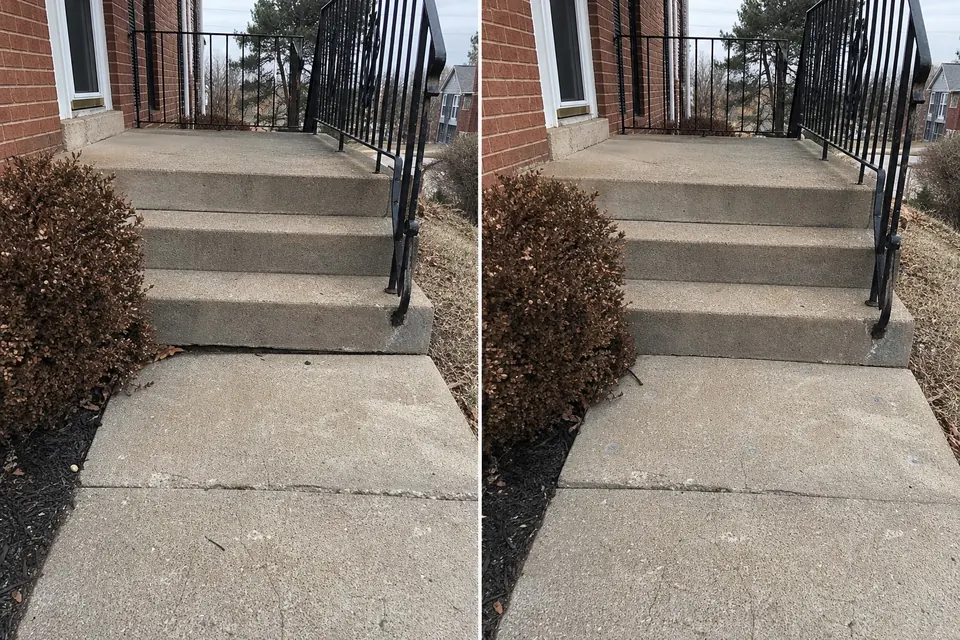
Steps and walks on older homes
Homes near the square and the college often have concrete steps and walks on sloped yards that have tipped over the decades. Raising them can reduce gaps at the porch, even out the steps, and remove the offsets at walk joints that tend to catch visitors in the dark.
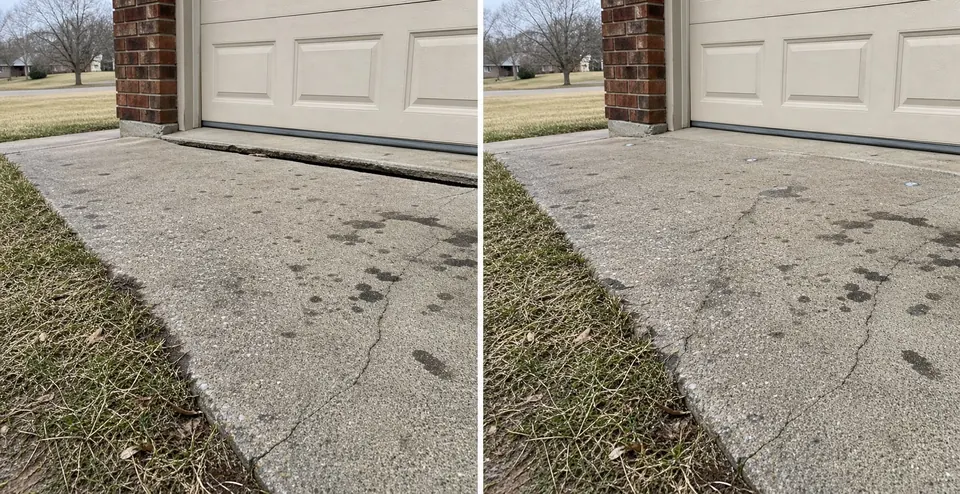
Garage aprons in newer neighborhoods
Newer homes on the edges of town often have a garage apron that has sunk over the backfill next to the foundation. Lifting it removes the lip at the garage, makes the transition smoother for cars, and helps water drain away from the door instead of toward it.
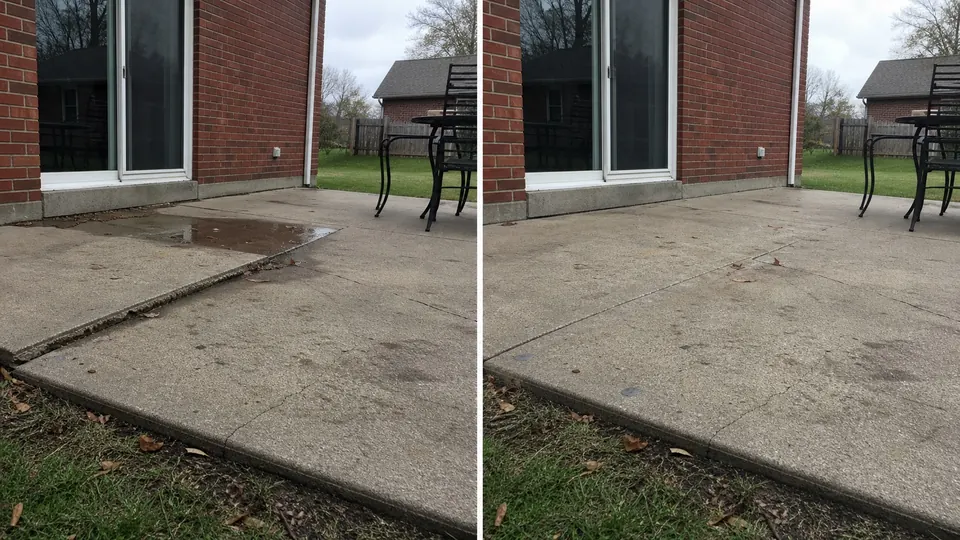
Patios and walkways around the house
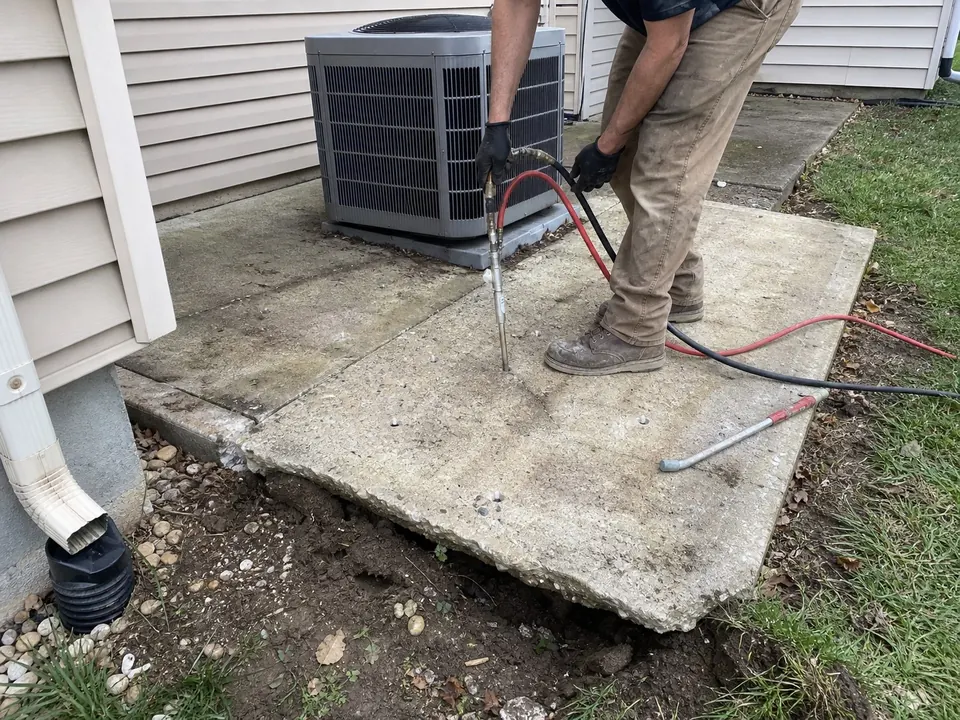
Patios and side walks that slope toward the house send roof and lawn water straight to the foundation. We raise the low side where the slab and door thresholds allow it, restoring drainage away from the home and reducing puddles that freeze in winter.
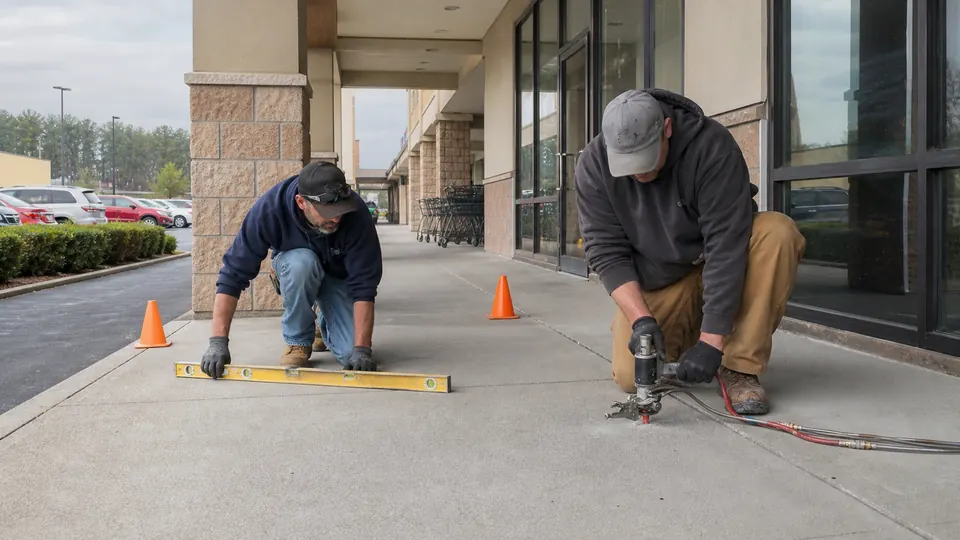
Institutional and commercial walks
Schools, churches, and businesses use foam leveling to correct uneven sidewalks, entries, and plaza areas. Because the work is done through small ports, it often brings less disruption and a shorter closure than a full tear-out and repour of the same concrete.
Our Liberty Leveling Process
A controlled lift with a small footprint.
01
Send photos
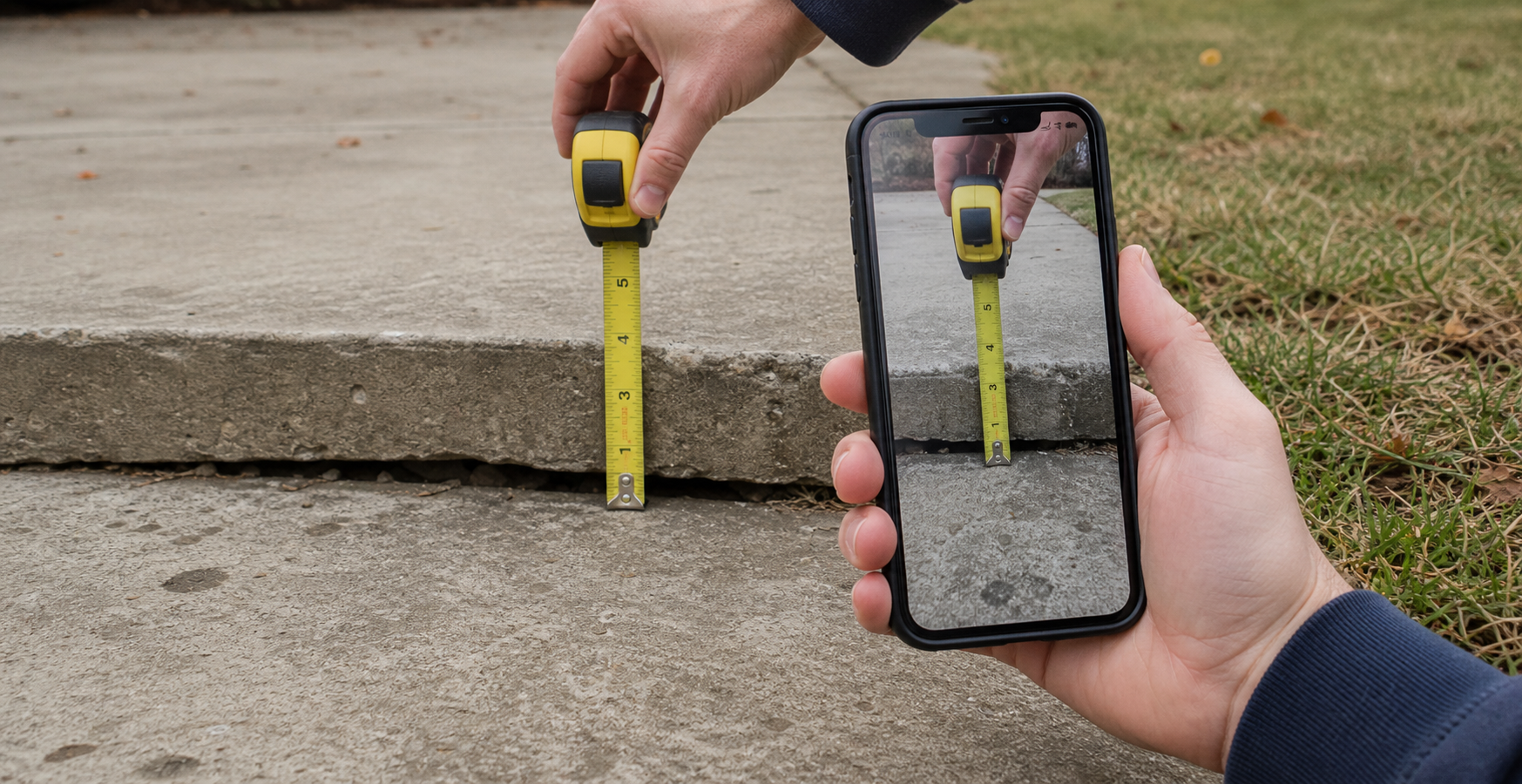
Text a wide shot, close-ups of the low joints, a tape measure showing the drop, and the address.
02
Review & quote
We look at the settlement, slab condition, and drainage, and follow up with a quote or questions.
03
Drill small ports
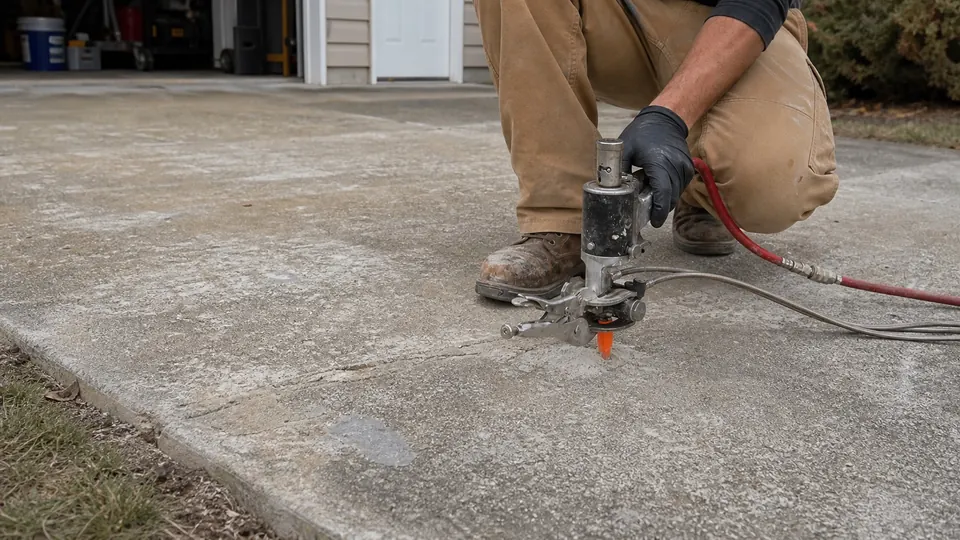
On the day of the repair we drill small access holes at planned points across the settled slab.
04
Lift in stages
Expanding polyurethane fills the voids and raises the concrete gradually while we watch the transitions.
05
Patch & clean up
Ports are patched, the area is cleaned, and the surface can usually be used again soon after.
Services in Liberty
Concrete lifting services available in Liberty, MO.
Metro Wide lifts and stabilizes most types of flatwork. Choose a service to learn how the repair works.
Are the soils in Liberty different from south of the river?
Somewhat. North of the Missouri River, the ground is usually loess, a fine silt, over glacial deposits and clay. Loess erodes easily when water gets under a slab, so settling often follows runoff paths. South of the river, shale-derived clays are more common. Foam lifting works in both settings, but north of the river we pay especially close attention to where water is coming from.
Will foam leveling get rid of the cracks in my driveway?
No. Lifting raises the slab and fills the voids underneath, which can make cracks less noticeable as the pieces come back into line, but the cracks themselves stay. If you want them closed up, we offer crack and joint sealing as a separate service. Sealing helps keep water and debris out of the gaps, which protects the soil under the slab.
How fast can I get a quote?
Text us photos of the whole slab, close-ups of each sunken joint, a tape measure showing the height difference, and your Liberty address. We review them and reply with a quote or follow-up questions. Many projects can be quoted from photos without an initial visit, which saves you from having to be home for an estimate.
How big are the holes you drill?
Polyfoam lifting uses small access ports, much smaller than the holes used for traditional mudjacking. The number and placement depend on the slab. After the lift, the ports are patched.
How much does concrete leveling cost in Liberty?
Pricing depends on the size of the slab, how far it has settled, how much void space is underneath, access, and how many areas need work, so we do not publish a flat price. Text photos, rough measurements, and your Liberty address and we can usually provide a remote quote. Leveling is often far less disruptive than tearing out and replacing a slab that is still usable.
How soon can I use my driveway or walkway after leveling?
Polyurethane foam cures quickly, so foot traffic and normal use can usually resume much sooner than with newly poured concrete. The exact timing depends on the repair, and we give you specific instructions when the work is finished.
Liberty Estimate
Find out if your Liberty concrete can be saved.
Text a wide photo, a close-up of the uneven area, a tape measure showing the drop, and your address. We will review it and follow up with a quote.
We accept Visa, Mastercard, American Express, Discover, Venmo, cash, and checks. Ask about payment details when scheduling your project.
Kansas City Metro Coverage
Explore our general service area.
Zoom, drag, or select a marker to explore communities within Metro Wide’s 75-mile Kansas City service radius. Scheduling varies by address and project type.
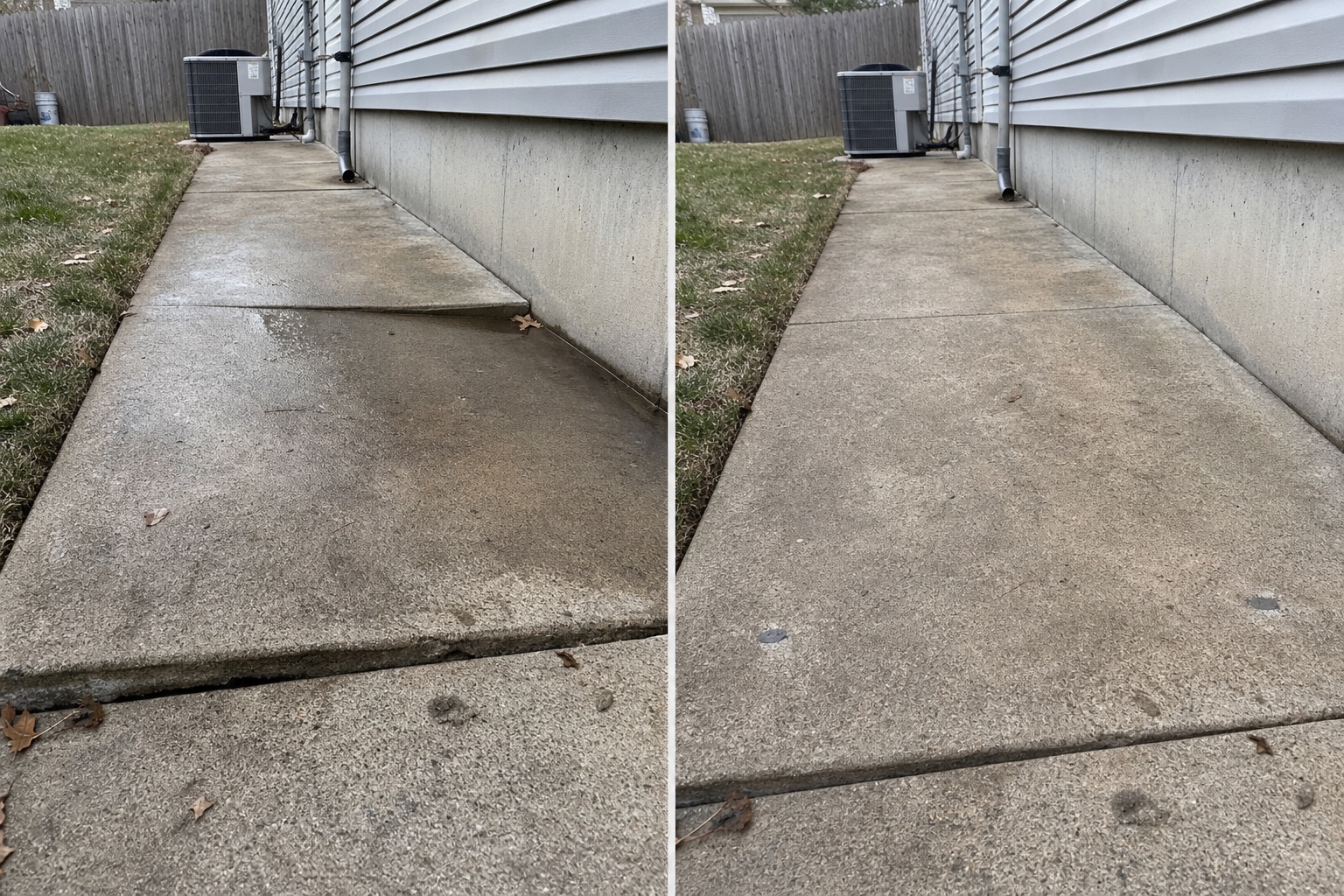
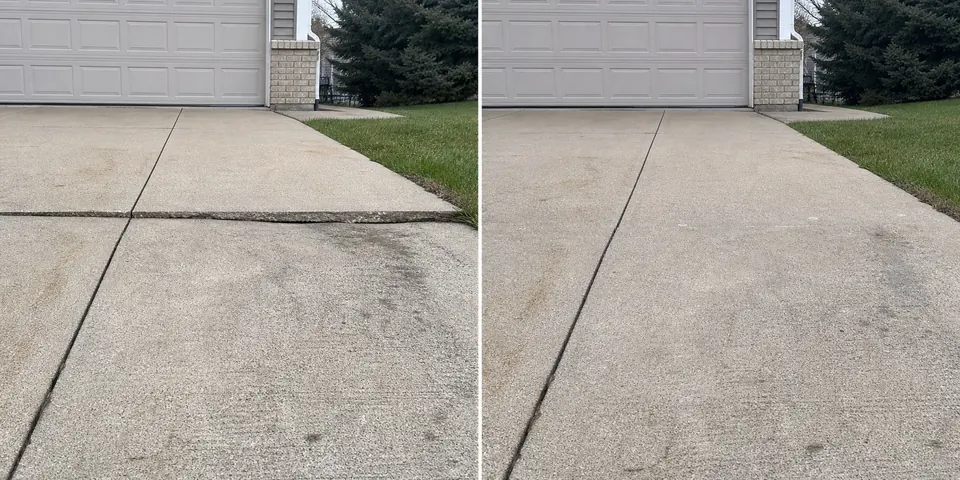 Driveway leveling
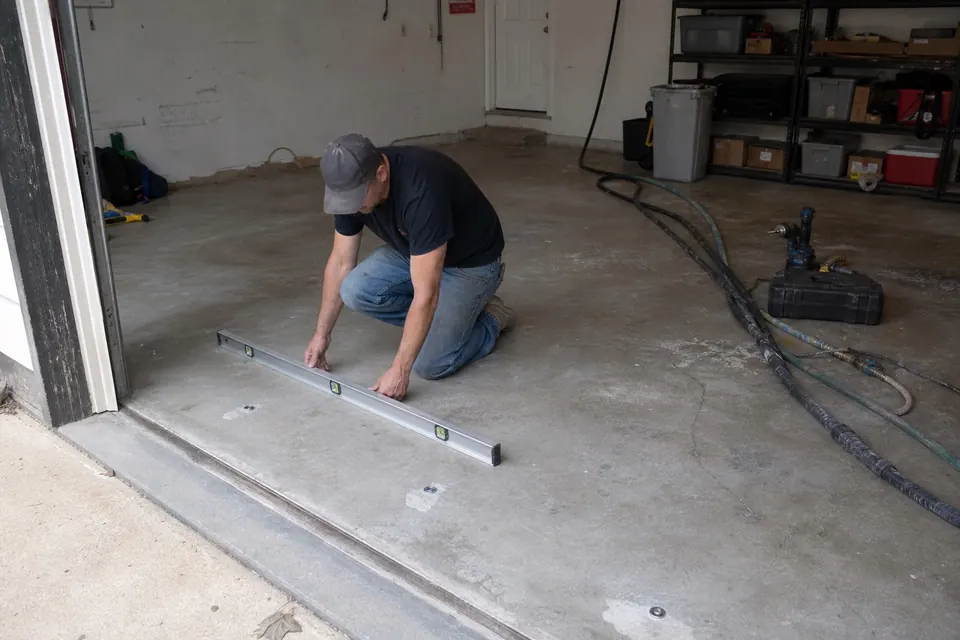 Garage floor leveling
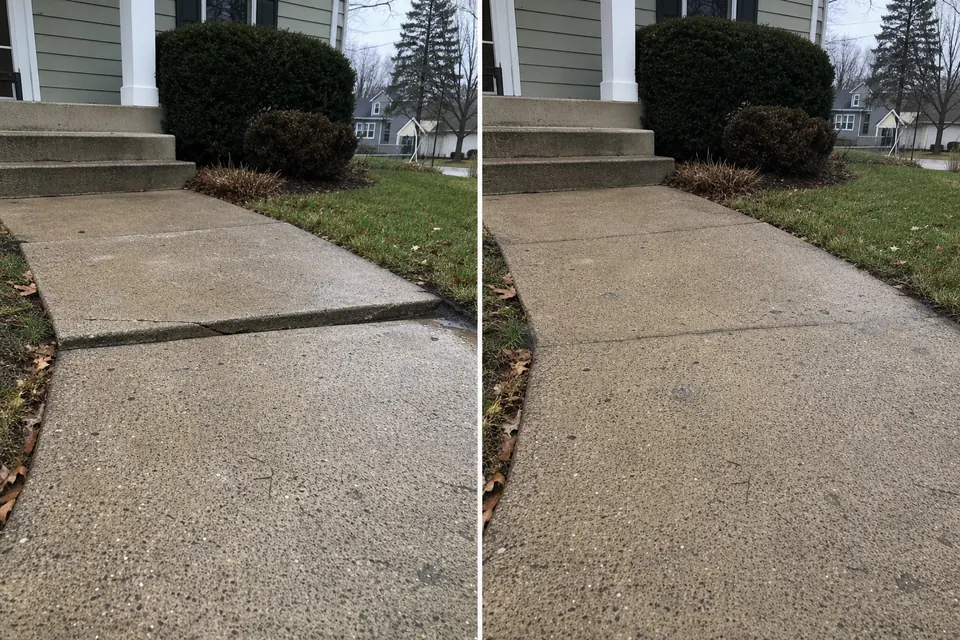 Sidewalk & walkway leveling
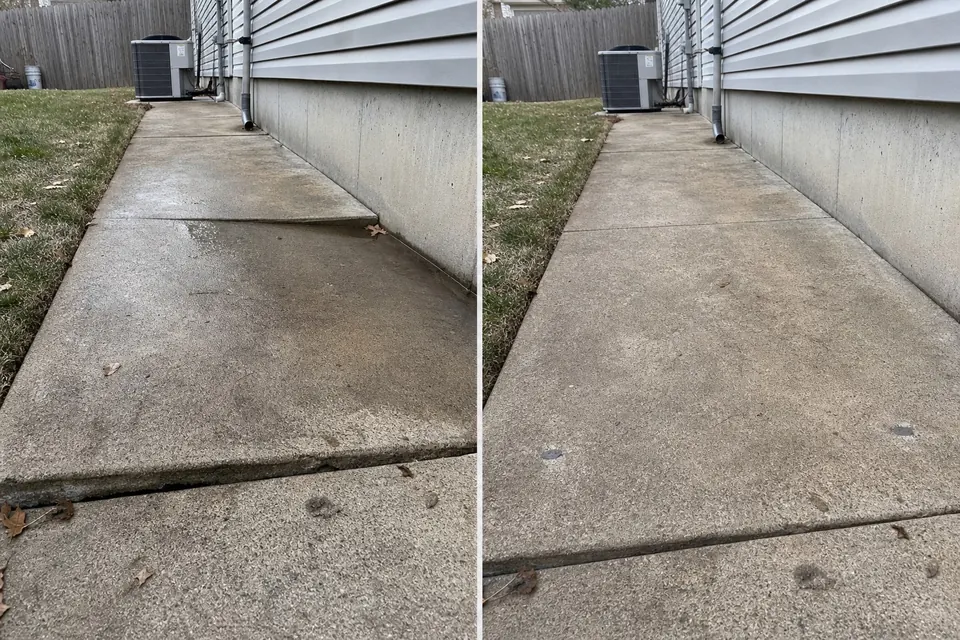 Porch & stoop leveling
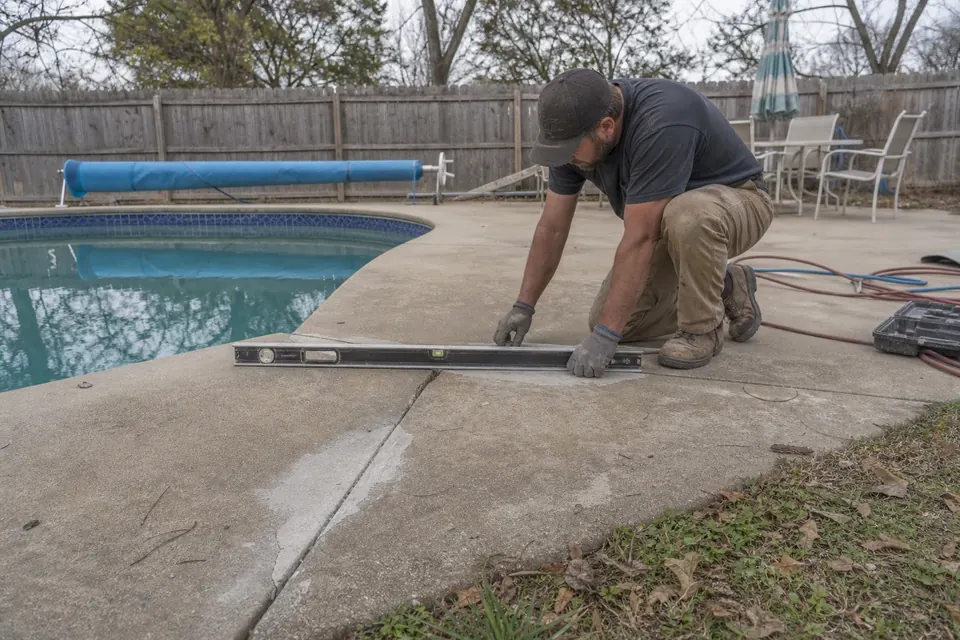 Pool deck leveling
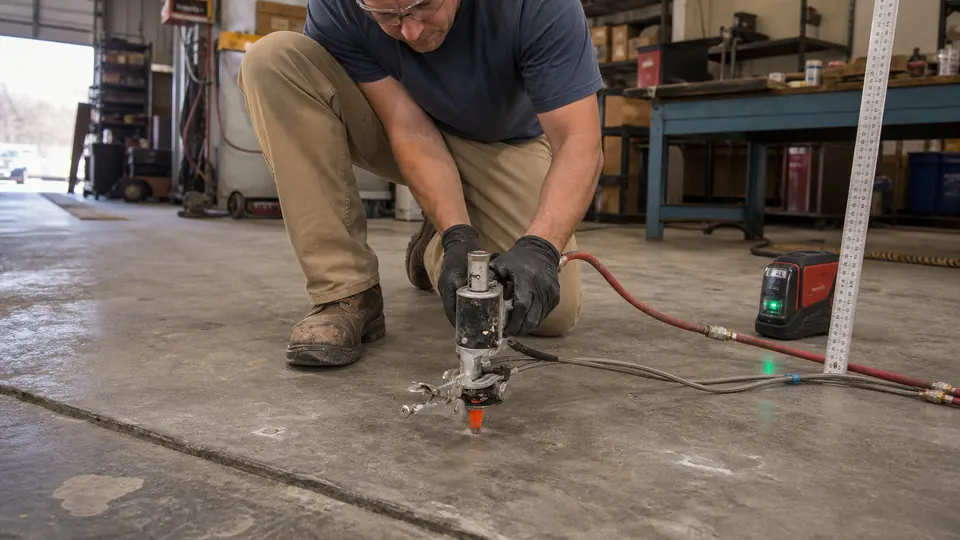 Concrete slab leveling
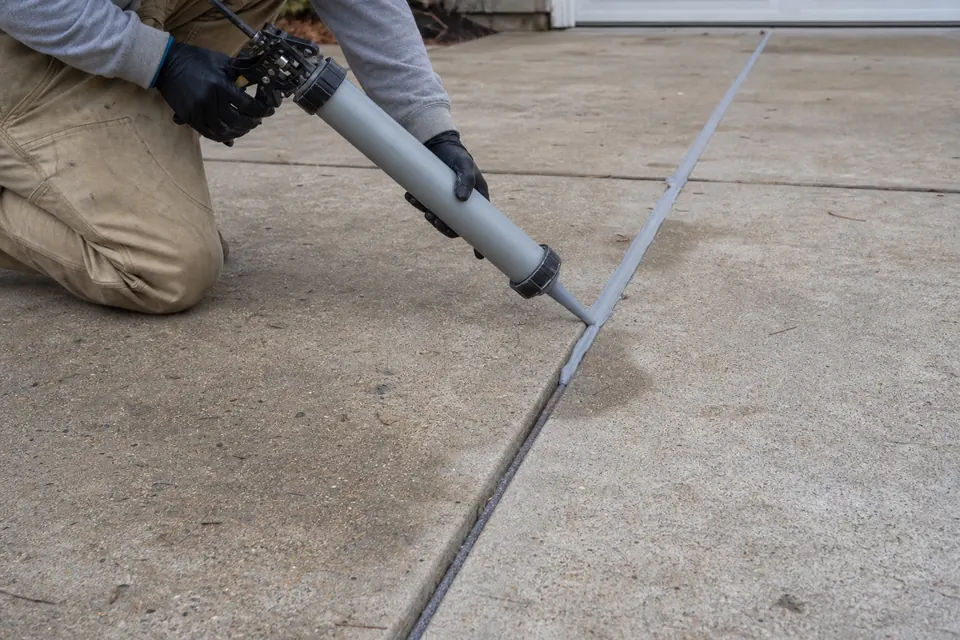 Crack & joint sealing