Lee’s Summit has grown fast, and much of that growth happened on graded lots where fill soil keeps settling for years. Metro Wide lifts sunken driveways, front walks, patios, and pool decks with polyurethane foam, from older homes near downtown to newer neighborhoods near the lakes.
Lee’s Summit has a historic downtown with older homes on its nearby streets, but most of the city is made up of subdivisions built from the 1970s onward. Many of those neighborhoods were laid out around rolling hills, creek valleys, and lakes such as Lakewood, Raintree, and Longview. Building on that kind of ground means a lot of cutting and filling, and the concrete poured over filled areas is often the first to show it.
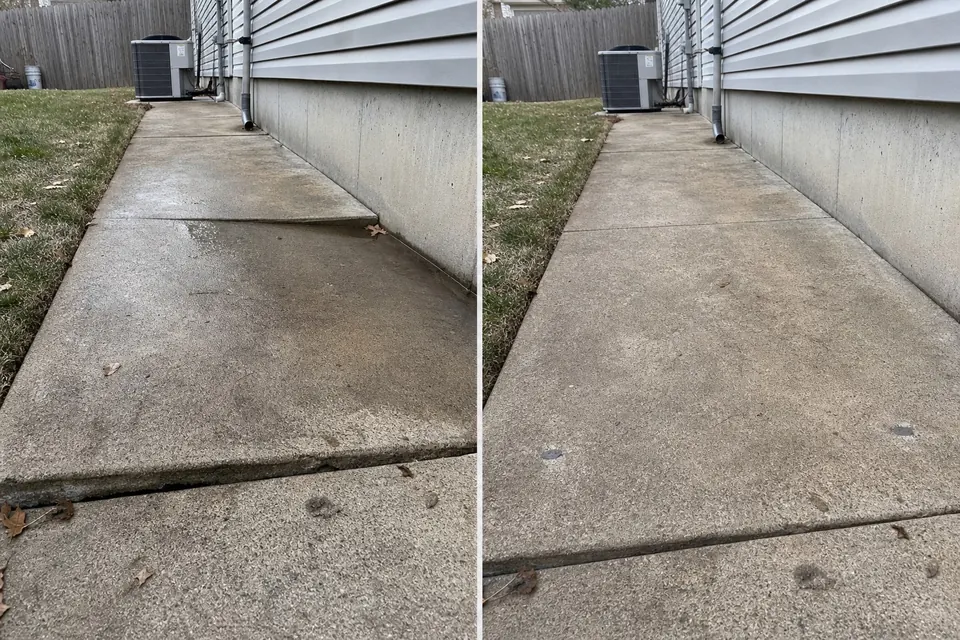
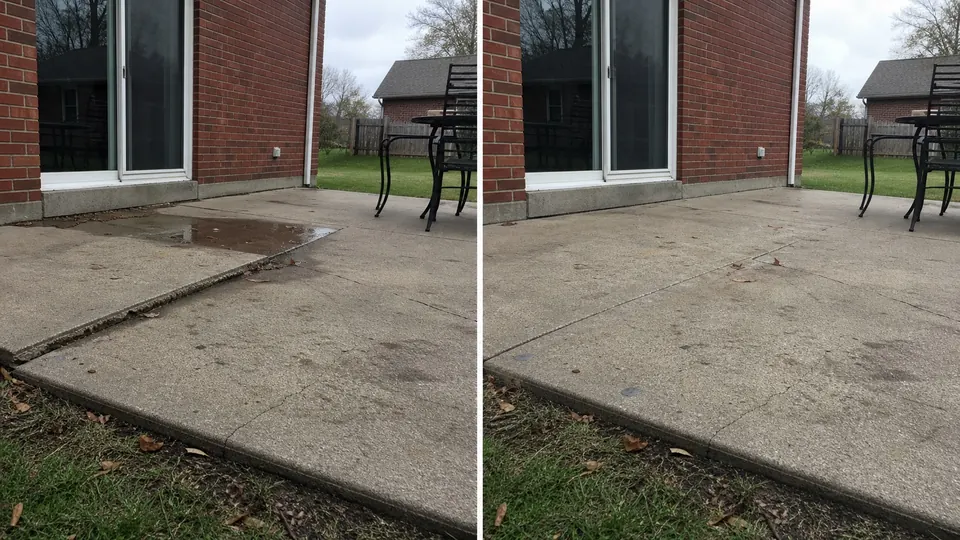
The calls we get from local homeowners tend to center on a few things: a garage apron that has dropped an inch or more below the driveway, a front walk that has tipped away from the porch, or a patio and pool deck that no longer drains away from the house. HOAs here also tend to watch for uneven walks and drives.
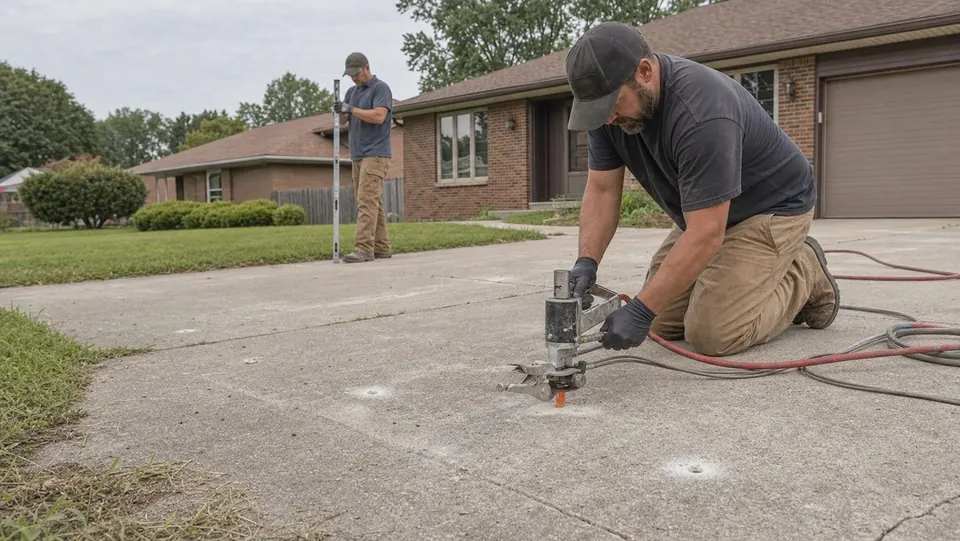
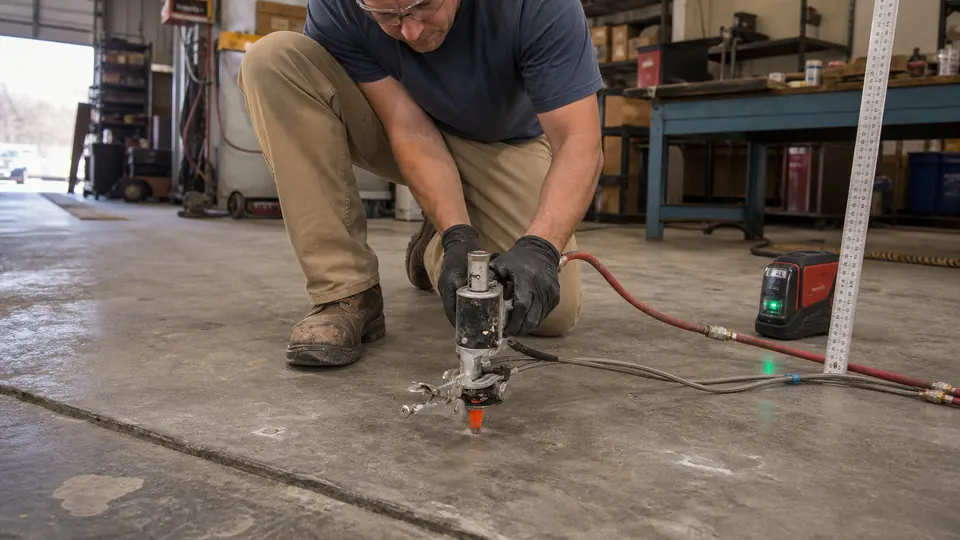
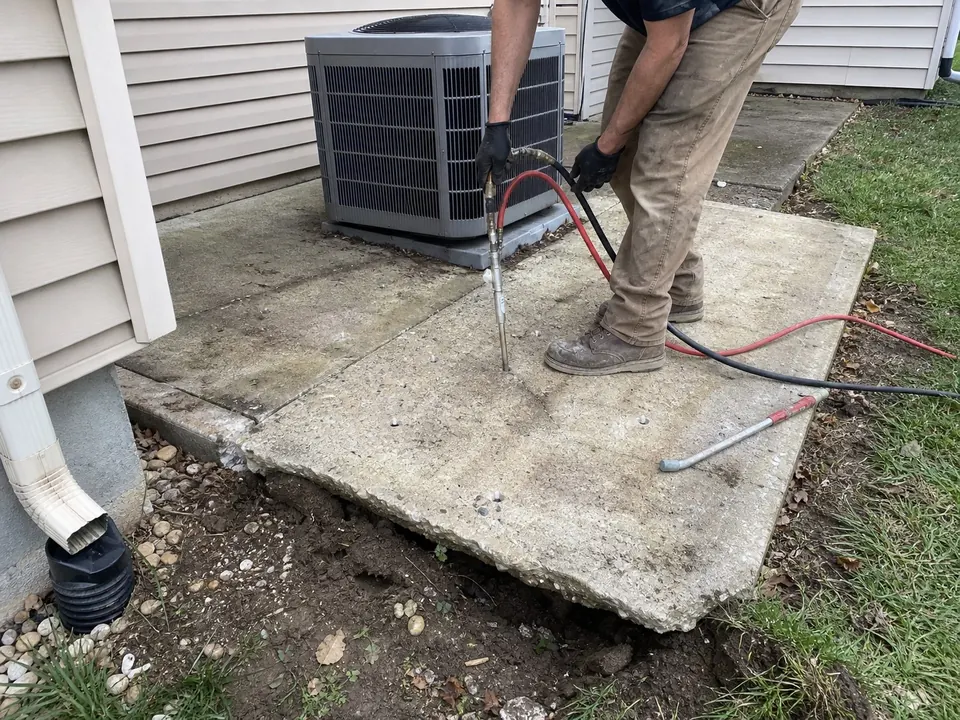
Polyurethane foam lifting is a practical fix for these problems. We drill a few small ports, inject foam that expands to fill the voids and raise the slab, and patch the holes. You keep your existing concrete, and you avoid the demolition, the debris, and the long wait for new concrete to cure.
Lee’s Summit at a glance
Location: Lee’s Summit, MO, Jackson County
Distance: about 17 miles southeast of downtown Kansas City
Method: polyurethane foam lifting through small ports
Estimates: free, often by text from your photos
Warranty: 2 years on residential lifting
Properties: residential and commercial
Lee’s Summit sits roughly 17 miles southeast of downtown Kansas City, well inside Metro Wide’s 75-mile coverage radius. Scheduling depends on the address and the size of the project, and a remote quote from your photos lets us plan the trip before we arrive.
Local Conditions
Why concrete settles in Lee’s Summit.
The biggest factor here is usually fill soil. When a subdivision is graded, high spots are cut down and low spots and creek draws are filled in. Soil placed around foundations and under driveways keeps compressing after the concrete goes down, and it often compresses unevenly. That is why a garage approach or a walk near the house can drop while the rest of the slab stays put.
Underneath the fill, much of the area has clay soils weathered from shale and limestone. These clays shrink during dry summers and swell when wet, so slabs ride up and down a little each year. Freeze–thaw cycles add to the movement, and gaps that open under the edges invite water in.
Drainage is the other piece. Homes on hillsides and near lake coves often have downspouts and sump lines discharging close to driveways and patios. That water can wash fines out from under the slab. When we lift concrete, we look for those sources and tell you about them, because fixing the drainage is what keeps a lifted slab where it belongs.
Signs your slab has lost support
A lip or step-up at a driveway, sidewalk, or garage joint
A patio or walk that tips toward the house
Gaps opening between steps, stoops, and the foundation
Water pooling on a slab or flowing toward the home
Hollow sounds or visible washout along a slab edge
Common Lee’s Summit Projects
The concrete we lift most often in Lee’s Summit.
Every slab is different, so we start with what is happening at your property. These are the repairs Lee’s Summit property owners ask us about most.
Garage aprons over backfill
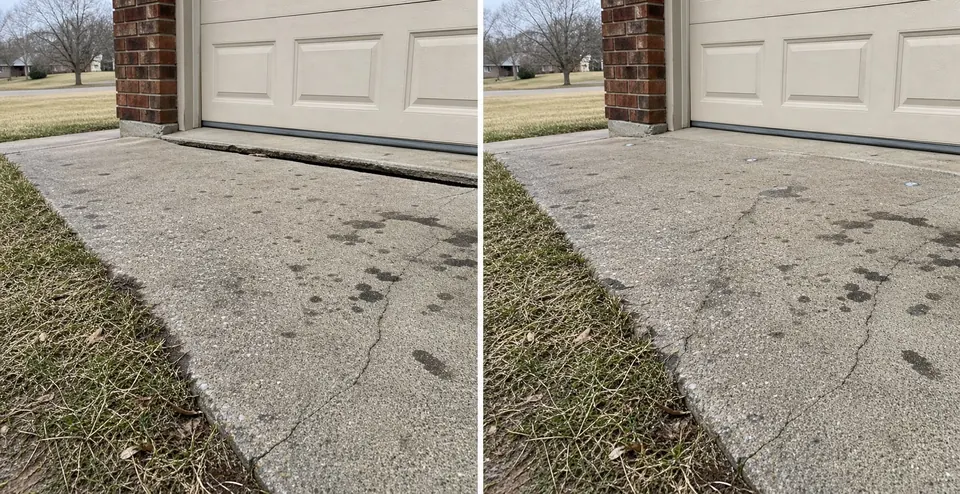
The slab right in front of the garage sits over soil that was backfilled against the foundation. It is the panel we lift most often in newer neighborhoods, and raising it removes the lip that catches tires and stops water from running back toward the garage door.
Pool decks and patios
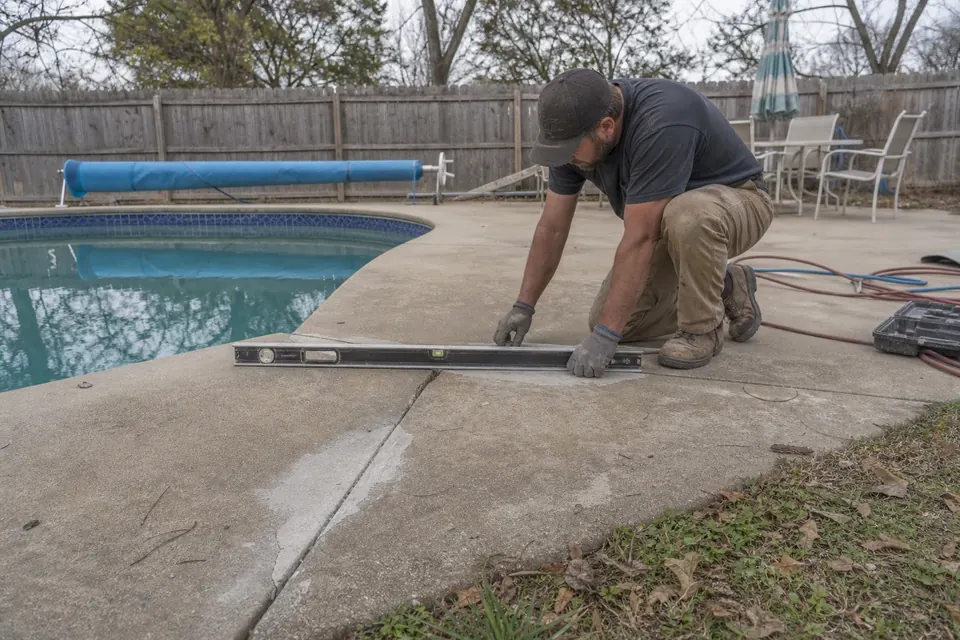
Pool decks and large patios can settle unevenly, creating tripping edges and low spots that hold water near the pool or the back door. Foam lifting can bring panels back into line where the deck is still in good condition, without draining the pool or tearing out coping.
Front walks and HOA concerns
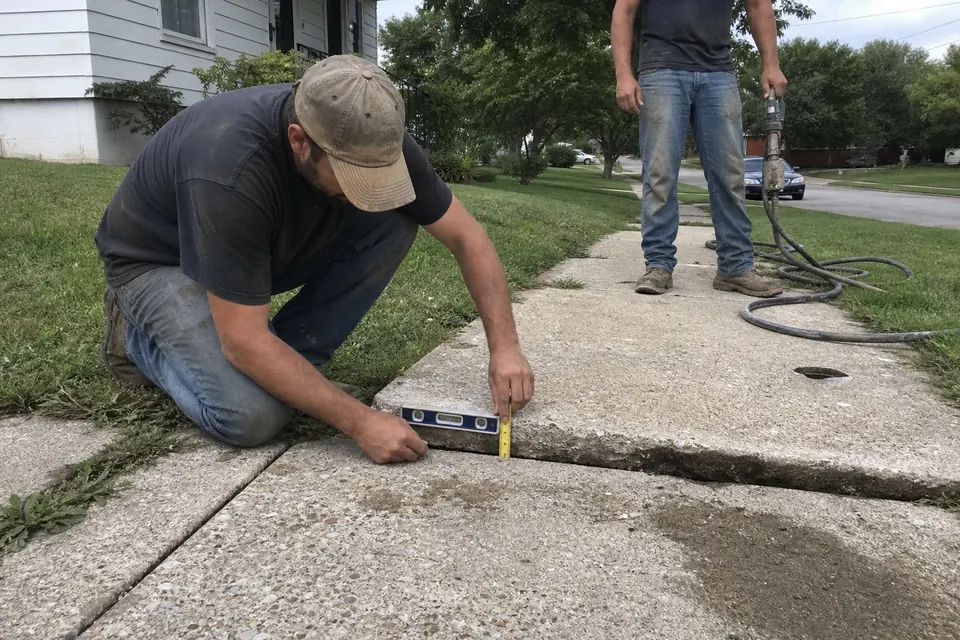
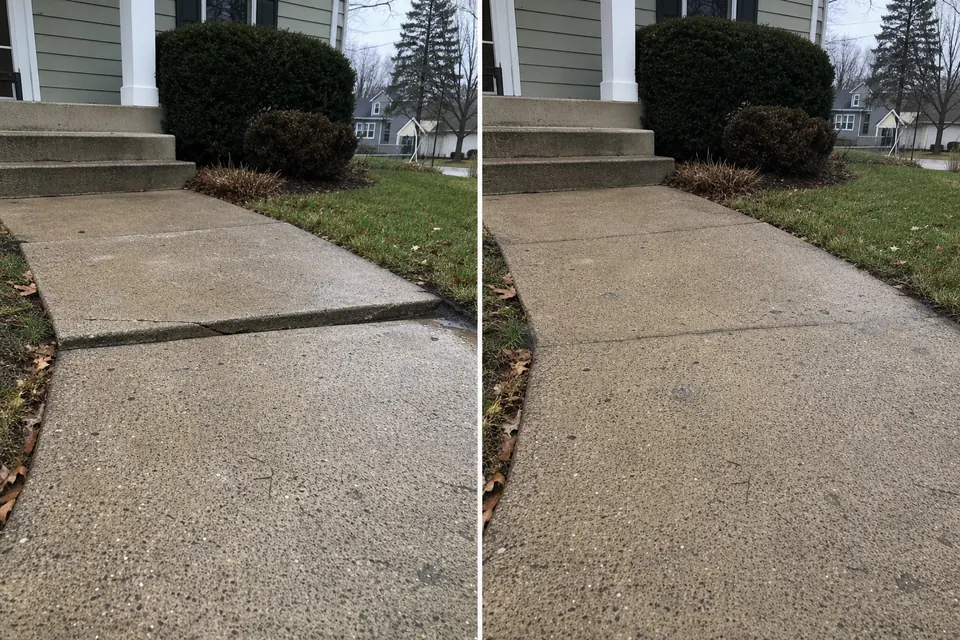
A walk that has sunk at one joint can draw an HOA notice and become a hazard for guests. Raising the low panel is usually quicker and less disruptive than replacing it, and the surface keeps the same color and finish as the rest of the walk.
Commercial walks and storefronts
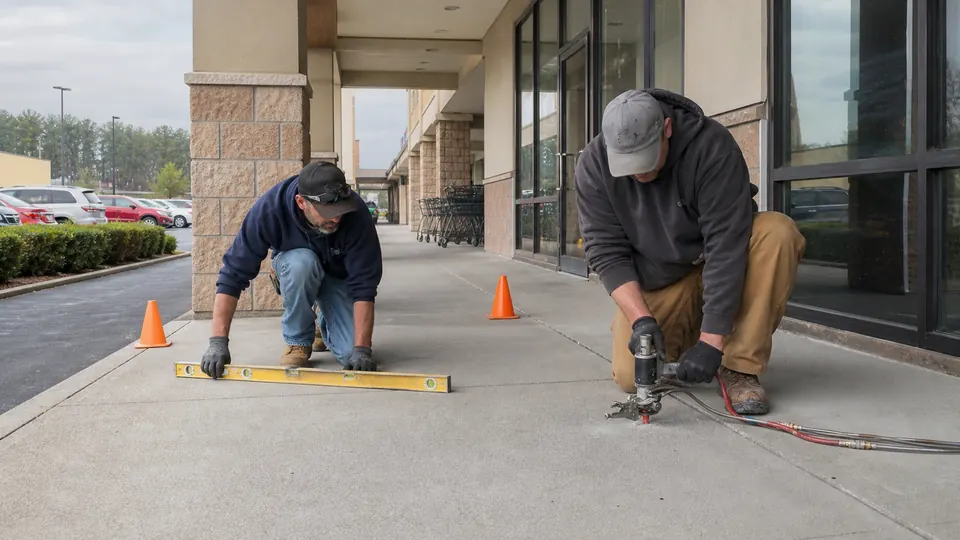
Retail centers, medical offices, and other buildings along the main corridors use leveling to correct uneven sidewalks, entries, and curb transitions. The work helps reduce trip hazards with minimal disruption to customers and without a long closure for new concrete to cure.
Our Lee’s Summit Leveling Process
A controlled lift with a small footprint.
01
Send photos
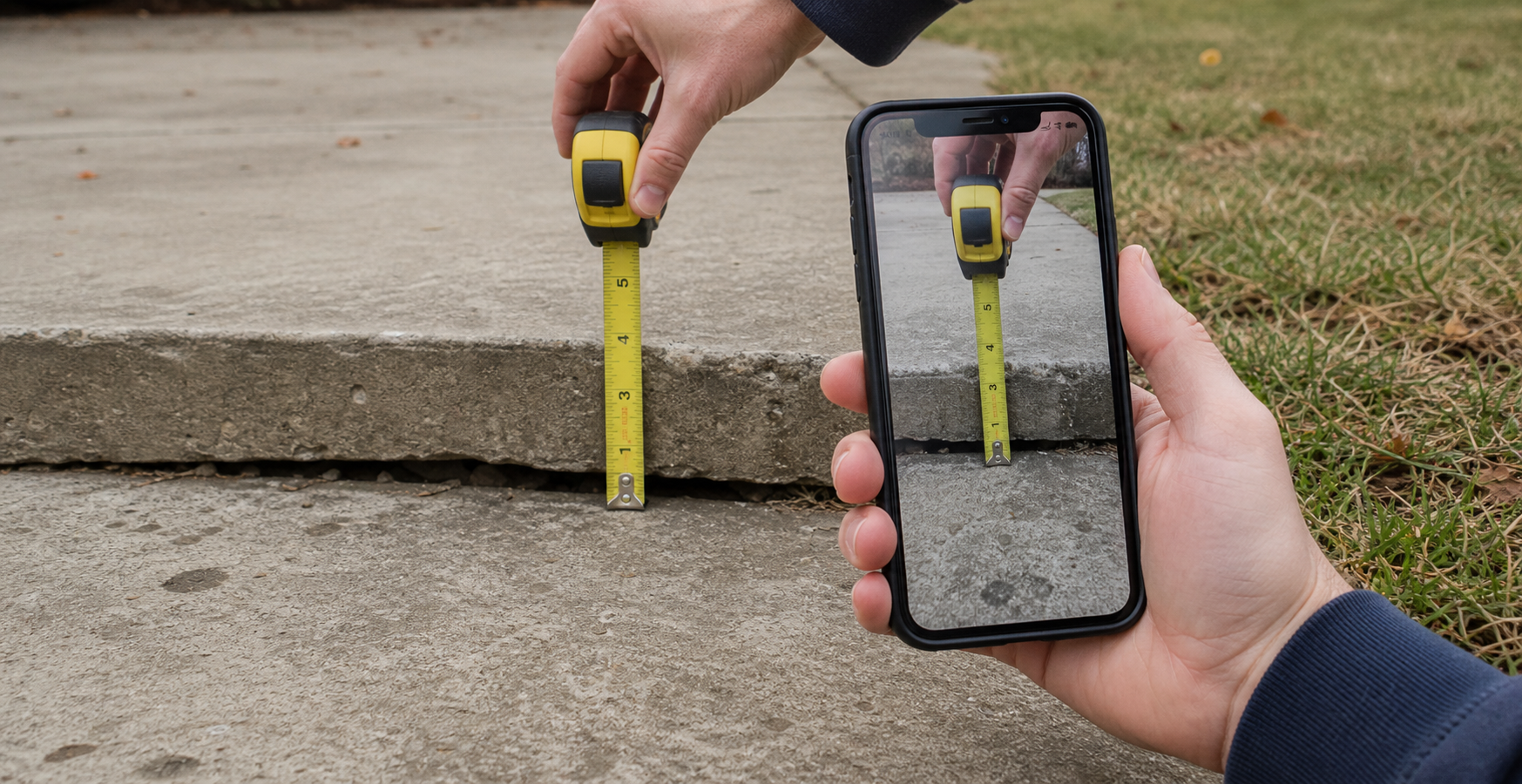
Text a wide shot, close-ups of the low joints, a tape measure showing the drop, and the address.
02
Review & quote
We look at the settlement, slab condition, and drainage, and follow up with a quote or questions.
03
Drill small ports
On the day of the repair we drill small access holes at planned points across the settled slab.
04
Lift in stages
Expanding polyurethane fills the voids and raises the concrete gradually while we watch the transitions.
05
Patch & clean up
Ports are patched, the area is cleaned, and the surface can usually be used again soon after.
Services in Lee’s Summit
Concrete lifting services available in Lee’s Summit, MO.
Metro Wide lifts and stabilizes most types of flatwork. Choose a service to learn how the repair works.
Our home backs up to a lake cove. Does that make settling worse?
It can. Lots near water usually slope toward it, and runoff moving across or under patios and walks can erode the soil beneath them. Some lakeside lots also have more fill than lots on flatter ground. Foam lifting can raise and support the slab, but we will also look at how water moves across the yard and point out anything that could keep undermining the concrete.
Is foam lifting better than mudjacking for a newer Lee’s Summit subdivision?
Both methods raise concrete by filling the space beneath it. Polyurethane foam is lightweight, so it adds very little load to soft fill soil that is already compressing, and it goes in through smaller holes. It also cures quickly, so the slab can be used again soon. For most of the newer driveways and walks we see, those are real advantages over a heavy slurry.
What warranty do you offer on residential concrete leveling?
Residential lifting comes with a 2-year warranty, and we will explain what it covers before work begins. Leveling restores support and alignment under the slab, but it does not erase existing cracks. If you want those closed up, we can seal cracks and joints as a separate service to help keep water from getting underneath again.
Do you offer a warranty?
Yes. Residential concrete lifting from Metro Wide is backed by a 2-year warranty. We will explain what is covered for your project when we provide the quote.
When is replacement a better choice than leveling?
If the concrete is badly broken, crumbling, severely spalled, or cannot move without damaging a fixed structure, replacement may be the better investment. We tell you when a slab is not a good lifting candidate rather than recommending a repair that will not hold up. Our leveling vs. replacement guide covers the trade-offs.
Can leveling fix water running toward my foundation?
Sometimes. Raising a patio, walk, or driveway panel that settled toward the house can restore some pitch away from the foundation. Drainage also depends on gutters, downspouts, and surrounding grades, so we point out anything that is likely to undo the repair.
Lee’s Summit Estimate
Find out if your Lee’s Summit concrete can be saved.
Text a wide photo, a close-up of the uneven area, a tape measure showing the drop, and your address. We will review it and follow up with a quote.
We accept Visa, Mastercard, American Express, Discover, Venmo, cash, and checks. Ask about payment details when scheduling your project.
Kansas City Metro Coverage
Explore our general service area.
Zoom, drag, or select a marker to explore communities within Metro Wide’s 75-mile Kansas City service radius. Scheduling varies by address and project type.
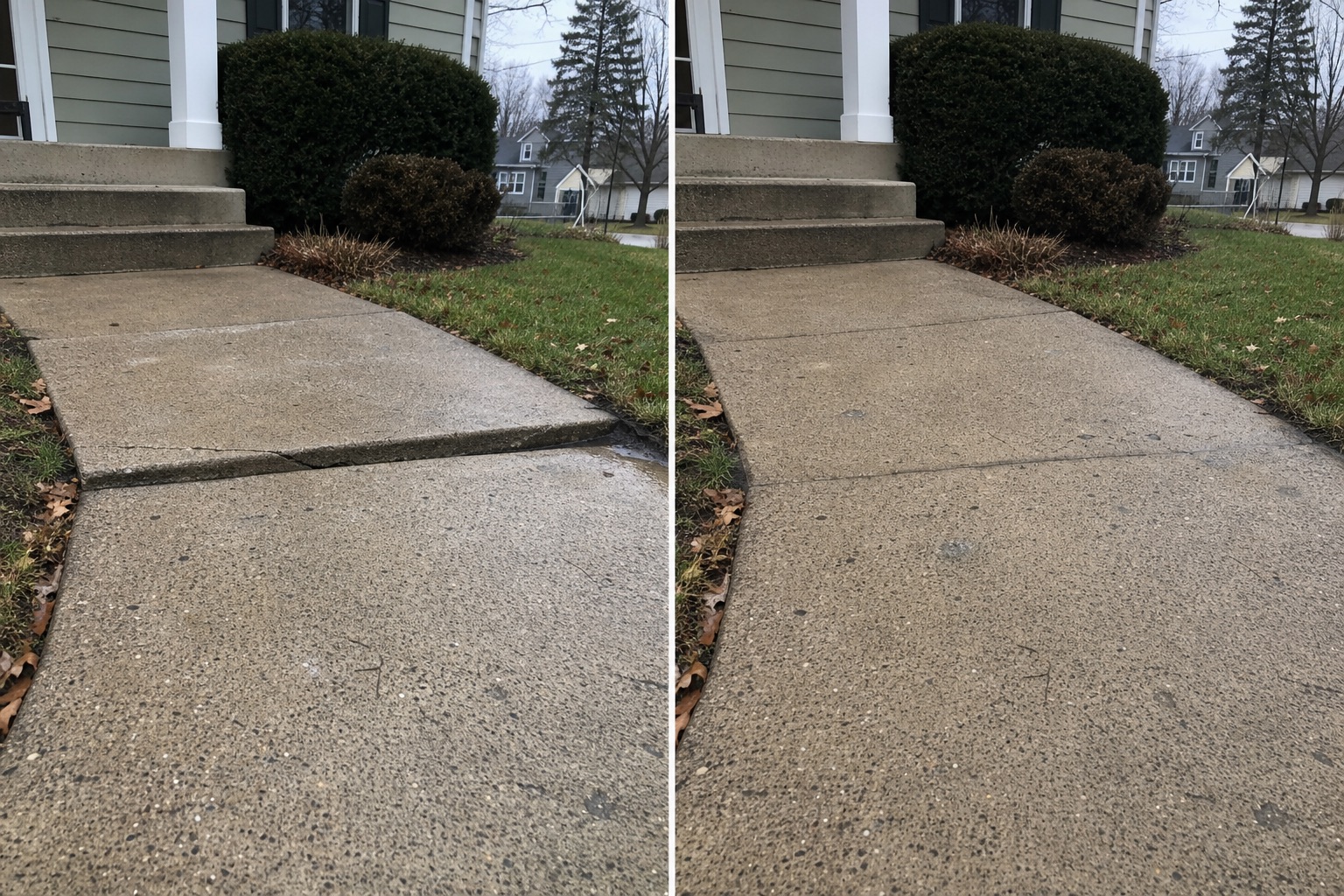
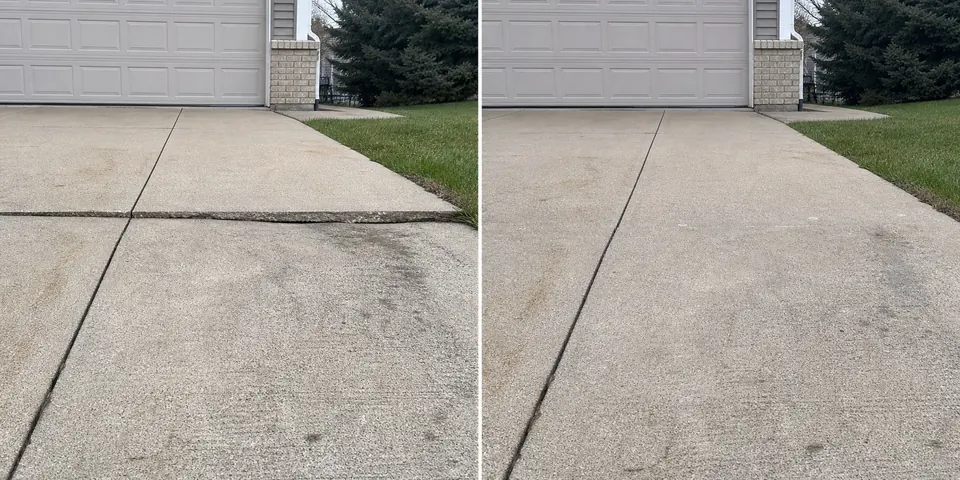 Driveway leveling
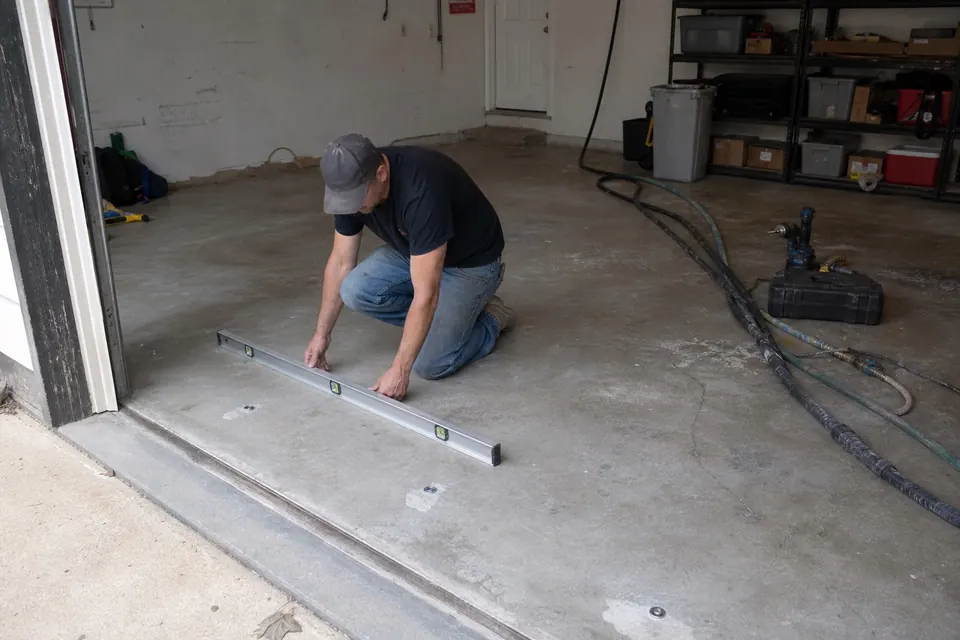 Garage floor leveling
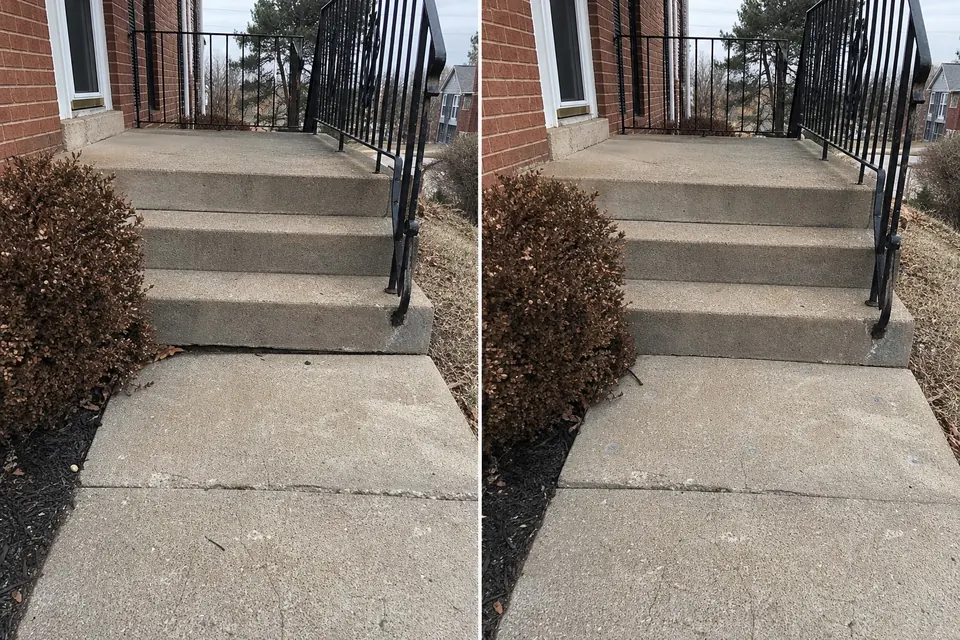 Steps leveling
 Porch & stoop leveling
 Patio leveling
 Concrete slab leveling
 Void filling
 Crack & joint sealing