De Soto sits on the Kansas River at the western edge of Johnson County, with older in-town homes, newer subdivisions and rural properties side by side. Metro Wide lifts settled driveways, patios, walks and outbuilding slabs with polyurethane foam.
De Soto is a small river town on the south bank of the Kansas River, along K-10 between the Johnson County suburbs and Lawrence. Its older blocks near downtown follow a traditional small-town grid with modest homes, some dating back many decades, while newer subdivisions have filled in around the edges of town. Outside the city limits, many properties are acreages with long driveways, detached garages and shops.
The area is also changing quickly. Large new industrial development along K-10 has brought new construction, new residents and new interest in De Soto, and that growth means more freshly graded lots where concrete sits on fill that is still settling.
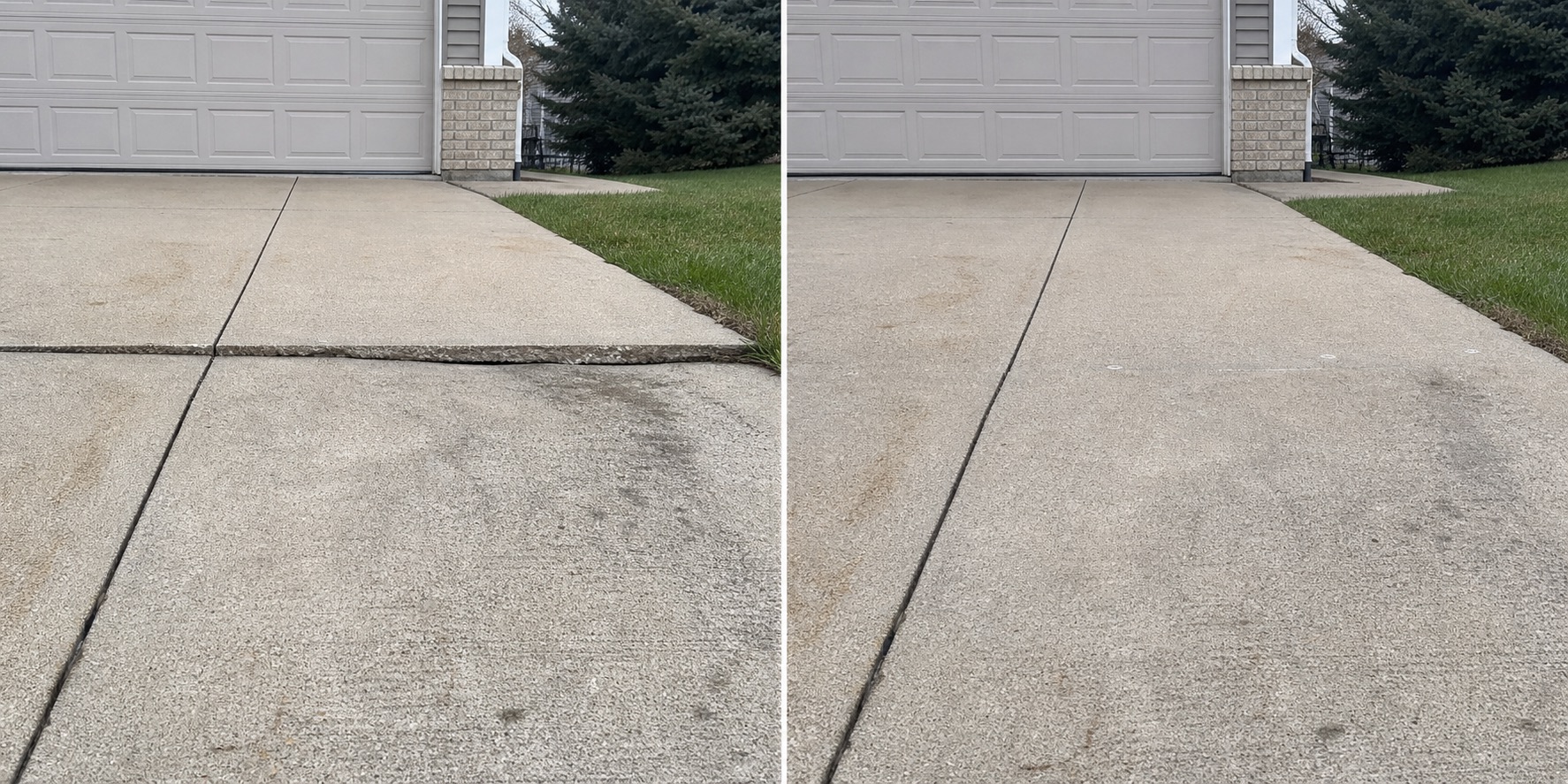
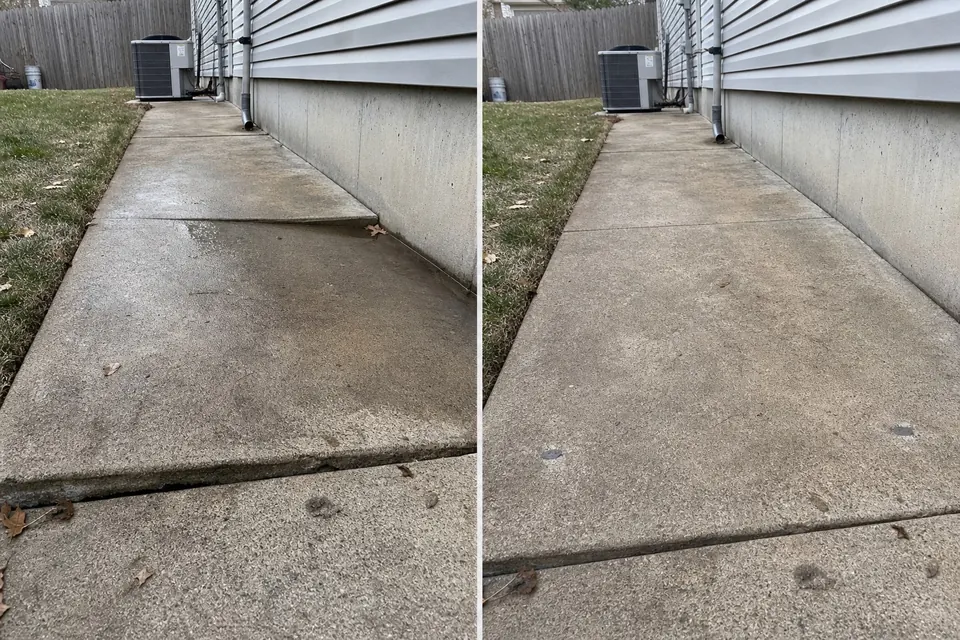
Common calls from De Soto include driveways that have dropped at the garage, patios that have sunk on the house side, sidewalks with uneven joints, and slabs in detached garages and shops that have settled at one end. Polyurethane foam lifts those slabs through small ports, without the demolition and haul-off of a replacement, and residential work is covered by our 2-year warranty.
De Soto at a glance
Location: De Soto, KS, Johnson County
Distance: about 23 miles west of downtown Kansas City
Method: polyurethane foam lifting through small ports
Estimates: free, often by text from your photos
Warranty: 2 years on residential lifting
Properties: residential and commercial
De Soto sits roughly 23 miles west of downtown Kansas City, well inside Metro Wide’s 75-mile coverage radius. Scheduling depends on the address and the size of the project, and a remote quote from your photos lets us plan the trip before we arrive.
Local Conditions
Why concrete settles in De Soto.
Being on the Kansas River shapes the ground in and around De Soto. Lower parts of town and land closer to the river sit on alluvial soils, the silts, sands and clays deposited by the river over time. These soils can be soft and hold water, and in some places sandy layers can wash out from under a slab once water finds a path. Higher ground south of the river transitions to the clay-rich upland soils typical of Johnson County, which swell and shrink with moisture.
New construction adds fill. As farm ground has been turned into lots, builders grade and place soil to create level pads for houses and driveways. That fill compresses for years, and the concrete closest to the foundation, such as garage aprons, walks and patios, is usually the first to drop.
On rural properties, gravel drives meeting concrete aprons, downspouts emptying onto open ground, and shop floors poured with limited base preparation can all lead to settling. Freeze-thaw cycles work on all of it every winter.
Signs your slab has lost support
A lip or step-up at a driveway, sidewalk, or garage joint
A patio or walk that tips toward the house
Gaps opening between steps, stoops, and the foundation
Water pooling on a slab or flowing toward the home
Hollow sounds or visible washout along a slab edge
Common De Soto Projects
The concrete we lift most often in De Soto.
Every slab is different, so we start with what is happening at your property. These are the repairs De Soto property owners ask us about most.
Shop and outbuilding floors
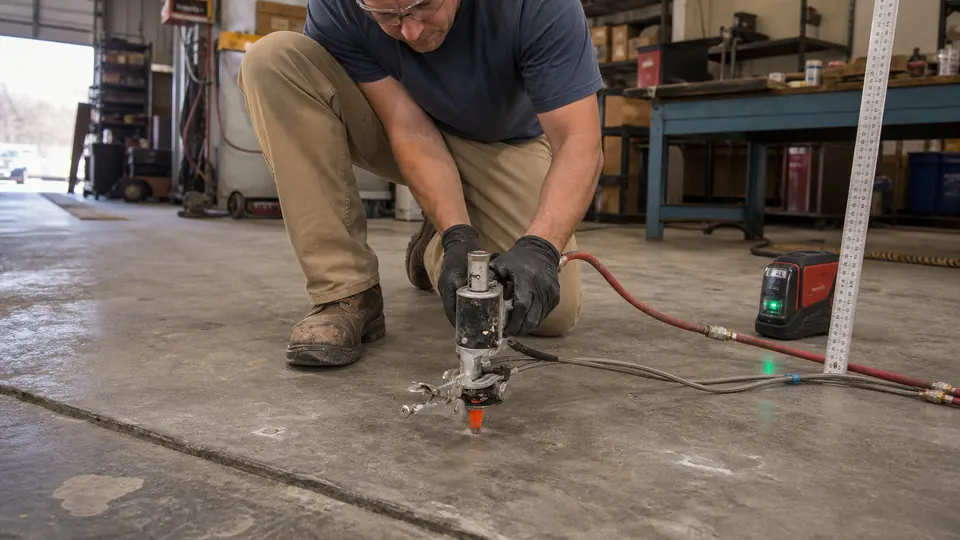
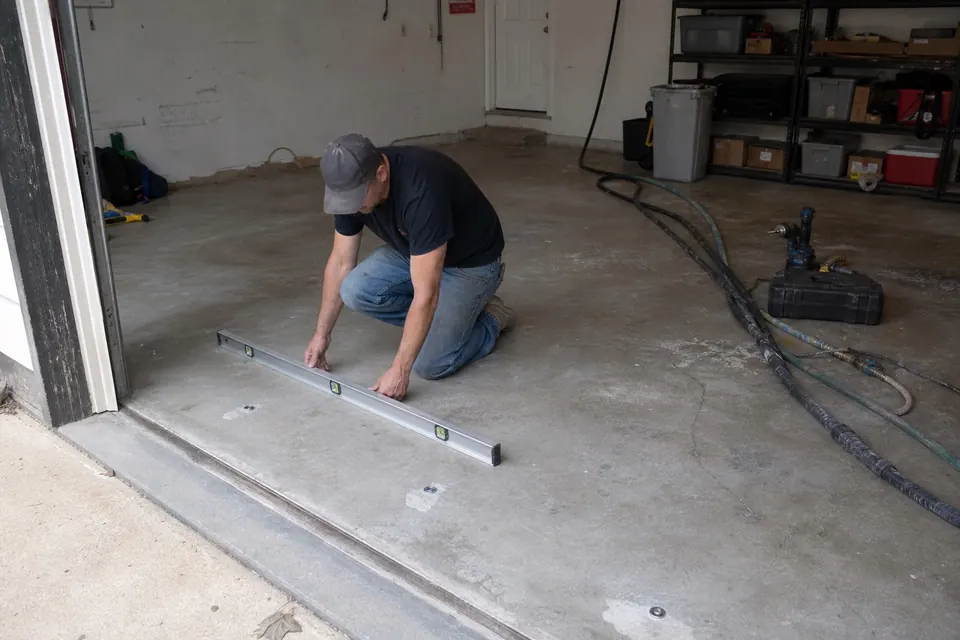
Detached garages and shops on acreages often have slabs that have dropped at one corner or along the overhead door. Lifting the low area can make it easier to roll equipment in and keep water from pooling inside the building.
Driveway aprons on new lots
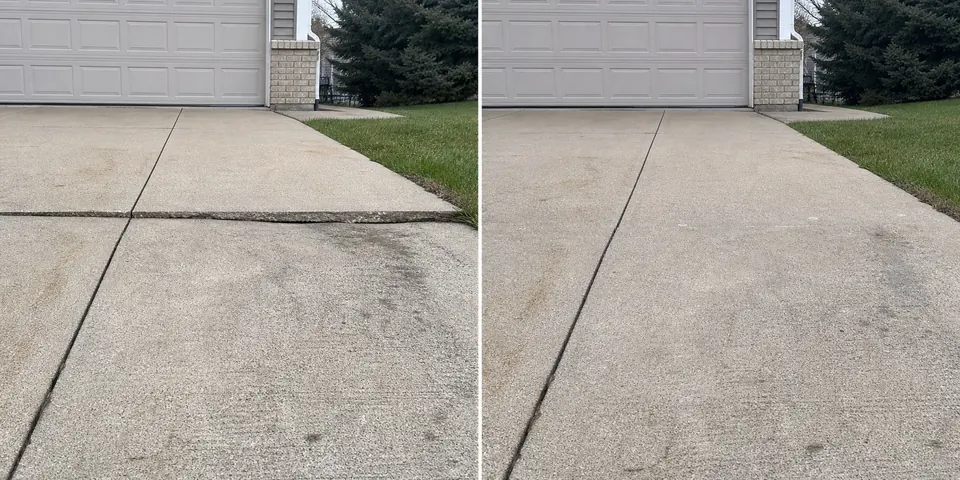
In newer De Soto subdivisions, garage aprons and the first driveway panel often settle as backfill compresses. Raising them before the void grows and the cracks widen removes the lip at the garage and restores drainage toward the street.
Patios on lower ground
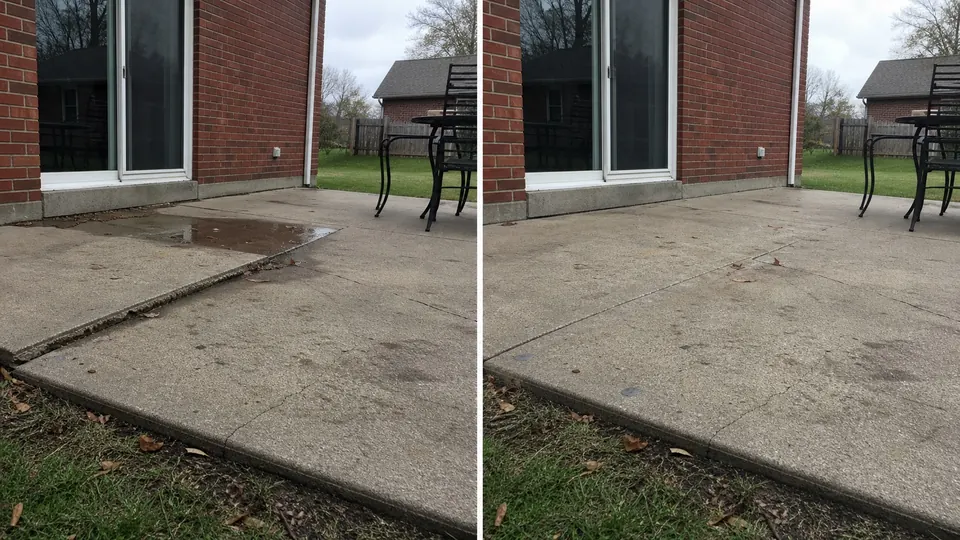
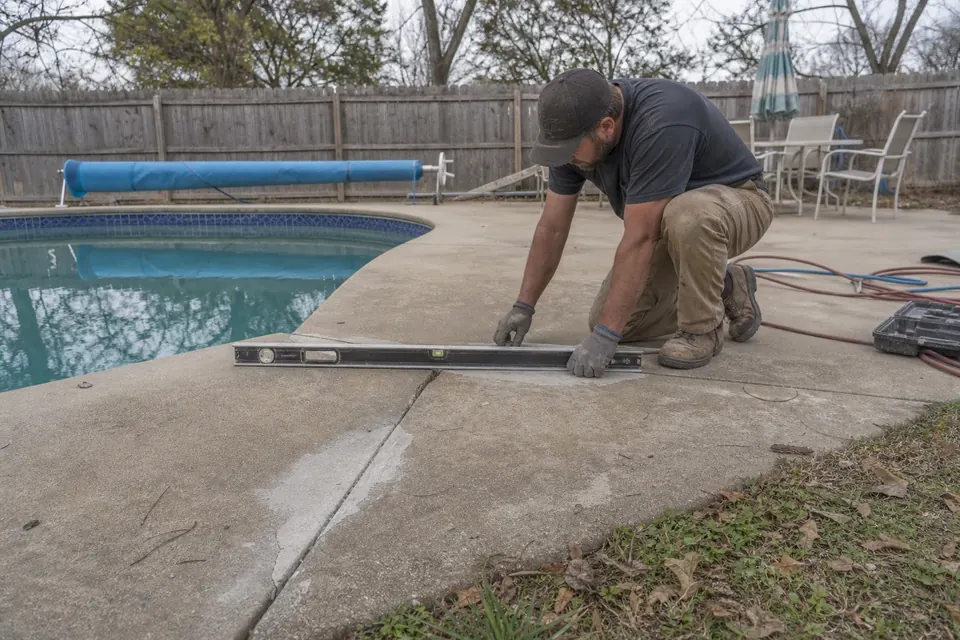
Patios on wetter ground closer to the river can sink unevenly, with one corner lower than the rest. Where the slab is intact, foam can raise it and fill the voids, and we will point out drainage improvements that help it stay put.
Sidewalks and stoops in town
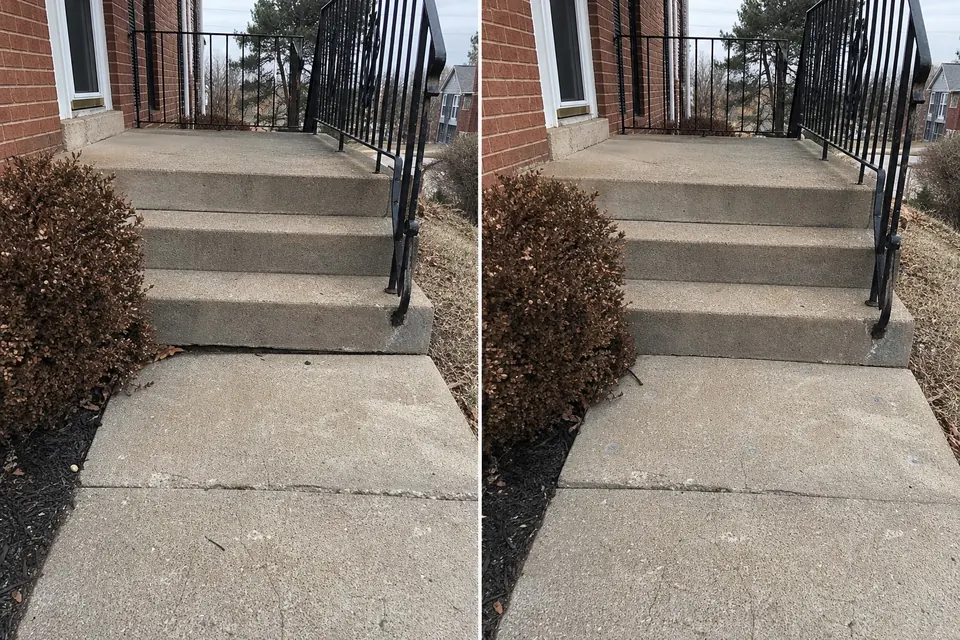
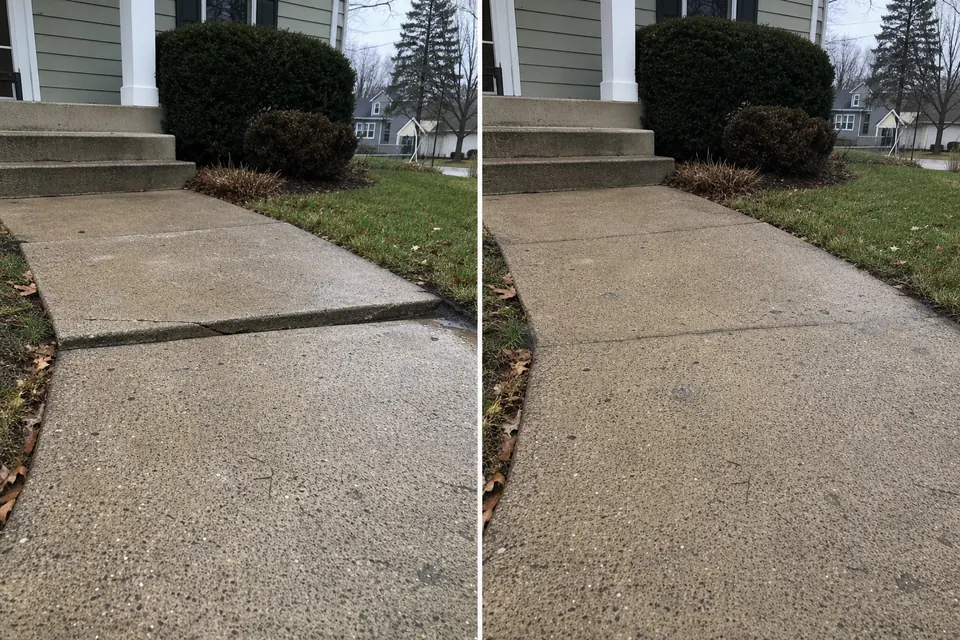
Older homes near downtown often have walks and stoops that have settled over the years. Lifting removes trip edges along the walk and can close gaps where a stoop has pulled away from the house.
Our De Soto Leveling Process
What happens on the day of your repair.
01
Send photos
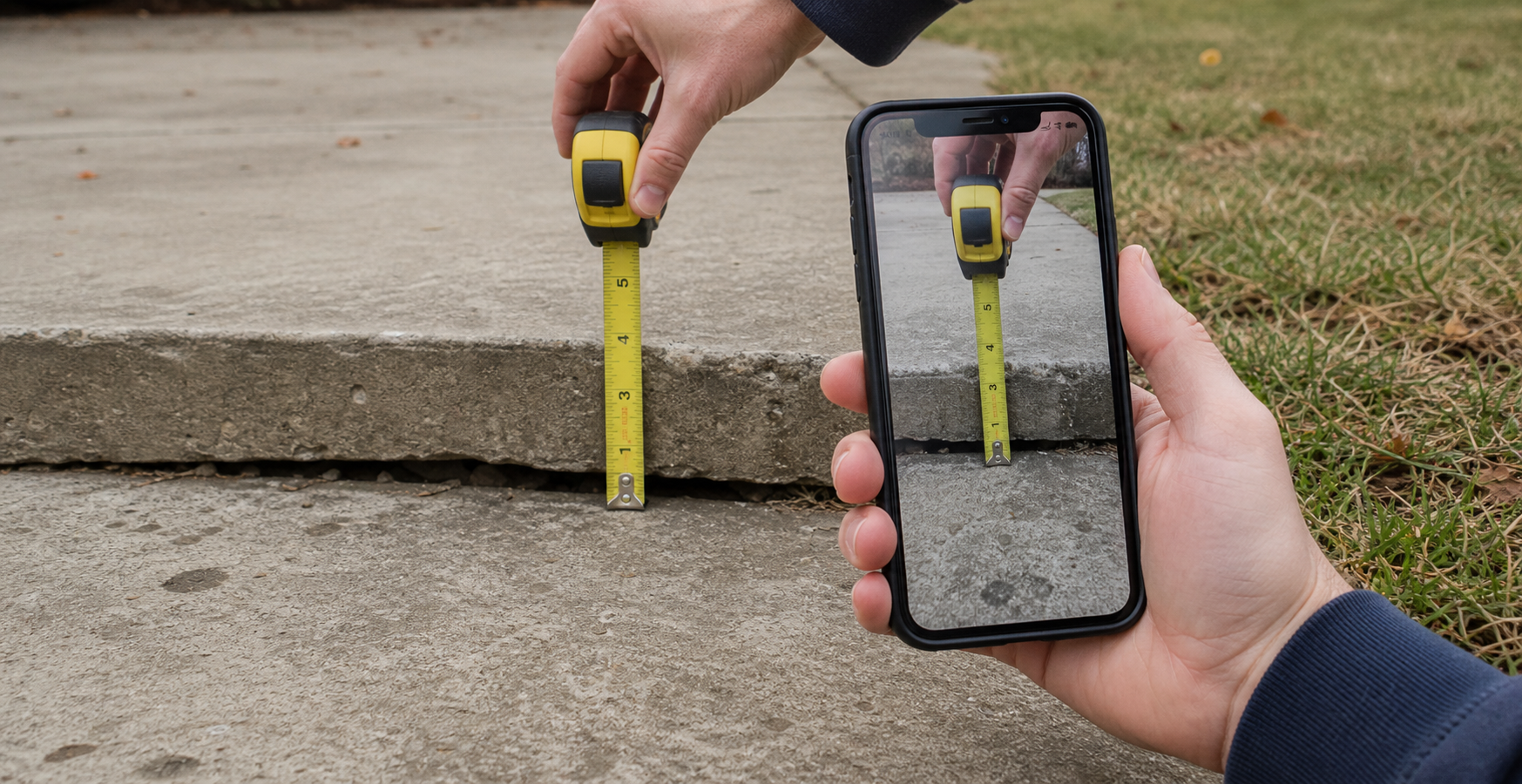
Text a wide shot, close-ups of the low joints, a tape measure showing the drop, and the address.
02
Review & quote
We look at the settlement, slab condition, and drainage, and follow up with a quote or questions.
03
Drill small ports
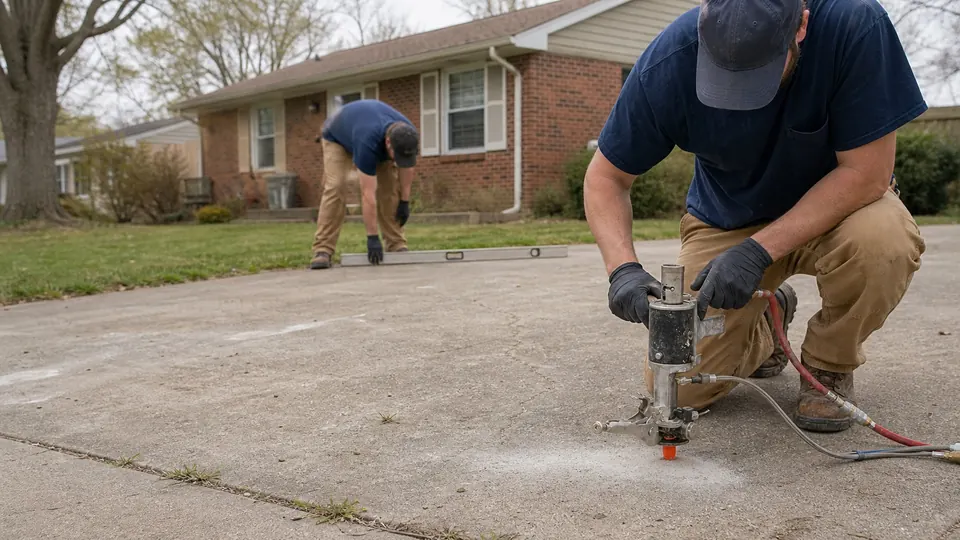
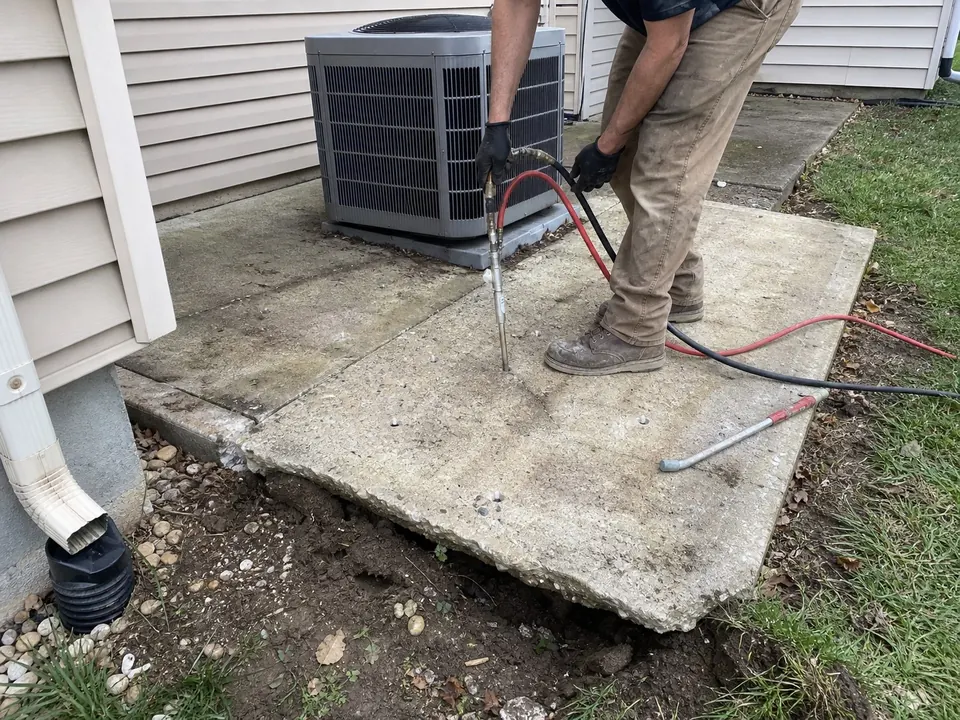
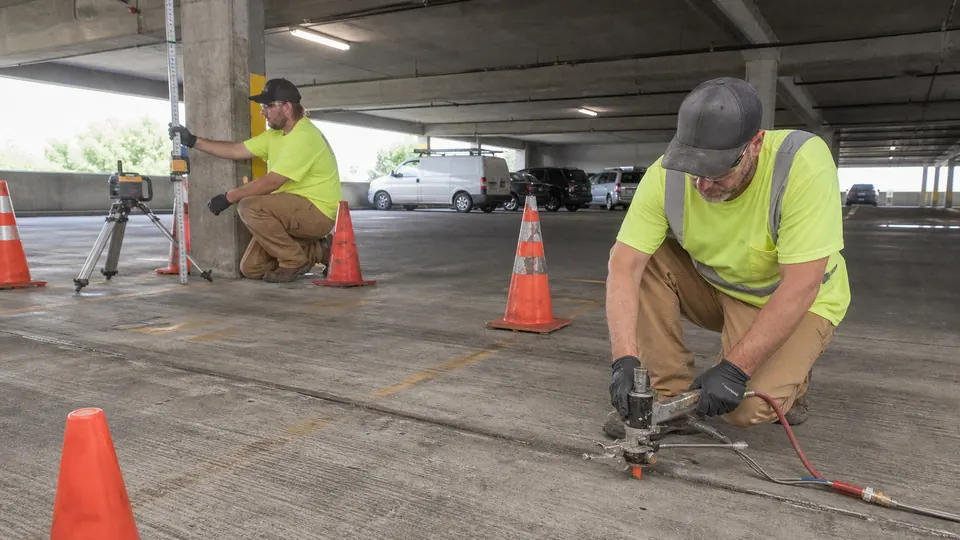
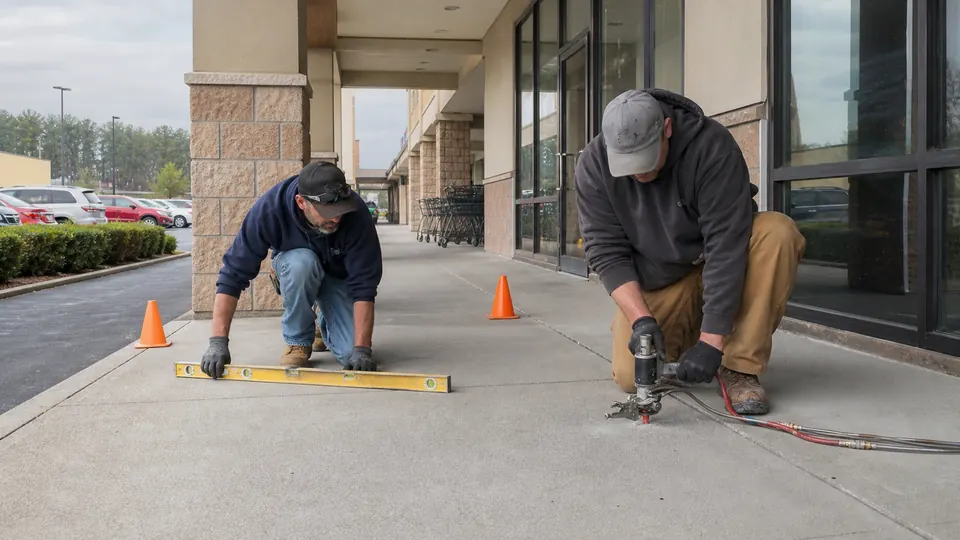
On the day of the repair we drill small access holes at planned points across the settled slab.
04
Lift in stages
Expanding polyurethane fills the voids and raises the concrete gradually while we watch the transitions.
05
Patch & clean up
Ports are patched, the area is cleaned, and the surface can usually be used again soon after.
Services in De Soto
Concrete lifting services available in De Soto, KS.
Metro Wide lifts and stabilizes most types of flatwork. Choose a service to learn how the repair works.
Yes, in many cases. Foam fills voids and spreads into soft areas beneath the slab, then hardens to support it. The challenge with sandy or silty soil is that water can keep moving material out if drainage isn't addressed. When we lift concrete near the river, we look closely at where water is coming from and recommend changes that help the repair last.
Do you work on rural properties outside De Soto city limits?
Yes. We serve homes, acreages and farm properties around De Soto as well as properties in town. Rural slabs like shop floors, barn aisles and driveway aprons are often good candidates for lifting if the concrete is intact. Text photos, a short description of how the slab is used, and your address, and we will follow up about the project.
Will lifting my garage floor fix the cracks?
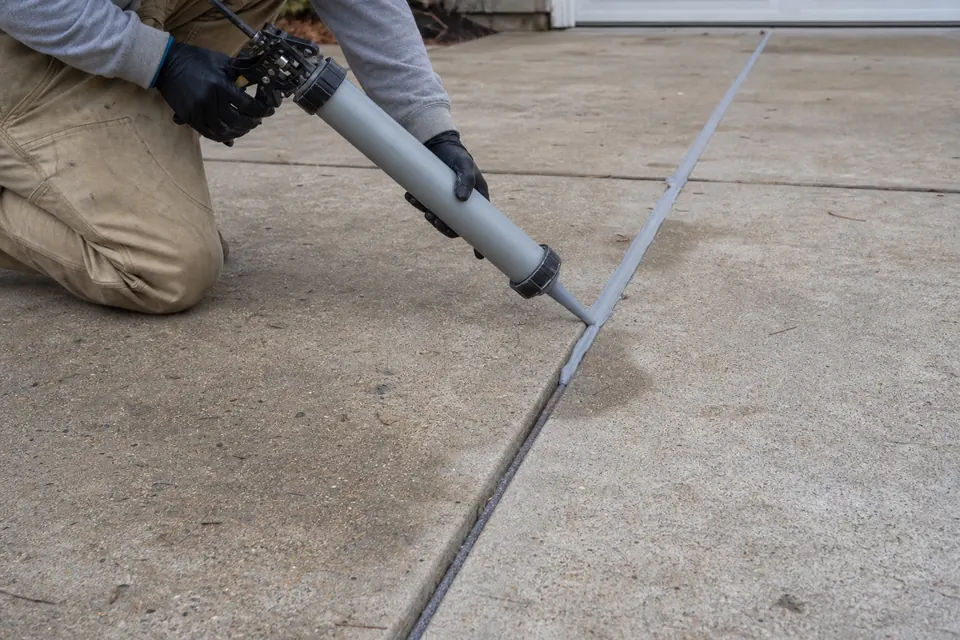
No. Lifting raises the slab and fills the voids underneath, but existing cracks will still be there afterward. What lifting does is bring the pieces back into a more even plane and restore support, which can keep cracks from opening wider. We can seal cracks and joints as a separate service to help keep water out. Badly broken floors may be better replaced.
How soon can I use my driveway or walkway after leveling?
Polyurethane foam cures quickly, so foot traffic and normal use can usually resume much sooner than with newly poured concrete. The exact timing depends on the repair, and we give you specific instructions when the work is finished.
Will concrete leveling get rid of the cracks?
No. Lifting changes the position and support of the slab, but existing cracks stay visible. Raising the sections on either side can bring a crack back into alignment, and crack and joint sealing is available as a separate step to help keep water out.
Is polyurethane foam better than mudjacking?
Both methods lift concrete by filling the space underneath it. Polyurethane uses smaller holes, weighs far less than a cement slurry, cures quickly, and resists washing out. See our polyurethane vs. mudjacking comparison for a full breakdown.
De Soto Estimate
Find out if your De Soto concrete can be saved.
Text a wide photo, a close-up of the uneven area, a tape measure showing the drop, and your address. We will review it and follow up with a quote.
We accept Visa, Mastercard, American Express, Discover, Venmo, cash, and checks. Ask about payment details when scheduling your project.
Kansas City Metro Coverage
Explore our general service area.
Zoom, drag, or select a marker to explore communities within Metro Wide’s 75-mile Kansas City service radius. Scheduling varies by address and project type.
 Driveway leveling
 Garage floor leveling
 Sidewalk & walkway leveling
 Porch & stoop leveling
 Pool deck leveling
 Commercial concrete leveling
 Crack & joint sealing